Ever stared at a drill, then at a screw, and wondered if you’re about to turn that screw into dust or just make it sit there stubbornly? You’re not alone. Deciding how much torque you need in a drill boils down to understanding what that specific number actually means for your projects. It’s the difference between a tool that makes tasks easy and one that creates more problems than it solves.
In our research, we found that while consumer-grade drills commonly offer torque ratings between 200 and 500 inch-pounds (in-lbs), industrial models can push much higher. Knowing where you fall on this spectrum depends entirely on the materials you’re working with and the size of the fasteners you’re driving. We’ll break down exactly what you need to consider so you can pick the right drill for any job.
What Torque Really Means for Your Drill
Torque is the twisting or rotational force your drill delivers to the bit. Think of it as a measure of raw turning power. When you’re trying to drive a screw into dense wood or drill a large hole, it’s that torque that pushes the bit through. Manufacturer specifications often list torque in inch-pounds (in-lbs), foot-pounds (ft-lbs), or Newton-meters (Nm).
For context, 1 ft-lb equals 12 in-lbs, and 1 Nm is roughly 8.85 in-lbs.
Higher torque means the drill can apply more rotational force before it stalls or its motor strains. This is critical for tougher jobs like driving long lag bolts or using large hole saws. Conversely, too much torque, especially when not properly managed with a drill’s clutch settings, can easily strip screw heads or even damage your workpiece by driving fasteners too deep. As of 2026, most standard 18V or 20V cordless drills offer a good balance for general use, typically falling in the 300-500 in-lbs range.
Your Project: The Biggest Factor in Torque Needs
The single most important question to ask yourself is: what will you actually be doing with this drill? Torque requirements change dramatically based on the materials you’re working with and the fasteners you’re using. This isn’t just about drilling holes; it’s about driving screws effectively and safely.
If your tasks mainly involve hanging lightweight decorations, assembling flat-pack furniture with small screws, or drilling pilot holes in soft materials, you’ll find that even lighter cordless drills have more than enough power. On the other hand, if you’re building decks, framing walls, or working with hardwoods, you’ll need a drill with significantly more muscle to get the job done efficiently and without frustrating stalls.
Hanging Shelves vs. Building a Deck
When you’re just hanging a few shelves or mounting a picture frame, speed and precision might be more important than raw power. A drill with a torque rating around 200-300 in-lbs is usually perfectly adequate. These tasks typically involve small screws going into drywall or relatively soft wood.
Building a deck, however, is a different ballgame. You’ll likely be driving longer, thicker screws or lag bolts into sturdy lumber like pressure-treated pine or oak. These materials resist penetration. Aggregate reviews indicate that for these kinds of demanding applications, a drill with at least 500 in-lbs of torque is highly recommended to prevent the drill from bogging down and to ensure consistent driving power.
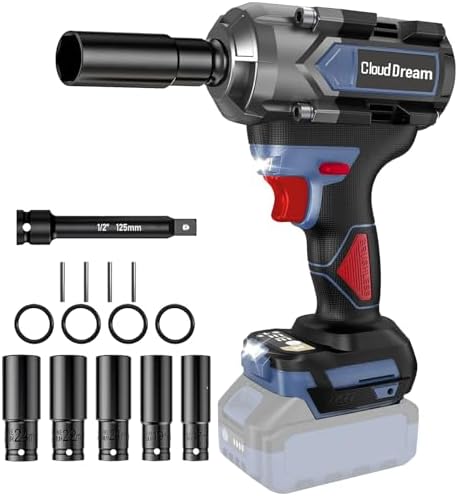
Below check from amazon
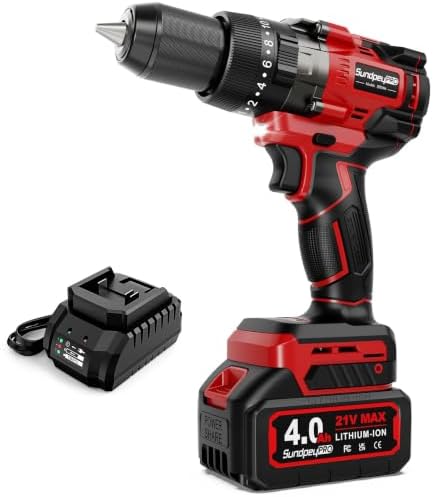


Understanding Drill Torque Measurements
Torque is measured in rotational force, and the units you’ll see most often are inch-pounds (in-lbs). This is the standard for most consumer and prosumer drills in North America. A drill’s maximum torque rating tells you the most twisting power it can generate.
To put it simply, if a drill can exert 100 pounds of force at a distance of 1 inch from its center of rotation, it has 100 in-lbs of torque. Some manufacturers might also list torque in foot-pounds (ft-lbs), which is a larger unit where 1 ft-lb equals 12 in-lbs. You might also see Newton-meters (Nm), an international standard; approximately 1 Nm is equivalent to 8.85 in-lbs.
Inch-Pounds, Foot-Pounds, and Newton-Meters
You’ll most frequently encounter inch-pounds (in-lbs) when shopping for drills in the US. This unit measures how much rotational force a drill can produce. For example, a drill might be rated at 350 in-lbs. This is typically sufficient for most common household tasks, from assembling furniture to drilling pilot holes.
Foot-pounds (ft-lbs) is a larger unit, often used for heavier-duty equipment. If you see torque listed in ft-lbs, remember to convert it to in-lbs for easier comparison with other drills (multiply ft-lbs by 12). For instance, 40 ft-lbs is equivalent to 480 in-lbs. Similarly, Newton-meters (Nm) is the metric standard.
If a drill specifies its torque in Nm, you can convert it to in-lbs by multiplying the Nm value by approximately 8.85. Knowing these conversions helps you accurately compare drill capabilities across different manufacturer specifications.
Torque Needs for Common DIY Tasks
Figuring out how much torque you need really comes down to the typical jobs you’ll be tackling around the house. It’s about matching the tool’s capability to the resistance it will encounter. Don’t overbuy power you’ll never use, but definitely don’t underspend and end up frustrated.
For light household chores, like installing a closet rod or screwing cabinet hardware, lower torque is fine. As you move into tasks that involve fastening larger screws into harder materials, the torque requirement climbs. This is where understanding the nuance between different types of jobs makes all the difference.
Quick Guide: Matching Torque to Your Project
Let’s break down some common DIY and homeowner projects and the general torque range you’ll want to aim for. This isn’t an exact science, as wood density and screw type can vary, but it’s a solid starting point.
- Light Assembly & Decor: For tasks like screwing in light fixtures, assembling small furniture, or hanging pictures, a drill producing 0-300 in-lbs is usually more than enough. Many compact 12V drills fall into this category.
- General Household Use: Driving screws into standard construction lumber (like pine or fir), assembling medium-sized furniture, or installing basic shelving often requires 200-400 in-lbs of torque. Most standard 18V and 20V cordless drills comfortably handle this.
- Woodworking & Deck Building: When you’re working with denser woods, driving longer or thicker screws, or using hole saws on wood, you’ll want more power. Aim for drills in the 300-500 in-lbs range.
- Heavy-Duty Fastening: Driving lag bolts, working with hardwoods as dense as oak or maple, or using the largest hole saws for significant material removal requires serious grunt. Look for drills that offer 500 in-lbs and up. These are often found in higher-end professional-grade drills.
Key Drill Features That Impact Performance
While torque is the headline spec for power, a drill is a system, and other features play a huge role in how effectively that torque is delivered and controlled. You can have all the torque in the world, but without proper control, it can be more of a hindrance than a help.
The clutch, for example, is arguably as important as the torque rating for many everyday tasks. It directly influences how the drill’s power is applied to the fastener. Variable speed triggers also give you precise command over the rotation, allowing you to adapt to different materials and screw types seamlessly.
Beyond Torque: Clutch, Speed, and Motors
The adjustable clutch on a power drill is a critical feature for controlling torque output. It allows you to dial in the maximum rotational force before the clutch disengages, preventing you from over-driving screws or damaging softer materials. For delicate tasks, you’ll use a low clutch setting; for driving into hard materials, you’ll use a higher setting.
The variable speed trigger provides granular control over how fast the drill bit spins. A gentle squeeze allows for slow, precise starting of screws, especially in smooth or hard surfaces, minimizing the risk of slippage. A firm pull engages higher speeds for efficient drilling or driving. Additionally, drills with brushless motors generally offer better power efficiency, longer runtimes, and often more consistent torque delivery under load compared to traditional brushed motors.
These features work together to make the drill more versatile and user-friendly.
When Torque Becomes a Problem
You might think more torque is always better, but that’s not quite true. Pushing a drill beyond what a task requires can lead to significant issues. Over-driving screws is a common problem, the screw head strips out, leaving you with a fastener that’s partially in and impossible to remove easily. This wastes time and can mess up the surface of your material.
Another risk is cam-out, where the drill bit slips out of the screw head. This is more likely with extremely high torque settings or when starting screws at an aggressive speed. It can damage both the screw head and the bit, and it’s a surprisingly common frustration that many seasoned DIYers have encountered.
Common Mistakes When Using High Torque
One of the most frequent errors is not utilizing the clutch setting effectively. People often crank the clutch all the way up, thinking it will just drive screws faster or more firmly. However, this negates the clutch’s primary function: protecting your workpiece and fastener by preventing over-driving.
Another mistake is attempting to start screws at high speeds. For most materials, it’s best to start screws slowly, allowing the threads to bite cleanly into the material. Aggressively engaging high torque and high speed right from the beginning dramatically increases the chance of stripped screws or cam-out, especially with softer woods or when working near the edge of a board.
Choosing the Right Drill for Your Needs
When you’re standing in the tool aisle, it’s easy to get swayed by the highest torque numbers. But remember, the best drill for you is the one that fits your typical workload. A super-powered drill might seem impressive, but it can be heavy, tiring to use for extended periods, and frankly, overkill for tasks like assembling furniture.
Consider your budget and how frequently you’ll use the tool. If you’re a weekend warrior tackling DIY projects a few times a year, a mid-range drill is likely the sweet spot. For professionals or serious hobbyists who use drills daily, investing in a higher-torque, more robust model makes sense.
Deciding Between 12V and 18V/20V Drills
The voltage rating on a cordless drill is a good indicator of its overall power potential, including torque. 12-volt (V) drills are generally smaller, lighter, and more maneuverable, making them ideal for tasks in tight spaces or for repetitive, lighter-duty jobs like hanging pictures or assembling IKEA furniture. They typically offer lower torque, often in the 200-350 in-lbs range.
On the other hand, 18V or 20V (these are often interchangeable terms for the same battery technology) drills pack a more significant punch. They’re ideal for driving larger screws, drilling wider holes, and working with harder materials. These drills commonly range from 300 in-lbs up to 500-600 in-lbs or more, making them the workhorses for most construction and serious DIY projects. If you’re unsure, a 20V drill typically offers the best versatility for most homeowners.
Expert Tips for Maximizing Drill Power and Control
Getting the most out of your drill, regardless of its torque rating, is about smart usage. It’s not just about how much power the drill has, but how you apply it. By using the right techniques and understanding your tool’s features, you can improve efficiency and achieve better results.
Think of it this way: a race car driver doesn’t just floor the gas pedal all the time. They use the car’s power strategically. Similarly, with a drill, mastering its controls means mastering its power. This is where practical experience and applying some know-how really pay off.
Smart Strategies for Screw Driving
When driving screws, always start with the lowest speed setting on your drill and a moderate clutch setting. This allows you to get the screw started straight and prevents it from going in crooked or stripping the head immediately. Once the screw threads have properly engaged the material, you can gradually increase speed if needed.
It’s also wise to use the correct size and type of driver bit for your screw heads. A poorly fitting bit is a surefire way to strip a screw head, no matter how much torque your drill has. Ensure the bit is seated firmly in the screw head before you begin driving. For particularly tough jobs, consider using a drill with a dedicated “impact” mode if available, though this is more common in hammer drills and impact drivers.

Michael Harris is an experienced woodworker and power tool expert with over 12 years in woodworking. Specializing in functional, high-quality furniture, he offers expert advice on tool selection, maintenance, and sharpening for both beginners and professionals.