
Are you struggling with your brad nailer not driving nails just right? Too much pressure can damage your work, while too little leaves nails half in.
Knowing how to adjust your brad nailer pressure is key to getting clean, professional results every time. In this guide, you’ll discover simple steps to fine-tune your tool’s pressure, saving you time and frustration. Keep reading to unlock the secret to flawless nailing and take your projects to the next level.
Credit: www.homedepot.com
Why Pressure Matters
Pressure control is key for using a brad nailer well. It changes how deep the nail goes and how much force the tool uses. Setting the right pressure helps you get clean, strong results on every project. It also protects your materials and keeps you safe.
Impact On Nail Depth
Pressure affects how far nails enter the wood or surface. Too much pressure pushes nails too deep. This can split the wood or hide the nail head. Too little pressure leaves nails sticking out. Nails that are too shallow won’t hold well. Adjusting pressure lets you control nail depth perfectly.
Preventing Damage To Materials
High pressure can cause dents or cracks in soft materials. It may also damage thin or delicate surfaces. Low pressure might not secure pieces tightly. Correct pressure avoids damaging your materials. This helps keep your work neat and strong.
Ensuring Safety
Proper pressure reduces the risk of nails bouncing back. Excessive force can make nails shoot out dangerously. Low pressure might cause the tool to jam or misfire. Setting pressure right protects you and others nearby. Safe use is always a top priority.
Credit: www.homedepot.com
Tools Needed For Adjustment
Adjusting the pressure on a brad nailer needs the right tools. These tools help you control the nailer’s power and improve your work quality. Knowing the tools makes the process simple and safe.
Pressure Gauge
A pressure gauge shows the air pressure in your system. It tells you if the pressure is too high or too low. This tool helps you set the perfect pressure for your brad nailer. Most air compressors come with a built-in gauge.
Air Compressor Settings
The air compressor controls the air going to the nailer. You can adjust its settings to change the pressure. Look for a dial or knob on the compressor. Turn it to raise or lower the pressure as needed.
Brad Nailer Controls
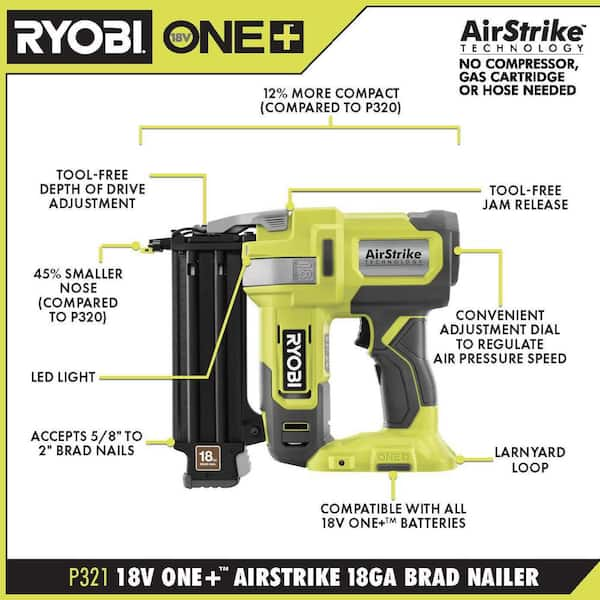
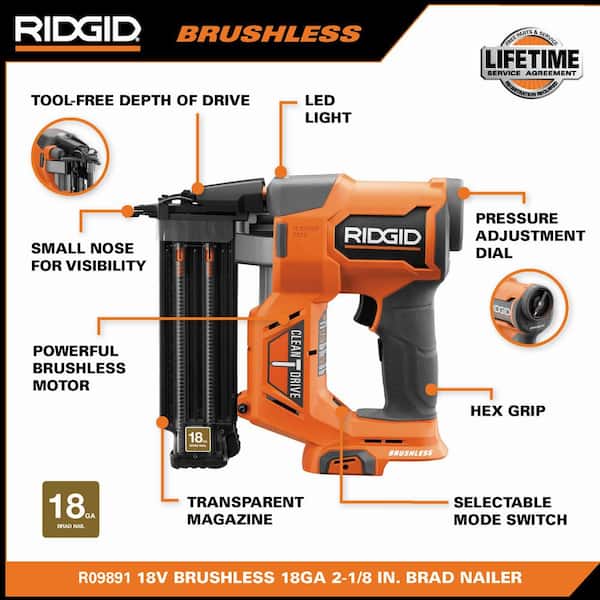
Your brad nailer may have its own pressure control. Check the manual to find these controls. Some models have a screw or dial near the air inlet. Adjust this to fine-tune the nailer’s power for different tasks.
Step-by-step Pressure Adjustment
Adjusting the pressure on a brad nailer is important for smooth work. The right pressure helps the nails go in perfectly. Too much pressure can damage the wood. Too little pressure leaves nails sticking out. Follow these steps to set the pressure just right.
Disconnecting The Nailer
Start by unplugging the brad nailer from the air compressor. This is for safety. No air should flow during adjustments. Check the hose and connections to be sure they are loose. Never adjust pressure while the nailer is connected.
Adjusting The Air Compressor
Find the pressure regulator on your air compressor. Turn the knob to change the pressure. Turn clockwise to increase pressure. Turn counterclockwise to lower it. Set the pressure between 70 and 120 psi for most brad nailers. Check your nailer’s manual for exact numbers.
Testing Nail Depth
Reconnect the nailer to the air hose. Test it on a scrap piece of wood. Fire a few nails and check the depth. Nails should be flush or slightly below the surface. If nails are too deep, lower the pressure. If nails don’t go in fully, raise the pressure.
Fine-tuning The Pressure
Make small pressure changes for best results. Adjust by 5 psi or less each time. Test again after each change. Stop adjusting when nails go in just right. Keep safety in mind and wear eye protection during tests.

Credit: www.reddit.com
Common Pressure Problems
Pressure issues are common with brad nailers. They affect the tool’s performance and the quality of your work. Understanding these problems helps you fix them fast. It also ensures nails go in smoothly and wood stays intact.
Below are some common pressure problems and how they show up during use.
Nails Not Fully Driven
This happens when the pressure is too low. Nails do not go deep enough into the wood. The brad nailer feels weak and the nails stick out. Adjust the pressure higher to push nails fully in. Too low pressure wastes nails and makes your work look rough.
Nails Splitting Wood
Too much pressure causes nails to drive too hard. The wood can crack or split around the nail. Use lower pressure for soft or thin wood. This prevents damage and keeps your project neat. Check pressure settings before starting to avoid splitting wood.
Air Leaks And Loss Of Pressure
Leaks cause steady pressure loss during use. The nailer sounds different and works slower. Check for loose fittings or damaged seals. Fix leaks to restore steady pressure. Proper air supply keeps the tool running strong and nails going in right.
Maintenance Tips For Consistent Pressure
Maintaining consistent pressure on your brad nailer ensures smooth and accurate nailing. Regular care helps avoid pressure drops and tool damage. Follow these simple maintenance tips to keep your nailer working well and lasting longer.
Regular Cleaning
Clean your brad nailer often to remove dust and debris. Use a soft brush or compressed air to clear the magazine and trigger area. Dirt buildup can block airflow and reduce pressure. Clean parts help the tool work smoothly every time.
Checking For Wear And Tear
Inspect your nailer for worn or broken parts regularly. Look at seals, O-rings, and hoses for cracks or damage. Worn parts cause air leaks and lower pressure. Replace any damaged components to keep pressure steady and nails driven properly.
Proper Storage
Store your brad nailer in a dry, cool place after use. Keep it away from moisture and extreme temperatures. Moisture can cause rust and damage internal parts. Proper storage protects the tool and maintains its pressure performance over time.
Frequently Asked Questions
How Do I Adjust Brad Nailer Pressure Correctly?
To adjust brad nailer pressure, locate the pressure regulator knob. Turn clockwise to increase pressure and counterclockwise to decrease it. Test on scrap wood for optimal depth and secure fastening without damaging the material.
What Is The Ideal Pressure For A Brad Nailer?
The ideal pressure for a brad nailer typically ranges from 70 to 120 PSI. Always check the manufacturer’s guidelines and adjust pressure based on wood density and nail length for best results.
Can Incorrect Pressure Damage My Brad Nailer?
Yes, incorrect pressure can cause misfires, jams, or damage the tool. Too high pressure may split wood; too low pressure may result in shallow nails. Proper adjustment ensures tool longevity and safe operation.
How Often Should I Check Brad Nailer Pressure?
Check brad nailer pressure before each use. Regular monitoring ensures consistent nail depth and prevents tool damage. Adjust pressure as needed for different materials and nail sizes.
Conclusion
Adjusting brad nailer pressure is simple and important. Correct pressure keeps nails secure without damage. Too much pressure splits wood, too little leaves nails loose. Always test on scrap wood first. Make small changes and check results often. Keeping your tool in good shape helps it work better.
Practice these steps to nail with confidence every time. This keeps your projects neat and strong. Now, your brad nailer will perform just right.
Michael Harris is an experienced woodworker and power tool expert with over 12 years in woodworking. Specializing in functional, high-quality furniture, he offers expert advice on tool selection, maintenance, and sharpening for both beginners and professionals.