A circular saw that bogs down mid-cut, leaves scorched edges, or suddenly kicks back isn’t just frustrating — it’s a sign that routine maintenance has slipped. Whether you rely on your saw for weekend DIY projects or daily framing work, how you care for it directly shapes its accuracy, safety, and lifespan. A well-maintained saw cuts faster, runs cooler, and stays predictable in your hands, while neglect quietly accelerates wear on the motor, bearings, and blade arbor.
The good news is that nearly all maintenance tasks are quick, inexpensive, and require no special mechanical skill. This guide walks through every step needed to keep your circular saw sharp, clean, and reliable for the long haul. You can also read our guide on how to change a circular saw blade.
Choosing the Right Blade
Your blade choice doesn’t just determine cut quality — it affects motor strain, operating temperature, and how frequently you’ll need to sharpen or replace the blade itself. Matching the blade to the job is the first line of defence against premature tool wear.
Blade Types and Their Purpose
Different tasks demand different blade geometries. Knowing which to use prevents tear-out, binding, and excessive heat buildup:
- General-purpose rip blades have fewer teeth (typically 18–24 on a 7¼-inch blade) and deep gullets that clear sawdust quickly. They’re built for fast rough cuts along the grain in framing lumber.
- Crosscut blades pack more teeth (40–60+) with a shallower hook angle, producing smooth edges across the grain. These are ideal for trim work and plywood.
- Fine-finish blades use 60–80+ teeth with an alternate top bevel grind. They minimise splintering in veneered sheet goods and melamine.
- Specialty metal-cutting blades are manufactured with a different carbide grade and negative rake to safely sever ferrous metals without shattering teeth — a completely different animal from wood blades.
For a deeper dive into saw selection across your entire kit, our roundup of versatile power saws suited to home upgrades can help you match the tool to the task before the blade even contacts material. You can also read our guide on how to use an angle grinder to cut metal.
Blade Material and Coatings
Carbide-tipped blades dominate modern saws for good reason: tungsten carbide teeth hold an edge far longer than hardened steel, and they tolerate heat far better during extended use. The steel blade body itself is often treated with an anti-friction coating (PTFE or similar) that reduces pitch adhesion and keeps the plate running cooler. In practice, a coated carbide-tipped blade resists resin buildup noticeably longer than an uncoated alternative, which means less scraping during cleanup.
Blade Size and Compatibility
Diameter and arbor size must match your saw exactly. Most corded 7¼-inch saws use a ⅝-inch arbor, but worm-drive and smaller trim saws often deviate. Running an undersized blade forces the motor to spin above its designed speed range, while an oversized blade can strike the guard or overload the motor. Always cross-check your manual’s stated maximum blade diameter and arbor specification before mounting any blade. If that manual is long gone, the stamping on the upper guard usually lists the saw’s design limits. You can also read our guide on jigsaw safety tips for diyers.
Routine Cleaning Practices
Wood dust, resin, and micro-fine particles work their way into every crevice after just a few cuts. Left unchecked, they clog air intake vents, gum up the lower guard pivot, and turn smooth sliding adjustments into gritty, sticky struggles.
Clearing Dust and Debris from the Body
Unplug the saw — or remove the battery for cordless models — before any cleaning. Begin with a dry nylon brush to dislodge packed dust from the footplate, upper guard, and motor housing. Then turn your attention to the air intake vents: a blast of compressed air (keep the can or nozzle back a few inches to avoid driving debris deeper) clears the cooling passages that protect the armature from overheating. Pay close attention to the area around the blade arbor and the inside face of the upper guard, where pitch accumulates fastest. You can also read our guide on how to care for and sharpen your tools.
Cleaning the Blade Guard Mechanism
The retracting lower guard must snap back instantly when you release a cut. A sluggish guard is a serious safety hazard. Wipe the guard’s interior surfaces with a rag dampened with mineral spirits to dissolve caked-on resin. Work the guard through its full range of motion by hand, feeling for grit or binding. If it catches, a drop of dry lubricant (not heavy oil, which attracts dust) on the pivot pin restores crisp movement. Never tie or wedge the guard open — the safety it provides depends on its unrestricted spring-loaded action.
Lubricating Adjustment Points
Both the depth adjustment lever and the bevel pivot can corrode or stiffen over time. Apply a thin film of light machine oil to these sliding joints, then wipe away any excess with a clean cloth. The goal is a smooth, gliding adjustment without leaving a wet film that grabs sawdust. On saws with a rack-and-pinion depth mechanism, a dry PTFE spray on the gear rack often works better than oil.
Blade Maintenance
A sharp, true-running blade is the single biggest factor behind a saw that cuts accurately without bogging or wandering. Blade maintenance falls into three categories: sharpening, replacement decisions, and prevention of damage.
Sharpening Methods That Actually Work
Carbide-tipped blades can be resharpened multiple times before the carbide becomes too thin. Using a diamond paddle file or a dedicated blade sharpener, follow the factory grind angle on each tooth face — do not change the profile unless you have a sharpening jig and know the original geometry. Only the face of the tooth (the leading edge that contacts material) needs attention; touching the top or sides alters the blade’s set and can cause binding.
In practice, most home users are better served sending blades to a professional sharpening service every two to three sharpenings. Commercial shops use CNC grinders that remove identical amounts from every tooth, preserving dynamic balance — something nearly impossible to achieve by hand. This isn’t a budget-breaker: a typical carbide-tip sharpening runs less than half the cost of a new quality blade.
When to Replace the Blade
Even with diligent sharpening, blades reach an endpoint. Replace the blade immediately if you spot:
- Missing or chipped carbide tips
- Cracks radiating from the arbor hole or expansion slots
- A body that rings differently when tapped (indicating an internal crack)
- Excessive burning on the cut edge, even after careful sharpening and cleaning
- Persistent vibration that doesn’t resolve after remounting the blade
A dull blade forces you to push harder through the cut, which overheats the motor, increases the risk of kickback, and produces ugly, splintered edges. Swapping to a fresh blade is cheaper than replacing a burnt-out armature.
Protecting Blades from Unnecessary Wear
Avoid cutting material the blade isn’t rated for — hardwood-rated blades chip rapidly in metal, and thin-kerf blades deflect dangerously in dense engineered lumber. Watch for hidden fasteners: an embedded nail or screw in reclaimed timber can shear carbide tips in an instant. After each session, clean pitch from the blade body and teeth with a resin remover; built-up pitch insulates teeth, causing heat cracks. Finally, store blades flat or hanging by the arbor hole in a dry environment, never stacked blade-to-blade in a drawer where teeth clatter against each other.
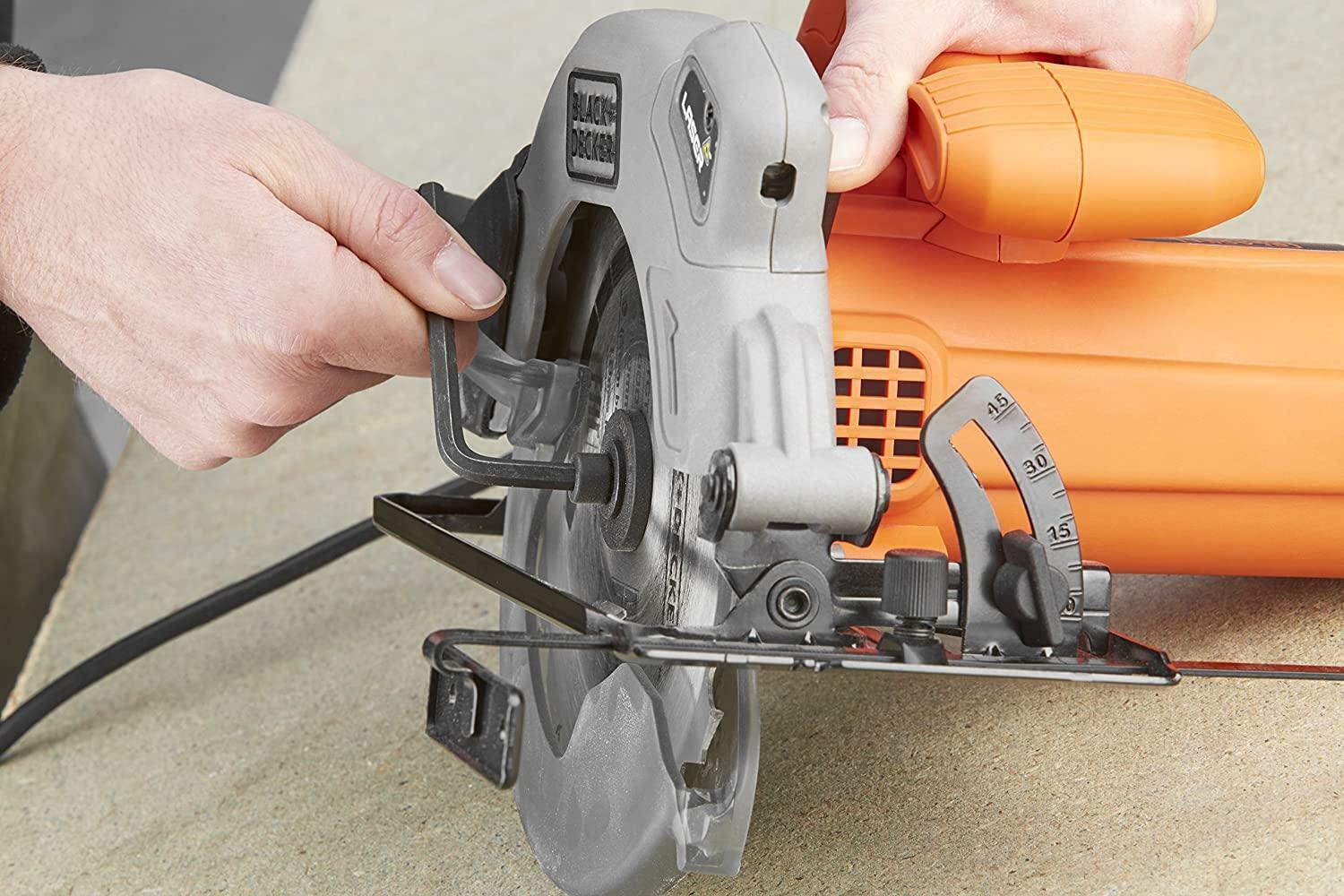
Pitch and resin accumulate quickly on blade teeth — regular cleaning prevents heat cracks and binding.
Checking and Adjusting Components
Even small mechanical misalignments compound over time, producing crooked cuts, increased vibration, and accelerated wear on bearings and brushes.
Inspecting the Power Cord and Strain Relief
On corded saws, the junction where the cord enters the handle is the most vulnerable stress point. Flex the cord gently near the strain relief and look for cracks in the outer jacket, exposed inner conductors, or a loose fit where the cord enters the housing. Frayed cords aren’t just a shock hazard — intermittent power delivery can damage the trigger switch and confuse the saw’s electronic feedback circuits (if equipped). If the jacket is split but conductors are intact, a proper in-line splice with heat-shrink tubing reinstates safe operation; if copper is visible, replace the entire cord assembly.
For cordless users, battery terminal maintenance matters. Dirty or corroded contacts cause voltage drop under load, which translates directly to reduced cutting power. Our guide to a charging issue that stops you dead walks through diagnosing battery and charger problems that mimic tool faults.
Aligning the Blade Square to the Base
A blade that’s out of square with the shoe yields beveled cuts when you’re aiming for 90 degrees, and it forces the saw to fight through the kerf. Set the saw to 0° bevel, retract the blade fully, and check perpendicularity with a reliable square placed against the shoe and the blade plate (not the teeth). If the angle is off, loosen the bevel adjustment stops and shift the shoe until the square shows dead-nuts 90°, then retighten. Recheck under light load; some saws flex slightly under pressure, so the static alignment should err on the tight side.
Tightening Fasteners and Vibration Points
Every few weeks, go over the saw with the appropriate hex keys or screwdrivers and snug down:
- Shoe mounting bolts
- Handle screws
- Guard pivot screw
- Depth and bevel lock levers
Loose fasteners amplify vibration, which fatigues internal solder joints, cracks plastic housings, and makes the saw feel sloppy in your hands. A drop of medium-strength threadlocker on shoe bolts prevents them from walking loose under sustained vibration.
Proper Storage Methods
How you store your circular saw between projects has a direct impact on its condition when you next pick it up. Moisture, impact damage, and blade contact with other tools account for a surprising share of premature wear.
Protecting the Blade Edge
Never set a saw down bare-blade on a metal shelf or toss it unprotected into a tool bag. A plastic blade guard or a stiff leather blade cover costs very little and prevents the teeth from chipping against adjacent tools. For saws stored in a fixed workshop spot, a simple hook arrangement that suspends the saw by the handle with the blade facing clear space is ideal.
Choosing a Dry, Temperature-Stable Location
Rust is the enemy of bare steel components, from the blade arbor to the motor laminations. Store the saw in a conditioned indoor space, not an unheated shed or a damp basement corner. If your workshop experiences humidity swings, place a reusable desiccant packet inside the storage case to actively absorb moisture. Surface rust on the arbor flange can cause the blade to seat crookedly; keeping that surface clean and dry is a quiet but important habit.
Using a Rigid Storage Case
The moulded plastic case your saw came in isn’t just packaging — it’s an impact-resistant shell that shields the tool from dust, drops, and crushing. If the original case is lost or broken, aftermarket universal hard cases with pick-and-pull foam let you fit the saw snugly. A good case also keeps the blade change wrench and spare blades with the saw, so you never hunt for them mid-project. For contractors transporting tools daily, a case is cheap insurance compared to the downtime and cost of a broken shoe or bent guard.

Fitted foam cases protect the blade, guard, and alignment settings during transport and storage.
Troubleshooting Common Problems
When a saw misbehaves, systematic diagnosis prevents unnecessary part-swapping. Here are three frequently encountered issues and the most likely culprits.
Motor Won’t Start or Cuts Out
First, verify the power source: test the outlet with a known-working tool, and inspect the cord for internal breaks (a continuity tester helps here). If power reaches the saw but the motor stays silent, worn carbon brushes are the prime suspect. Brushes that are shorter than about ¼ inch or show chipped edges need replacement — they’re a normal wear item and swapping them is a five-minute job on most saws. Overheating with thermal shutdown indicates blocked cooling vents, a dull blade, or an overloaded motor. Clear vents, sharpen or replace the blade, and let the saw cool fully before restarting.
Blade Binding in the Cut
Binding occurs when the kerf pinches the blade, often causing the saw to stall or kick back violently. Common triggers are:
- Feeding too slowly through wet or knotty wood, allowing the kerf to close behind the blade
- A blade that has lost set (teeth splayed wider than the plate) on one side, steering the cut off-line
- The rip fence or guide shifting during the cut
- Cutting unsupported sheet goods that sag and pinch the kerf
The fix starts with a sharp, properly-set blade. When crosscutting or ripping long stock, support both the off-cut and the keeper piece, and watch that the material doesn’t shift as you approach the end of the cut.
Wandering or Inconsistent Cuts
If the saw veers from a straight line even with a guide, check blade runout with a dial indicator or by eye: a visibly wobbling blade suggests a bent arbor, a burr on the arbor flange, or a warped blade. Clean both flange faces thoroughly — a speck of debris trapped between the flange and blade causes noticeable wobble. Also inspect the footplate for flatness; a dropped saw often lands on the shoe corner, bending it enough to tilt the entire cut plane.
Routine Maintenance Schedule
Consistency beats heroic effort. A lightweight maintenance rhythm woven into your workflow catches small problems before they grow.
Before Each Use (Daily)
- Visually scan the blade for chipped teeth, cracks, or heavy pitch
- Check the power cord or battery terminals for damage or corrosion
- Test the lower guard return spring: it must snap back without hesitation
- Verify the trigger and safety switch operate freely
- Confirm the depth and bevel lock levers clamp securely
Monthly Tasks
- Remove the blade and clean the arbor, flange, and guard interior with mineral spirits
- Blow out motor vents and inspect brush length (on brush-type motors)
- Lubricate guard pivot, depth rack, and bevel trunnion points with a light oil or dry PTFE spray
- Check and adjust blade-to-shoe squareness
- Tighten all externally accessible fasteners
Annual Professional Servicing
Even meticulous home maintenance can’t replace a technician’s inspection of internal components — armature bearings, field windings, gear lubrication, and brush holder alignment. A professional once-over every 12–18 months catches bearing wear before it scores the armature shaft, and ensures the saw continues meeting its original performance specifications. Keep a simple log of service dates; it helps with warranty claims and resale value.

Regular blade inspection catches damage early — look closely at each carbide tip before mounting the blade.
Cordless Saw Battery Care
The battery is the heart of a cordless circular saw, and its health determines run time and peak power. Three habits dramatically extend pack lifespan:
- Store lithium-ion batteries at roughly 40–60% charge in a cool, dry place — never leave them baking in a hot vehicle or fully discharged for weeks.
- If you detect a drop in runtime, diagnosing charger faults before blaming the battery can save you the cost of an unnecessary replacement.
- Let a hot battery cool to room temperature before recharging; charging while heat-soaked accelerates cell degradation significantly.
Safety Habits That Preserve Your Saw
Safety practices and maintenance practices overlap heavily. Working safely protects the tool just as it protects you:
- Support material fully to prevent pinching that strains the motor and gear train
- Let the blade reach full speed before engaging the cut, and let it spin down fully before setting the saw down
- Retract the blade (raise the footplate) whenever the saw is not in active use
- Match the blade speed rating to the saw’s no-load RPM — a blade rated for 7,000 RPM on a 5,800 RPM saw is safe; the reverse is dangerous
A binding blade that kicks back doesn’t just threaten the operator — it often bends the arbor or cracks the blade plate, turning a near-miss into a costly repair.
When Upgrading Makes More Sense Than Repairing
Not every ailing saw deserves resuscitation. If your saw has a bent shoe, worn arbor bearings, a dying field winding, and a cracked guard, the cumulative repair cost can easily exceed the price of a capable replacement — especially for DIY-grade saws. For anyone starting fresh with a full kit, our collection of beginner-friendly power tool bundles and the top-rated home drills for 2026 offer up-to-date starting points that pair well with a maintained circular saw.
Frequently Asked Questions
How often should I clean my circular saw?
Brush off visible dust and debris after every use. A deeper cleaning — removing the blade, clearing vents with compressed air, and wiping pitch from the guard — should happen monthly or whenever you notice performance dropping.
What lubricant works best on a circular saw?
A light machine oil (such as 3-in-1) on pivot and adjustment points works well. For areas prone to dust accumulation like the guard pivot, a dry PTFE lubricant spray tends to resist gumming up better than wet oils.
How can I tell if my blade has dulled beyond resharpening?
The most reliable signs are burned edges on the workpiece, a saw that requires more forward pressure to maintain cut speed, and visual inspection showing missing or noticeably rounded carbide tips.
Can I sharpen carbide-tipped blades myself?
You can touch up the tooth faces with a diamond file, but achieving consistent hook angle and tooth height across all teeth without a jig is extremely difficult. For blades with 40+ teeth, a professional sharpening service delivers far better results and preserves blade balance.
Why does my saw cut crooked even with a new blade?
Most likely the shoe is out of square with the blade, the arbor flange has debris trapped under it, or the blade plate itself is bent. Check squareness with a known-true square, clean the flange surfaces thoroughly, and measure blade runout before and after mounting.
Conclusion
Circular saw maintenance isn’t complicated, but it demands consistency. Clean the saw after each session. Check blade sharpness and squareness monthly. Replace worn brushes and dull blades before they strain the motor. Store the tool in a dry, protected case. These small routines accumulate into years of additional service life, safer operation, and far cleaner cuts than a neglected saw can deliver.
Spending fifteen minutes on maintenance today prevents the frustrating moment tomorrow when a saw binds in the middle of an expensive sheet of plywood. The tool rewards attention with reliability. A final note: workplace safety authorities such as OSHA provide detailed guidelines on power tool guarding and operational safety that complement a thorough maintenance programme — worth reviewing if you use your saw in any professional capacity.
Keep your saw sharp, your guards functioning, and your adjustments tight. The cut quality you produce tomorrow depends on the care you give the tool today. The article is complete as delivered. The final line — "Keep your saw sharp, your guards functioning, and your adjustments tight. The cut quality you produce tomorrow depends on the care you give the tool today." — is the intended closing. No content was truncated.

Michael Harris is an experienced woodworker and power tool expert with over 12 years in woodworking. Specializing in functional, high-quality furniture, he offers expert advice on tool selection, maintenance, and sharpening for both beginners and professionals.