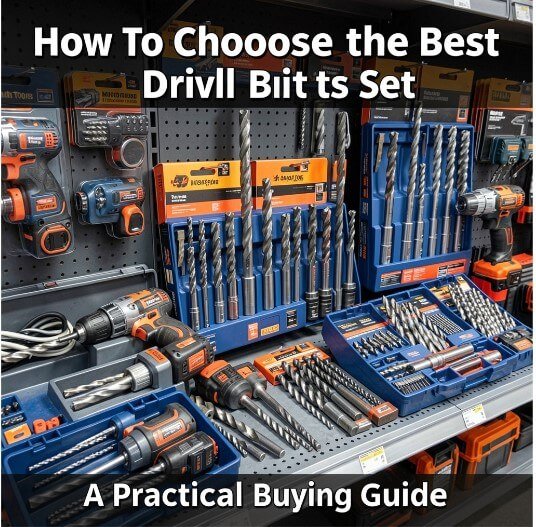
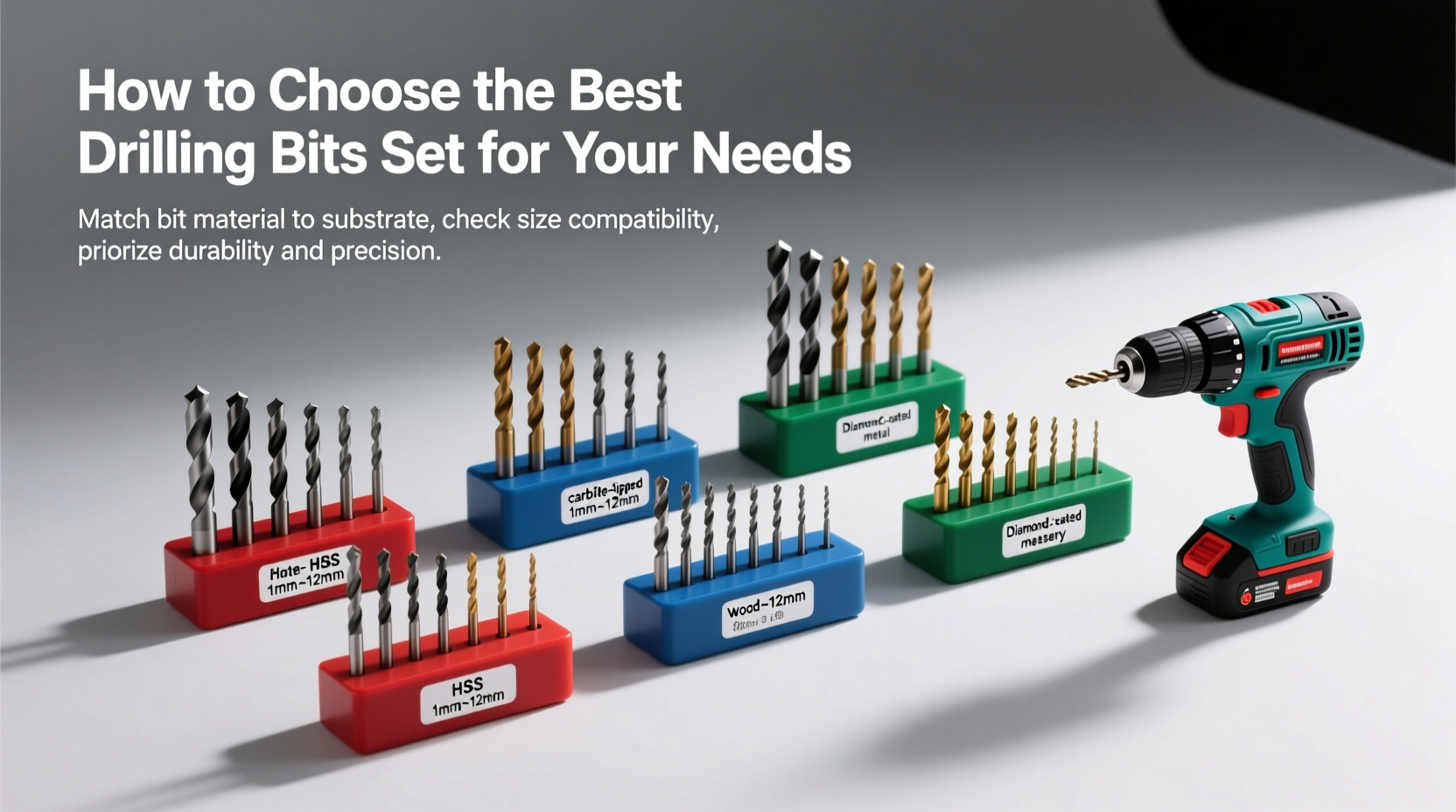
Choosing the best drill bit set starts with one simple question: what materials will you drill most often? Wood, metal, masonry, plastic, and tile all need different bit designs. A good set should match your projects, include useful sizes, offer durable materials, and come in a case that keeps everything organized.
The right drill bit set saves time, protects your materials, and helps your drill perform better. The wrong set can cause rough holes, broken bits, slipping screws, and damaged surfaces. This guide explains what to look for before buying, so you can choose a drill bit set with confidence.
What Is the Best Drill Bit Set for Most People?
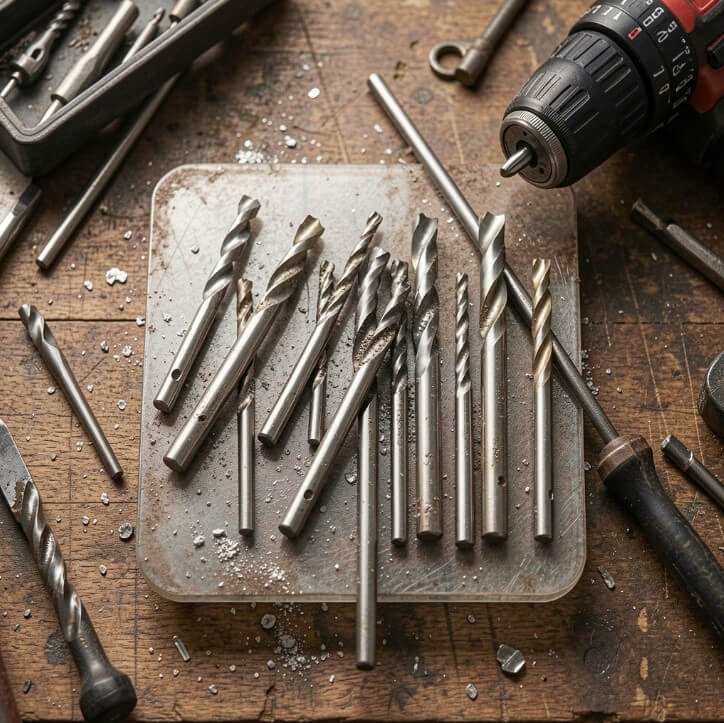
The best drill bit set for most people includes common sizes, twist bits for general drilling, masonry bits for brick or concrete, and wood bits for clean holes in timber. For basic DIY work, choose a mixed-purpose set with HSS bits, carbide-tipped masonry bits, and a strong storage case.
A good all-around set should cover everyday repairs, furniture assembly, shelving, wall plugs, pilot holes, and light metal drilling. You do not always need the largest set. A smaller set with better-quality bits is often more useful than a cheap set with dozens of weak pieces.
Look for:
- A clear size range
- Bits for wood, metal, and masonry
- Rust-resistant coating
- Strong shanks that fit your drill
- A labeled storage case
- Positive reviews for durability
For home users, a 20–40 piece set is usually enough. Professionals may need larger or more specialized sets for repeated drilling in metal, concrete, hardwood, or tile.
Which Drill Bit Types Should a Set Include?
A useful drill bit set should include the bit types you actually need for your materials. Twist bits handle general drilling, brad point bits work best for clean wood holes, masonry bits drill brick and concrete, spade bits make large wood holes, and Forstner bits create precise flat-bottom holes.
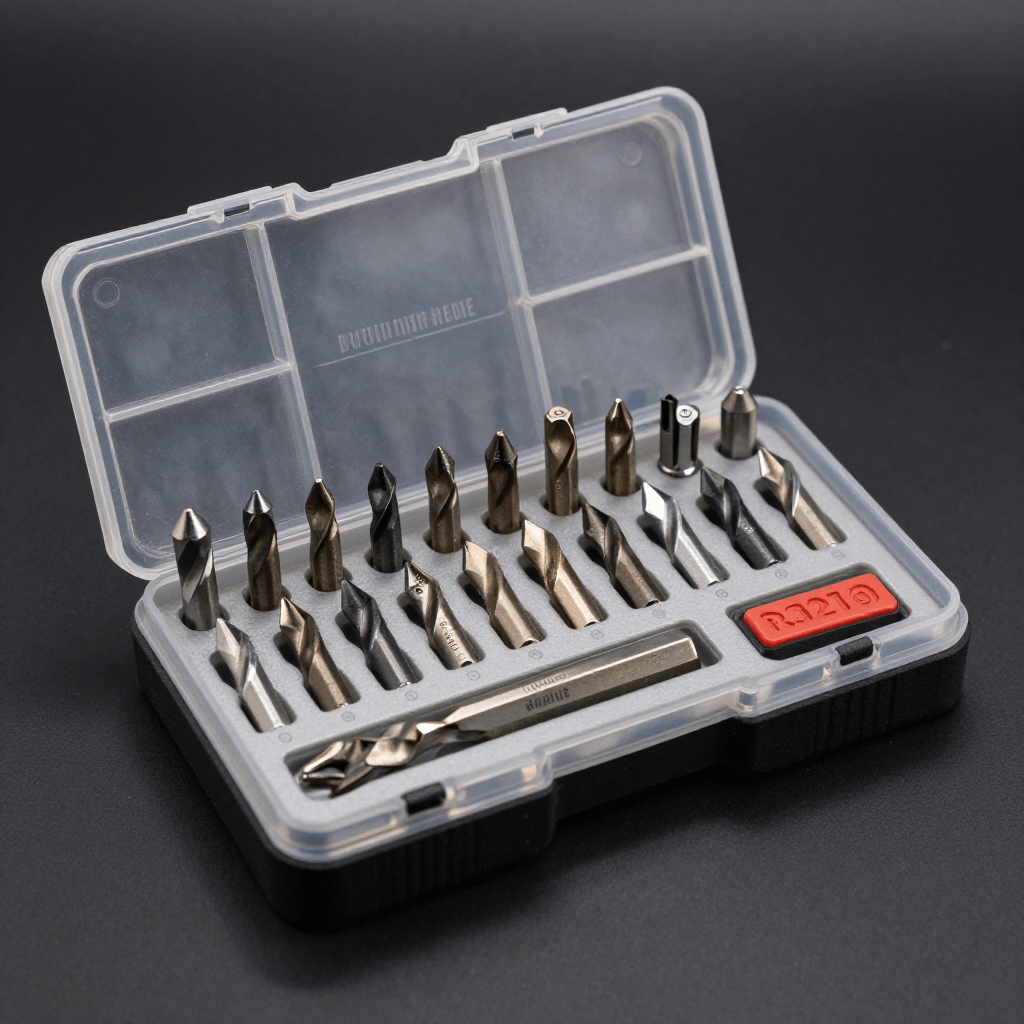
Here are the most common drill bit types and when to use them.
Twist Drill Bits
Twist drill bits are the most common bits in most sets. They have spiral grooves that remove material while drilling.
Best for:
- Wood
- Plastic
- Soft metal
- General DIY tasks
High-speed steel twist bits are a good choice for basic home use. Cobalt twist bits are better for harder metals.
Masonry Drill Bits
Masonry bits are made for hard building materials. They usually have a carbide tip that helps break through rough surfaces.
Best for:
- Brick
- Concrete
- Stone
- Blocks
- Wall anchor holes
Use masonry bits with a hammer drill for better results in concrete or brick.
Brad Point Bits
Brad point bits are designed for wood. The sharp center point keeps the bit from wandering when you start drilling.
Best for:
- Hardwood
- Softwood
- Furniture projects
- Accurate pilot holes
- Clean woodworking holes
These bits reduce splintering and help create neater holes than standard twist bits in wood.
Spade Bits
Spade bits have a flat paddle shape. They cut wide holes quickly but are less precise than Forstner bits.
Best for:
- Large holes in wood
- Rough carpentry
- Running cables or pipes
- Quick drilling jobs
They are useful when speed matters more than a perfectly smooth finish.
Forstner Bits
Forstner bits create clean, accurate, flat-bottom holes. They are often used in detailed woodworking.
Best for:
- Cabinet hinges
- Dowels
- Decorative holes
- Flat-bottom drilling
- Precision woodworking
They usually cost more but deliver cleaner results.

Credit: www.ttp-hard-drills.net
What Drill Bit Material Is Best?
The best drill bit material depends on what you drill. High-speed steel works for wood, plastic, and light metal. Cobalt is better for stainless steel and hard metal. Carbide-tipped bits are best for masonry, tile, and concrete. Coatings improve heat resistance, sharpness, and bit life.
Here is how the main materials compare.
High-Speed Steel Bits
High-speed steel, often called HSS, is common, affordable, and versatile.
Best for:
- Wood
- Plastic
- Aluminum
- Light metal
- Everyday drilling
HSS bits are a solid choice for beginners and general DIY users.
Cobalt Bits
Cobalt bits are stronger and more heat-resistant than standard HSS bits.
Best for:
- Stainless steel
- Cast iron
- Hard metal
- Repeated metal drilling
They cost more, but they last longer when used on tough materials.
Carbide-Tipped Bits
Carbide-tipped bits are very hard and durable. They are designed for abrasive materials.
Best for:
- Concrete
- Brick
- Tile
- Stone
- Masonry work
They can be brittle, so avoid dropping them or applying sideways pressure while drilling.
Titanium-Coated Bits
Titanium coating reduces friction and helps bits stay sharp longer. These are usually HSS bits with a titanium layer.
Best for:
- Wood
- Plastic
- Light metal
- General drilling
They are a good upgrade from plain HSS bits for light to medium use.
Black Oxide Bits
Black oxide coating helps resist rust and improves durability. These bits are usually budget-friendly.
Best for:
- Wood
- Plastic
- Mild steel
- Home repairs
They are not as tough as cobalt bits, but they are good for common tasks.
How Do You Choose the Right Drill Bit Size?
Choose drill bit size by matching the hole to the screw, anchor, bolt, or material requirement. For pilot holes, use a bit slightly smaller than the screw’s core. For clearance holes, use a bit wide enough for the screw to pass through without gripping the top material.
Drill bit size affects the strength, fit, and finish of your work. A hole that is too small can split wood or make screws hard to drive. A hole that is too large can make screws loose and weak.
Metric vs Imperial Sizes
Drill bits usually come in two measurement systems:
- Metric sizes: measured in millimeters
- Imperial sizes: measured in inches or fractions
Choose a set that matches the screws, anchors, and fasteners you use most. A set with both metric and imperial sizes gives you more flexibility.
Pilot Holes
A pilot hole guides the screw and reduces splitting. It is especially important when drilling into hardwood, thin boards, or near edges.
Use pilot holes for:
- Wood screws
- Cabinet work
- Furniture assembly
- Door hinges
- Decking
- Shelving
The pilot hole should usually be slightly smaller than the screw’s inner core.
Clearance Holes
A clearance hole lets the screw pass through the first piece of material before gripping the second piece.
Use clearance holes when:
- Joining two boards
- Fastening panels
- Pulling two materials tightly together
This helps create a stronger joint and a cleaner finish.
How Should You Match Drill Bits to Your Project?
Match drill bits to the material first, then choose the size and style based on the hole you need. Wood needs sharp, clean-cutting bits. Metal needs heat-resistant bits. Masonry needs carbide-tipped bits. DIY users need versatility, while professionals need stronger, task-specific sets for repeated use.
Different projects put different pressure on drill bits. A set that works well for wood may fail quickly on stainless steel or concrete.
Best Drill Bits for Woodworking
For woodworking, choose bits that cut cleanly and reduce splintering.
Good options include:
- Brad point bits for accurate holes
- Spade bits for large rough holes
- Forstner bits for flat-bottom holes
- Twist bits for basic wood drilling
If you do furniture, cabinets, or finish carpentry, prioritize precision over quantity.
Best Drill Bits for Metalworking
For metal, choose bits that can handle heat and friction.
Good options include:
- HSS bits for light metal
- Cobalt bits for stainless steel
- Titanium-coated bits for general metal use
Use slower drill speeds and steady pressure when drilling metal. Lubrication can also help reduce heat and extend bit life.
Best Drill Bits for Masonry
For masonry, use carbide-tipped masonry bits. These are made to handle hard, abrasive surfaces.
Good for:
- Brick walls
- Concrete blocks
- Stone
- Cement surfaces
- Wall plug holes
A hammer drill works best for concrete and brick. A normal drill may struggle with dense masonry.
Best Drill Bits for DIY Users
DIY users usually need a versatile set rather than a highly specialized one.
A good DIY set should include:
- Twist bits
- Masonry bits
- Wood bits
- Common screw and anchor sizes
- A durable case
This type of set is ideal for small repairs, hanging shelves, assembling furniture, and basic home improvement.
Best Drill Bits for Professionals
Professionals should focus on durability, precision, and replacement availability.
Look for:
- Cobalt bits for metal
- Carbide bits for masonry
- High-quality brad point or Forstner bits for wood
- Impact-rated bits if using impact drivers
- Strong cases with labeled slots
Professional use puts more stress on bits, so cheap sets usually cost more in the long run.
How Can You Tell If a Drill Bit Set Is High Quality?
A high-quality drill bit set has strong materials, sharp cutting edges, accurate sizing, durable coatings, and good resistance to heat or rust. Trusted brands, clear labeling, a solid storage case, good reviews, and a practical warranty are also strong signs that the set will last longer.
Cheap drill bits may look fine at first, but they can dull quickly, slip, overheat, or snap under pressure. Quality matters more when drilling metal, hardwood, concrete, or tile.
Check these before buying:
- Material: HSS, cobalt, carbide, or coated steel
- Coating: titanium, black oxide, or corrosion-resistant finish
- Sharpness: clean cutting edges with no rough defects
- Shank design: fits your drill securely
- Size accuracy: clearly marked sizes
- Case quality: keeps bits organized and protected
- Reviews: look for comments about durability, breakage, and real use
Brand Reputation
A reliable brand usually offers better quality control, clearer sizing, and stronger materials. You do not always need the most expensive brand, but unknown no-name sets can be risky for heavy use.
User Reviews
Reviews help you spot real-world problems. Look for patterns, not one-off complaints.
Pay attention to comments about:
- Bits snapping
- Coating wearing off
- Dullness after light use
- Poor case design
- Inaccurate sizes
- Performance on specific materials
Warranty and Support
A warranty does not automatically mean the set is great, but it does show the brand has some confidence in the product. It also helps if a bit breaks unexpectedly during normal use.
Should You Buy a Starter Set or a Specialized Set?
Buy a starter drill bit set if you handle basic DIY tasks across wood, plastic, light metal, and masonry. Buy a specialized set if you frequently drill one demanding material, such as stainless steel, concrete, tile, or hardwood. Specialized sets usually cost more but perform better.
Starter sets are good for general use. Specialized sets are better when performance matters more than variety.
Starter Sets
Starter sets usually include multiple bit types and common sizes.
Best for:
- Beginners
- Home repairs
- Occasional drilling
- Furniture assembly
- Shelving
- Light DIY projects
They offer good value if you do not know exactly what projects you will tackle next.
Specialized Sets
Specialized sets focus on one material or task.
Examples include:
- Cobalt metal drill bit sets
- Masonry drill bit sets
- Woodworking drill bit sets
- Tile and glass drill bit sets
- Forstner bit sets
Choose these when you need cleaner holes, better durability, or repeated use on tough materials.
Long-Term Value
The cheapest set is not always the best value. Low-quality bits wear out faster and can damage your project. A slightly better set can save money because it lasts longer, drills cleaner holes, and reduces frustration.
How Do You Maintain a Drill Bit Set?
Maintain a drill bit set by cleaning bits after use, keeping them dry, storing them in a labeled case, and sharpening dull bits when possible. Proper care prevents rust, protects cutting edges, improves drilling performance, and helps each bit last longer across wood, metal, and masonry projects.
Even good drill bits wear down if they are stored badly or used while dull. A few simple habits can extend their lifespan.
Clean After Each Use
After drilling, wipe bits with a dry cloth. Remove wood dust, metal shavings, and masonry debris.
For stubborn debris:
- Use a small brush
- Avoid leaving bits wet
- Add light oil to metal bits if needed
- Dry bits before storing them
This helps prevent rust and keeps the cutting edges cleaner.
Sharpen When Needed
Dull bits make drilling slower and increase heat. They can also burn wood, scratch metal, or wander off-center.
Signs a bit needs sharpening:
- Slow cutting
- Smoke or burning smell
- Rough holes
- Extra pressure needed
- Bit slipping or squealing
Some bits can be sharpened with a drill bit sharpener or grinding stone. Specialty bits may need more careful sharpening.
Store Bits Properly
Keep drill bits in a case with labeled compartments. This prevents loss, damage, and confusion.
Good storage habits:
- Keep bits dry
- Avoid loose storage in toolboxes
- Sort by size and type
- Replace broken bits quickly
- Close the case after use
An organized set saves time and helps you choose the right bit faster.
Credit: smartbuy.alibaba.com
Best Drill Bit Set Buying Checklist
The best drill bit set should match your most common materials, include the sizes you use often, offer durable bit materials, and come with a strong storage case. Before buying, check the bit types, coating, size range, drill compatibility, user reviews, and whether the set fits DIY or professional use.
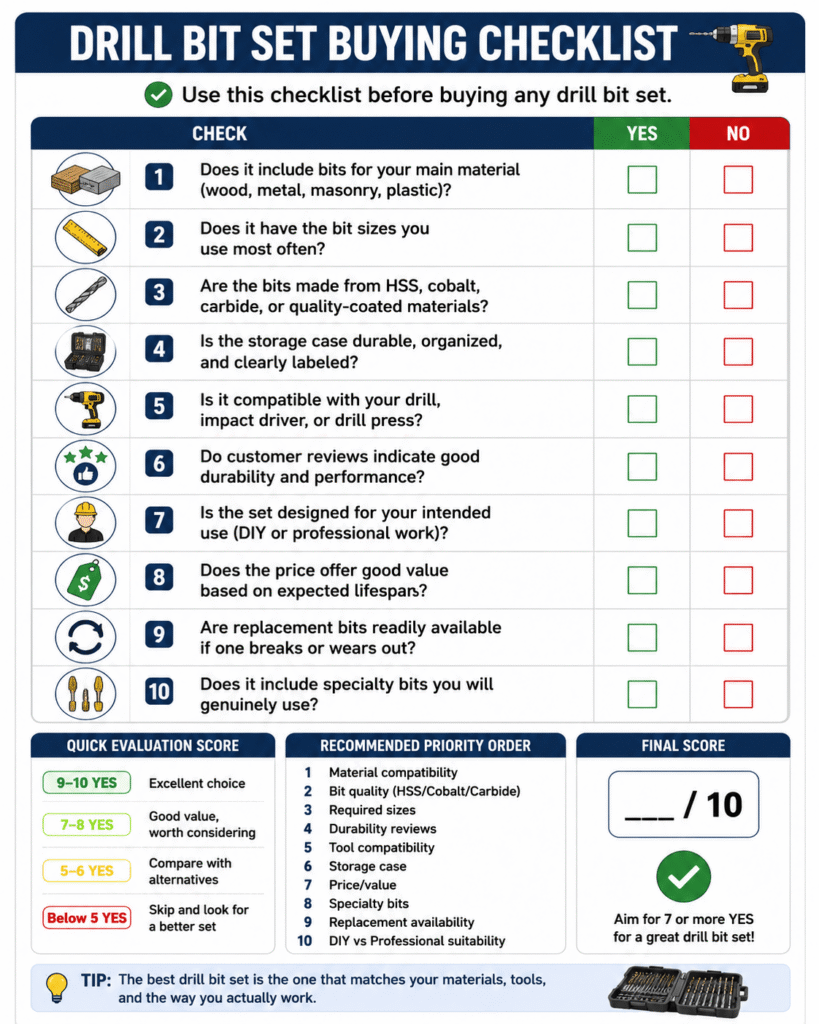
Use this quick checklist before choosing a set:
| Check | Yes ☐ | No ☐ |
|---|---|---|
| Does it include bits for your main material (wood, metal, masonry, plastic)? | ☐ | ☐ |
| Does it have the bit sizes you use most often? | ☐ | ☐ |
| Are the bits made from HSS, cobalt, carbide, or quality-coated materials? | ☐ | ☐ |
| Is the storage case durable, organized, and clearly labeled? | ☐ | ☐ |
| Is it compatible with your drill, impact driver, or drill press? | ☐ | ☐ |
| Do customer reviews indicate good durability and performance? | ☐ | ☐ |
| Is the set designed for your intended use (DIY or professional work)? | ☐ | ☐ |
| Does the price offer good value based on expected lifespan? | ☐ | ☐ |
| Are replacement bits readily available if one breaks or wears out? | ☐ | ☐ |
| Does it include specialty bits you will genuinely use? | ☐ | ☐ |
A focused, durable set is usually better than a huge set full of sizes and bit types you will never touch.
Frequently Asked Questions
The most common drill bit set questions are about bit types, material compatibility, sizes, quality, and beginner-friendly options. In simple terms, choose bits by material first, then size, then durability. For most users, a mixed set with wood, metal, and masonry bits is the safest choice.
What Types Of Drill Bits Are Essential For Beginners?
Beginners should look for a set with twist bits, masonry bits, and wood bits. This covers most home projects, including furniture assembly, wall plugs, shelving, light metal drilling, and basic repairs.
How To Choose Drill Bits For Different Materials?
Choose drill bits based on the surface you are drilling. Use brad point or wood bits for timber, HSS or cobalt bits for metal, and carbide-tipped masonry bits for brick, stone, or concrete.
Why does drill bit size matter?
Drill bit size controls the hole diameter. The correct size helps screws, anchors, and bolts fit securely. A bit that is too small can split material, while a bit that is too large can weaken the hold.
How To Identify High-quality Drill Bit Sets?
Look for drill bits made from durable materials like HSS or cobalt. Sharp cutting edges and rust-resistant coatings indicate quality. Trusted brands often provide better performance and longer-lasting bits, saving money over time.
Are cobalt drill bits better than titanium bits?
Cobalt bits are usually better for hard metals because they handle heat well and stay strong under heavy use. Titanium-coated bits are good for general drilling but may wear down once the coating is damaged.
What is the best drill bit set for home use?
The best drill bit set for home use is a mixed-purpose set with common sizes, HSS twist bits, wood bits, masonry bits, and a labeled storage case. It should be durable enough for repairs, DIY projects, and occasional drilling in different materials.
Conclusion
Choosing the best drill bit set is easier when you focus on your real projects. Start with the materials you drill most often, then choose the right bit types, sizes, materials, and coatings. A good set should be practical, durable, organized, and easy to use.
For most DIY users, a mixed drill bit set with wood, metal, and masonry bits is the smartest choice. For tougher work, choose specialized bits such as cobalt for metal or carbide-tipped bits for masonry. Buy quality once, maintain the bits well, and your drilling jobs will be cleaner, faster, and less annoying.

Michael Harris is an experienced woodworker and power tool expert with over 12 years in woodworking. Specializing in functional, high-quality furniture, he offers expert advice on tool selection, maintenance, and sharpening for both beginners and professionals.