

The jigsaw has a well‑earned reputation as the master of curves, scrollwork and cut‑outs. But ask whether it can deliver clean, straight cuts and you’ll get a lot of hesitation. In practice, the answer is a firm yes, provided you understand the tool’s nature and employ the right techniques. Straight cuts with a jigsaw are never quite as effortless as with a circular or table saw, but for many home and workshop projects they are perfectly achievable — and often the safest, most accessible option. This guide unpacks every variable that influences straight‑line accuracy, from blade selection and machine setup to guiding methods and maintenance, so you can use your jigsaw with genuine confidence.
Understanding the Jigsaw’s Design and Why Straight Cuts Are Tricky
A jigsaw cuts by reciprocating a narrow blade up and down at high speed, typically between 800 and 3,000 strokes per minute. Unlike a circular saw where the blade is a rigid disc, the jigsaw blade is a thin metal strip supported only at the top by the tool’s clamp mechanism. Most modern jigsaws also add some form of orbital or pendulum action — a forward‑and‑back oscillation designed to clear chips faster, which inherently pushes the blade away from a dead‑straight path. You can also read our guide on how to maintain your brad nailer.
The baseplate (or shoe) rides on the workpiece surface, but because the blade is unsupported below the stock and the baseplate is relatively short, the saw can twist or wander if even light side pressure is applied. This fundamental flexibility is the main reason freehand straight cuts often drift. When you understand those dynamics, you can systematically compensate for them.
Blade Selection: The Foundation of a Straight Cut
Your choice of blade is the single most important decision. A blade that is too narrow, too coarse, or dull will make straight cutting nearly impossible. You can also read our guide on how to use an angle grinder to cut metal.
Blade Width and Stiffness
Wider blades resist bending and twisting, so always pick a dedicated "straight cut" or "clean cut" blade rather than a slim scrolling blade. A blade that measures at least 6–8 mm across the body (not just at the teeth) holds a line far better. Some manufacturers label these as "Precision for Wood" or "Extra‑Wide" blades.
Tooth Count and Kerf
- Coarse teeth (6–10 TPI): Fast material removal, but leave a rougher edge and are more prone to grabbing, especially in plywood.
- Medium teeth (10–14 TPI): A versatile balance for general straight‑cutting in softwoods and manufactured boards.
- Fine teeth (14–20 TPI): Deliver noticeably cleaner cuts with reduced splintering. Ideal for hardwood, veneered plywood and melamine.
Most straight‑cut blades use a ground, taper‑cut tooth profile that slices rather than tears. Look for blades marked "clean for wood" or "fine finish." You can also read our guide on how to maintain your circular saw.
Material‑Specific Blades
- High‑Carbon Steel (HCS): Good for solid wood and plywood, economical but dulls faster in hard materials.
- Bi‑Metal (HSS + HCS body): Excellent combination of flex resistance and durability; they stay sharp longer and are less likely to snap. These are the go‑to for regular straight‑cut work.
- Carbide‑Grit or Edge: Essential when cutting laminate flooring or cement‑backer board straight, where standard blades wear out in seconds. If you’re working with sheet metal, a jigsaw designed specifically for metal cutting makes the task far smoother.
| Blade Type | Typical TPI | Best Straight‑Cut Application | Outcome |
|---|---|---|---|
| Wide HCS wood blade | 10–14 | Softwood framing, construction ply | Fast, decent edge |
| Taper‑ground fine‑finish blade | 14–20 | Hardwood boards, birch ply, melamine | Minimal splintering |
| Bi‑metal straight‑cut blade | 10–18 | Mixed materials, long life | Clean, durable |
| Carbide‑edged blade | 8–12 | Laminate flooring, fibre cement | Accurate, resists wear |
| Down‑cut blade | 10–14 | Veneered panels, countertops | No top‑face tear‑out |
When in doubt, refer to the comprehensive blade selection charts that manufacturers like Bosch publish on their official resource portal.
Common Reasons Your Jigsaw Won’t Cut Straight
Even with the right blade, several factors can still send your cut line wandering:
- Excessive feed pressure: Pushing the saw too hard flexes the blade and overrides the natural cutting rhythm. Let the blade pull the tool forward.
- Dull or damaged blade: A blunt blade generates heat and vibrates, which encourages drift. Swap blades every few projects, or immediately if you feel resistance.
- Orbital action set too high: For straight cuts, dial the orbital setting to zero or its lowest notch. High orbital settings agitate the blade out of a clean plane.
- Misaligned baseplate: If the shoe isn’t perfectly perpendicular to the blade, the saw will constantly fight you. Check and recalibrate it regularly.
- Unsecured workpiece: A panel that shifts or vibrates will cause the blade to bind and follow a crooked path.
- Not using a guide: Freehanding a straight line relies entirely on your hand‑eye coordination; a simple straight‑edge guide removes that variable.
In practice, a quick diagnostic exercise is to clamp a perfectly straight scrap board as a fence, set a fresh blade, zero the orbital action, and make a test pass. If the cut is still off, the baseplate or blade guide roller likely needs attention — or you may be twisting the tool mid‑cut without realising it.
Step‑by‑Step Technique for Straight Cuts
Master these steps and you’ll consistently hit your layout lines.
- Mark the work with precision. Use a sharp pencil, and for ultra‑critical cuts take a marking knife to create a crisp shoulder that the blade can follow.
- Tape the cut line. Apply low‑tack painter’s tape or clear packaging tape along the path and remark. This drastically reduces surface splintering on veneered panels and plywood.
- Clamp the piece securely. Place the workpiece on a stable surface, with the offcut side supported so the board doesn’t sag or pinch the blade near the end.
- Set up a straight‑edge guide. A dedicated guide rail or a stiff clamped board acts as a fence. Measure the offset from the blade to the baseplate edge, and clamp the guide exactly at that distance from the cut line.
- Select the right blade and dial in the machine. Fit a wide, sharp straight‑cut blade, set orbital action to 0, and adjust speed — slower for metal and thick stock, faster for thin plywood, always maintaining control.
- Start the saw before touching the material. Let it reach full speed, then gently pivot the baseplate against the guide fence and ease the blade into the stock.
- Maintain steady, light pressure. Keep the baseplate riding flush against the guide, never twist the rear of the saw, and advance at a pace that doesn’t let the motor labour.
- Watch for drift and react early. If you see the blade start to veer, stop the saw, back it out slightly, and realign. Forcing it back on line mid‑cut usually ruins the edge.
- Support the cutoff. On the last few centimetres, support the free offcut so it doesn’t break away and splinter the end grain.
- Add a zero‑clearance insert. A thin plywood or acrylic sub‑base attached to the jigsaw shoe minimises tear‑out on both sides of the cut and improves stability.
With this sequence, even a well‑reviewed beginner‑friendly jigsaw can deliver furniture‑grade results right out of the box. You can also read our guide on jigsaw safety tips for diyers.
Using Guides, Fences and Jigs for Repeatable Precision
Freehanding a straight line should be the exception, not the rule. Rely on jigs that lock in your line.
- Shop‑made cutting guide: A straight 1×4 or aluminium channel clamped to the workpiece is the simplest fence. Make sure it extends the full length of the cut.
- Dedicated guide rails: Several jigsaw brands offer compatible guide‑rail adapters that slide along a precision track, similar to a track saw. They eliminate offset calculations and are ideal for long rip cuts.
- Parallel guide attachment: The simple bar that comes with most jigsaws works well for edge‑parallel rip cuts up to about 200 mm wide. For accuracy, measure the distance from the blade teeth to the guide shoe and set the bar precisely.
- Sawboards: Build a single‑use straight‑cut jig from a strip of plywood glued or screwed to a wider base; the base’s edge rides against a clamped straight‑edge and your jigsaw follows a perfectly straight path every time.
- Anti‑splinter inserts: Many professional blades now come with a clear plastic insert that snaps into the baseplate, providing 360‑degree chip support.
 A jigsaw making a guided straight cut through plywood — note the clamp‑on fence and controlled feed speed.
Jigsaw vs. Other Tools: When a Circular Saw or Table Saw Is the Smarter Choice
A jigsaw can absolutely cut straight, but that doesn’t make it the best tool for every straight‑cutting task. Recognising when to switch saws saves time, material and frustration.
| Task | Jigsaw | Circular Saw | Table Saw |
|---|---|---|---|
| Short straight cuts (<300 mm) | ★★★★ | ★★★ | ★★★★ |
| Long rip cuts in sheet goods | ★★☆ | ★★★★ | ★★★★ (with outfeed) |
| Cut‑outs and interior plunge cuts | ★★★★★ | ☆☆ | ☆☆ |
| Precision joinery lines | ★★☆ | ★★★ | ★★★★★ |
| Portability and setup speed | ★★★★★ | ★★★★ | ★★ |
For straight cuts longer than about 450 mm in plywood or MDF, a circular saw riding against a guide rail will give you a faster, cleaner result. If you need repeatable, glue‑ready edges for cabinet joinery, a table saw is the benchmark. That said, the jigsaw shines where safety and versatility are paramount — it’s far less intimidating than a spinning blade, and it can cut out a sink opening without overcuts. When your project involves both curves and the occasional straight line, owning a selection of power saws suited to home improvement broadens your capability enormously.
If you currently only have a jigsaw, consider complementing it with a corded circular saw that you maintain well. Keeping your circular saw running smoothly and knowing how to replace a circular saw blade correctly will dramatically expand your straight‑cutting productivity without needing a workshop full of machines.
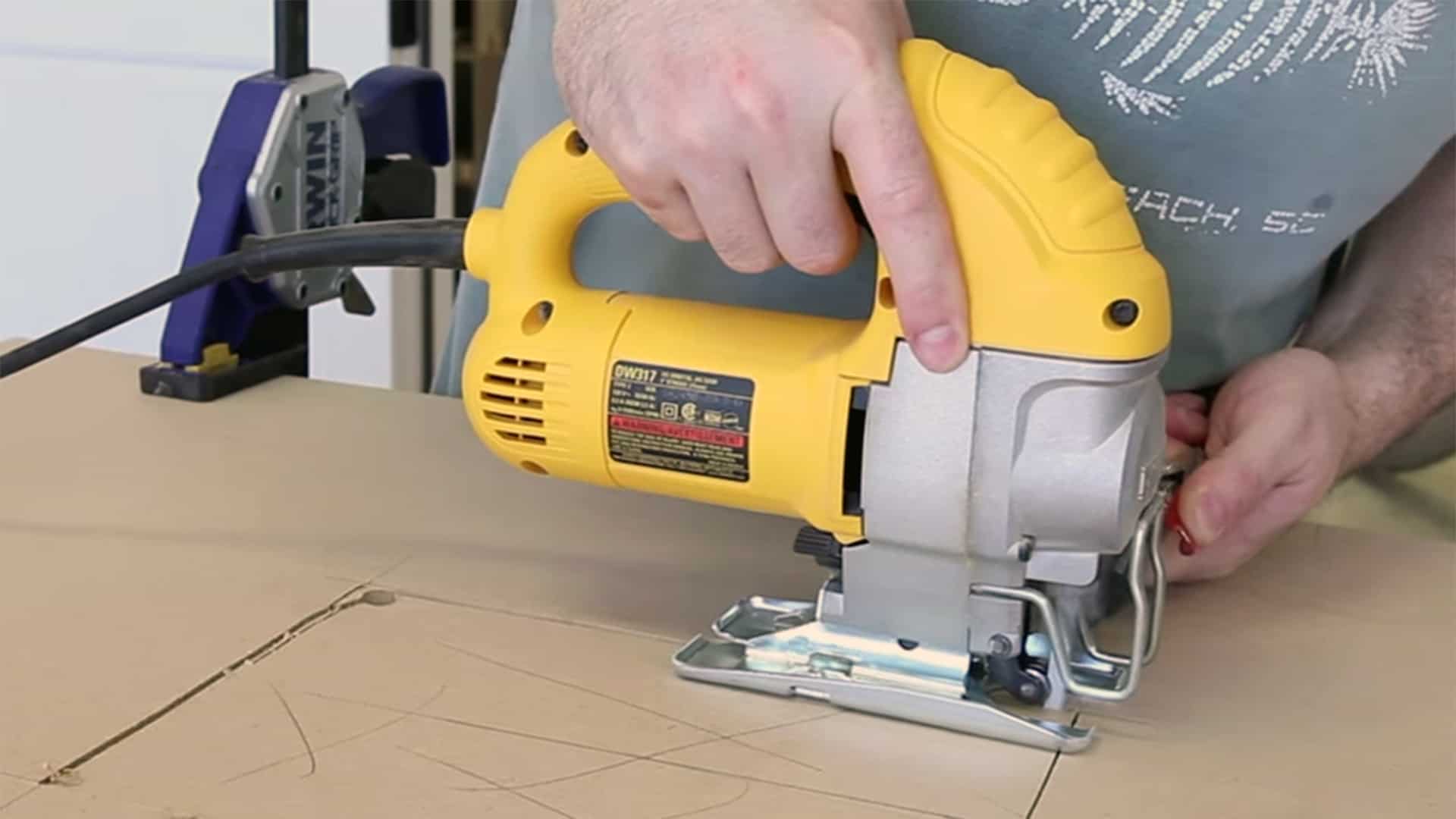 Blade wander is clearly visible when a jigsaw is pushed too hard or the blade is too narrow — a reminder to use a guide.
Jigsaw Features That Improve Straight‑Cut Accuracy
Not all jigsaws are created equal. If you’re shopping for one that handles straight cuts reliably, pay attention to these details:
- Orbital‑action control: A dial with a distinct ‘0’ position allows you to completely deactivate pendulum motion.
- Rigid baseplate: Cast aluminium or magnesium shoes resist flexing. Plastic bases can warp under pressure.
- Blade‑guide system: A carbide guide roller or dual ceramic blocks keep the blade from moving laterally. This is arguably the single biggest factor separating a wobbly cut from a crisp one.
- Variable‑speed trigger and dial: Lower speeds improve control in dense material. Being able to match the speed to the workpiece reduces vibration.
- Dust blower and LED light: Seeing your cut line clearly matters as much as the hardware. An integrated blower keeps the path clear; an LED removes shadows.
- Tool‑less blade change: A smooth clamping system encourages you to swap blades when needed rather than pushing a dull blade through.
If you are on a tight budget, look for affordable power tool options that still offer cast bases and variable speed — they exist and can perform remarkably well once set up with care.
Safety Considerations Specific to Straight Cutting
Safety fundamentals apply every time you plug in a power tool, but straight‑cutting with a jigsaw introduces a few additional concerns.
- Wear safety glasses and hearing protection. The reciprocating blade throws fine particles and the noise can exceed 90 dB.
- Always disconnect the power source when changing blades or adjustments. This small habit prevents countless accidents.
- Keep both hands on the machine. One on the body, one on the auxiliary handle or the barrel grip, never on the base plate near the blade path.
- Use clamps, not your body. A hand holding a guide fence near the blade is a recipe for injury. F‑style or quick‑action clamps keep everything secure.
- Watch for blade pinch. As you finish a long straight cut, the kerf can close and bind the blade, causing violent kickback. Support both sides of the cut equally.
- Follow established national guidelines for power tools, including those published by the Occupational Safety and Health Administration, and adopt the safe jigsaw operation habits every experienced woodworker relies on.
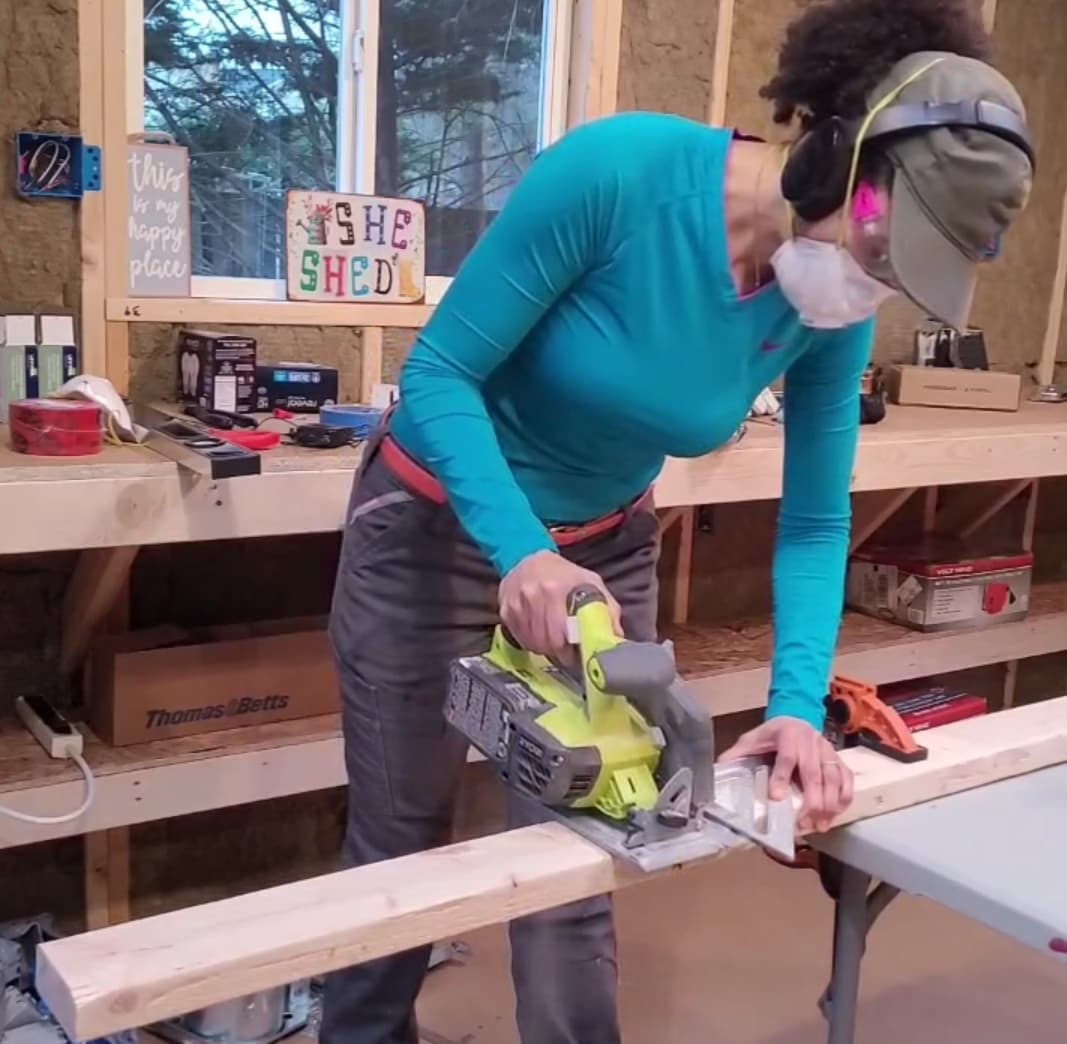 A straight‑edge guide transforms portable saws — the same principle works brilliantly with a jigsaw.
Maintenance and Troubleshooting for Consistent Straight Cuts
A well‑maintained jigsaw cuts straighter for longer. Integrate these checks into your routine:
- Inspect the blade before every session. Replace it if you see any dulling, bluing or tooth chipping.
- Clean the blade roller and guide. Sawdust buildup can push the blade off‑track. Blow out the housing after each project.
- Verify baseplate squareness. Loosen the bevel adjustment, set the shoe on a flat reference surface, and retighten at exactly 0°. A digital angle box is helpful.
- Tighten all fasteners. Vibration loosens the shoe and guard screws over time. A quick once‑over takes seconds.
- For cordless jigsaws, a weak battery induces speed fluctuations that affect straightness. If you experience erratic cutting, check the battery condition and troubleshoot your charging setup.
- Keep your other workshop tools in shape. Proper power tool maintenance isn’t just for your jigsaw — a clean, calibrated shop breeds better results across every tool you own.
Frequently Asked Questions
Can you cut a perfectly straight line with a jigsaw? A jigsaw can produce a very straight, glue‑ready edge when used with a rigid guide, a wide sharp blade and a zero‑orbital setting. However, it isn’t the tool for production‑grade perfection over long rips; a track saw or table saw will be more consistent.
Do I need a special blade to cut metal straight? Yes. Metal cutting requires a blade with tiny, closely spaced teeth (typically 18–32 TPI) and a bi‑metal or carbide construction. For thin sheet steel and aluminium profiles, using a jigsaw designed specifically for metal work greatly reduces vibration and wandering.
Why does my jigsaw blade bend to one side on long cuts? This usually stems from pushing too hard, using a blade that’s too narrow, or ignoring a bent baseplate. Switch to a wider blade, reduce feed pressure, and always clamp a fence.
Can you make a straight cut without a guide? You can, but only on short runs with light pressure and a very steady hand. Even experienced woodworkers find that a simple clamped fence dramatically improves the result, so it’s a false economy to skip it.
What’s the best jigsaw for someone starting out who needs straight cuts? Look for a cast‑metal base, easy orbital adjustment and a reliable blade‑guide system. A best jigsaw for beginners doesn’t need to be expensive, but those three features make straight cutting far more forgiving.
Conclusion
A jigsaw can absolutely handle straight cuts, as long as you treat it like the precision instrument it can be rather than a rough‑out tool. Match the blade to the job, turn off the orbital action, lock down a sturdy guide fence, and feed the saw slowly. You won’t get the blazing speed of a dedicated track saw, but you will get safe, clean, perfectly serviceable straight edges — whether you’re trimming shelves, notching deck boards or roughing out cabinet parts. Above all, remember that the jigsaw’s greatest strength is its versatility; master straight cuts with it and you’ve just levelled up every project that comes to your workshop.

Michael Harris is an experienced woodworker and power tool expert with over 12 years in woodworking. Specializing in functional, high-quality furniture, he offers expert advice on tool selection, maintenance, and sharpening for both beginners and professionals.