What is an Impact Driver Used For? Ultimate Guide to Uses
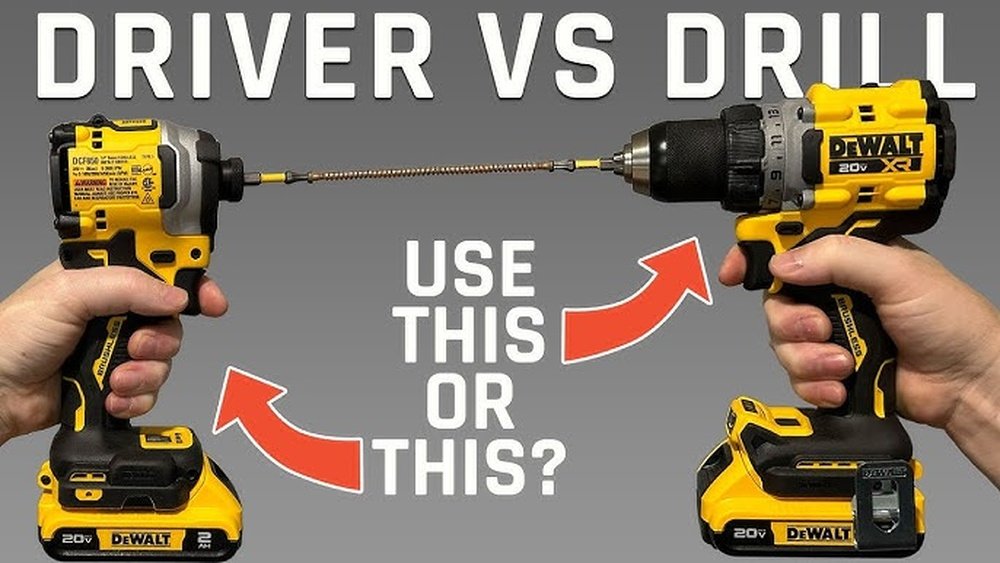
You grab a drill, pull the trigger, and the bit binds in a dense piece of framing lumber—your wrist twists hard and the screw head strips before it is even halfway seated. If that sounds familiar, you have brushed up against the exact problem an impact driver is built to solve. This compact, sharp-sounding tool does one job extraordinarily well: it hammers stubborn fasteners into place (or breaks them loose) with a fraction of the effort a standard drill demands. In the following guide you will learn precisely what an impact driver is used for, where it outperforms every alternative in your tool bag, and the handful of situations where you should leave it on the shelf.
What Exactly Is an Impact Driver?
An impact driver is a handheld power tool purpose-built for driving screws, bolts, and other threaded fasteners into dense or resistant material. On the outside it resembles a stubby drill—short head, pistol grip, variable-speed trigger—but open the chuck and the difference hits you immediately. Instead of a three-jaw keyless clamp, an impact driver uses a spring-loaded hex collet that accepts only ¼‑inch hex-shank bits. You can also read our guide on how to test a power tool battery.
How the Mechanism Actually Works
Inside the housing, a spring-loaded hammer, an anvil, and a gear assembly work together to generate concussive rotational force. When resistance rises—think of a 6‑inch lag screw biting into a treated post—the spring compresses until the hammer slips and slams forward against the anvil. That collision delivers a short, sharp burst of torque perpendicular to the bit. The cycle repeats dozens of times per second.
In practice, you notice three immediate benefits. First, the periodic impacts push the bit deeper without the tool trying to wrench your arm sideways—there is virtually zero reactional twist transmitted to the handle. Second, the hammering action resets the bit’s contact patch on the screw head after each blow, which dramatically reduces cam-out and stripping. Third, the motor can be significantly smaller than a drill motor delivering that same peak torque, which is why impact drivers are noticeably lighter and more compact. You can also read our guide on can an impact driver replace a drill.
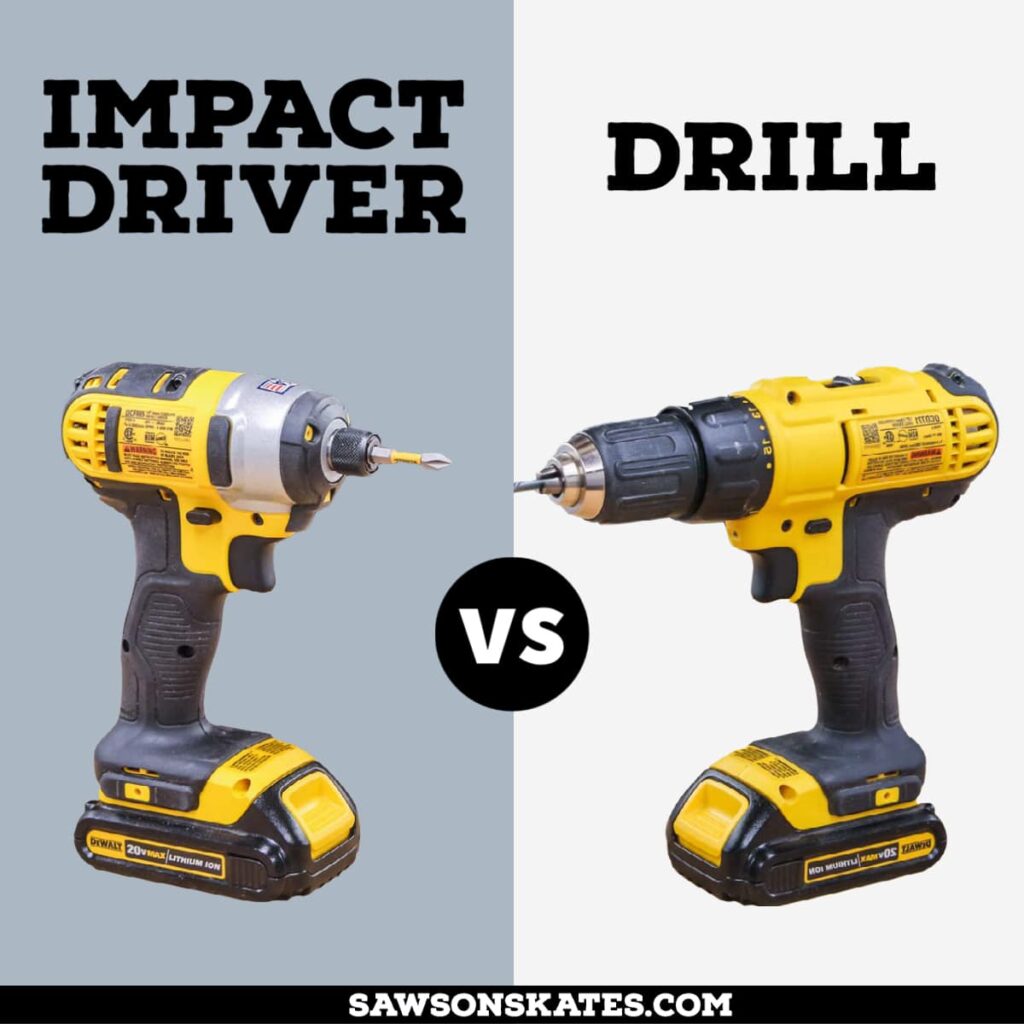 A visual side-by-side: the impact driver on the left uses a quick-change hex collet, while the standard drill driver on the right features a three-jaw keyless chuck.
Image source: www.eecusa.com
Key Specifications That Matter
Most modern cordless impact drivers sit in the 18‑V to 20‑V max platform range, with brushless motors now the default standard for anything beyond entry-level kits. Torque output for a mid-range brushless model lands between 1,500 and 2,200 in‑lbs, which is more than enough to sink a ½‑inch lag bolt flush into oak. Higher-end models designed for automotive or heavy-gauge steel fastening cross the 2,500 in‑lbs mark. Speed runs from a low-gear 0–1,200 RPM up through roughly 3,400 RPM on high gear, with impacts per minute (IPM) typically ranging from 3,500 to over 4,000. More IPM translates to a smoother, faster driving feel when the tool transitions into continuous impact mode.
Impact Driver vs. Drill Driver: The Real Differences
Calling an impact driver a “drill” creates confusion that trips up DIYers more than any other tool mix‑up. The two tools overlap in only one duty—spinning a fastener—and diverge on practically every design point after that. You can also read our guide on how to choose the best drill bit set.
| Aspect | Impact Driver | Drill Driver |
|---|---|---|
| Chuck type | ¼‑in hex collet only | ⅜‑in or ½‑in keyless three‑jaw chuck |
| Torque delivery | Concussive hammer‑and‑anvil bursts | Continuous rotational force |
| Reactional twist on the wrist | Near zero | High at stall torque |
| Drilling holes | Not designed for it; hex‑shank drill bits exist but are a compromise | Designed for it; holds round‑shank bits securely |
| Best fastener size | #6 screws through large lags and concrete anchors | Small screws, delicate materials, finish hardware |
| Weight | Lighter, shorter head length | Often heavier with a longer body |
| Noise level | Loud, metallic impact clatter (85‑100 dB) | Quieter motor whine (70‑80 dB under load) |
A key clarifying point: you can drill with an impact driver using hex‑shank drill bits, but the runout is noticeable, the flutes clog faster, and you lose the smooth, clean hole a true drill produces. Driving hundreds of 3‑inch screws in a day with a hammer drill function engaged beats your ears up quickly, but the same task with an impact driver becomes almost effortless—that is the exchange.
Common Applications Where an Impact Driver Excels
Driving Long Screws Without Pilot Holes
Long, coarse-threaded construction screws—from 3‑inch deck screws to heavy gauge cabinet screws—challenge a drill driver the moment the screw threads fully engage. A drill will stall, cam out, or demand two hands and an iron grip to finish the seat. An impact driver, by contrast, hits its power band as soon as the screw head meets resistance. In dozens of framing and decking projects, switching to an impact driver consistently cuts the time spent driving #10 and larger fasteners by about a third while leaving far fewer stripped heads behind.
Loosening Seized or Rusted Fasteners
A stuck bolt on a lawnmower deck or a hinge screw that has rusted into place abuses a standard drill: the motor bogs, the chuck jaws slip, or the bit rounds out the socket. An impact driver’s concussive action frees that bond incrementally without steadily increasing static load. The key technique here is to push firmly into the screw while pulsing the trigger until you feel it break free, then let the tool spin it out. This same principle makes an impact driver indispensable for brake caliper bolts, exhaust flange bolts, and starter fasteners when working on cars—though for true high-torque automotive bolts, a dedicated impact wrench for heavy auto work is worth owning.
Construction and Framing Tasks
On a job site, impact drivers appear everywhere: in a framer’s belt driving structural screws, in a drywall crew’s lineup hanging cement board, and in a carpenter’s hands assembling treated-lumber decks. The tool’s short head length fits conveniently between 16‑inch on‑center studs and inside cabinet carcasses. A common workflow pairs an impact driver for fastening with a drill driver for pilot holes; swapping constantly used to be irritating, but modern tandem kits have made owning both on a single battery platform nearly frictionless. For anyone building a home workshop from scratch, this two-tool setup cuts assembly time dramatically, and a good drill for basic household tasks rounds out the kit for lighter jobs where an impact driver is overkill.
Specialized Uses Beyond General DIY
Automotive Repairs
In the garage, an impact driver handles fasteners that a drill would never touch. Removing a stuck rotor set screw, freeing a bell housing bolt, or driving hardened self-tappers into a frame rail all fall inside its performance envelope. However, be strict about bit quality: a cheap Phillips bit will shatter under repeated impact in an automotive setting. Use impact-rated hex sockets and ¼‑inch adapters for medium-duty auto jobs; for lug nuts and axle nuts, step up to a dedicated impact wrench. Mechanics often keep a cordless tool set optimized for tight spaces on the cart, and selecting models with compact tool heads and high torque avoids bruised knuckles around engine bays.
Furniture Assembly and Finish Carpentry
Assembling flat‑pack furniture with an impact driver sounds reckless—you risk blowing through cam‑lock dowels and stripping particleboard—but with care it becomes fast and clean. The trick is the variable‑speed trigger: feather the tool until the screw head kisses the surface, then stop. A driver with a fine‑tuning control mode or “assembly” setting handles delicate #6 and #8 screws in soft material without over-driving them. When you graduate to building bookcases, bed frames, or custom cabinetry, you will quickly appreciate high-quality bits from a reliable precision fastening driver that gives you confidence behind each squeeze.
Outdoor and Hardscape Projects
Driving ledger board lags, concrete anchors, and timber screws into pressure‑treated wood puts enormous torque demands on a power tool. Impact drivers thrive here because they sustain peak driving force without drawing the high sustained current that overheats a drill motor. Use a ¼‑inch hex‑to‑socket adapter for lag bolt heads and keep an extra charged battery close at hand; a heavy outdoor build can drain a 5‑Ah pack faster than shop‑based tasks.
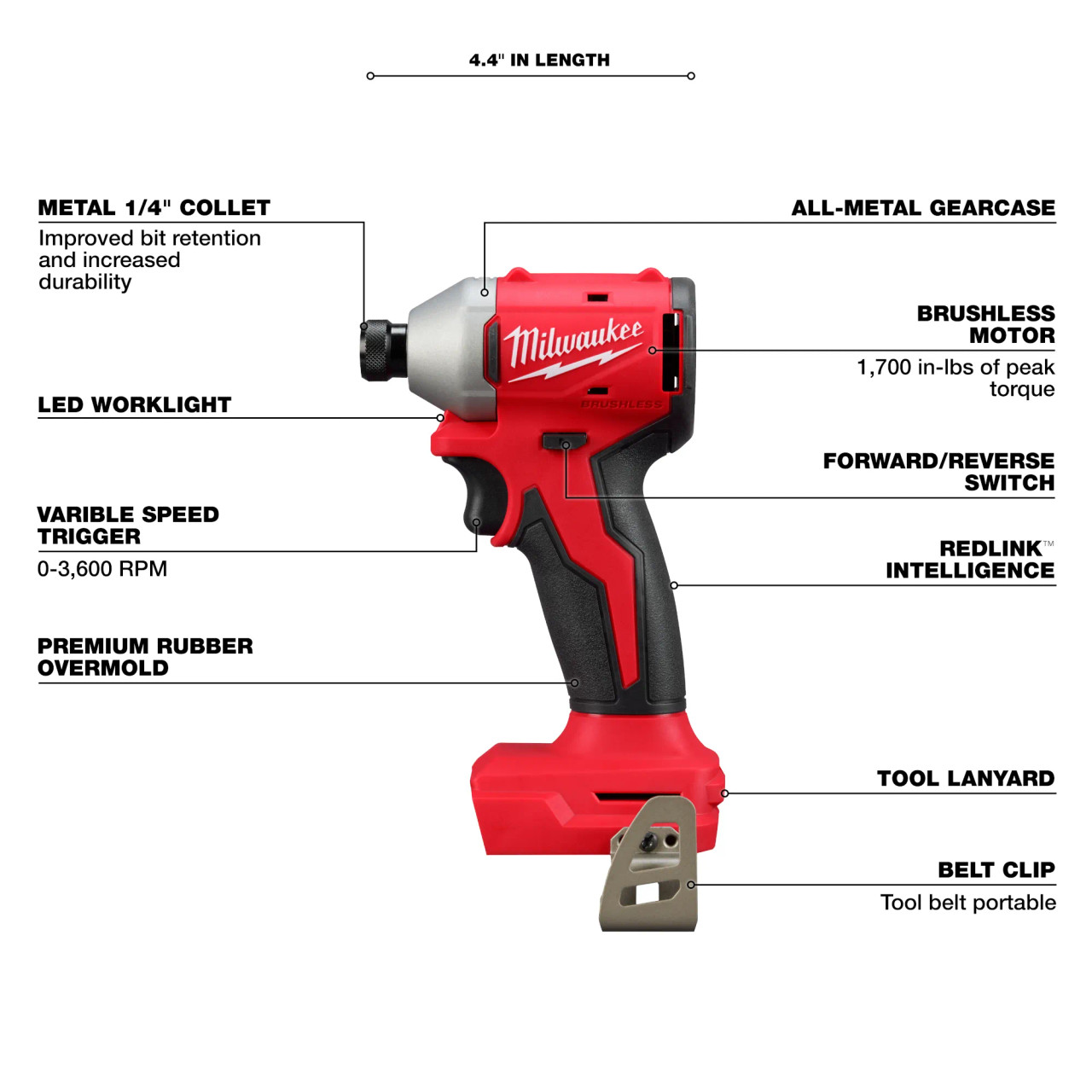 The ¼‑inch quick-change collet accepts hex‑shank bits with a push; no key or twisting required to swap bits mid‑task.
Image credit: fisi-on.com
When an Impact Driver Isn’t the Right Choice
For all its strengths, the impact driver is not a universal fastening solution. Knowing its limits keeps your work faster and your parts undamaged.
Situations to reach for a drill instead:
- Drilling clean holes larger than ¼ inch in wood, metal, or plastic.
- Driving screws into soft, brittle material (plastic electrical boxes, thin MDF, acrylic).
- Installing finish hardware with delicate brass or plated screw heads that would deform under impact.
- Precision work requiring a clutch to stop at a set depth—picture hinge screws on a cabinet door.
- Anything that demands a hammer-drill mode for masonry, where you need simultaneous rotation and axial hammering.
One common mistake is forcing an impact driver to sink fasteners flush in visible furniture parts without a depth-controlled approach. The result is often a countersunk screw sitting 2 mm below the surface in a dent. If your project involves handling fine wood joinery, pairing the impact driver with a drill for pilot holes and final seating is the reliable path.
Essential Bits, Sockets, and Accessories
An impact driver’s performance is only as good as the bits you put in it. Standard chrome‑vanadium bits shatter quickly under repetitive impact; dedicated impact‑rated bits made from S2 tool steel or similar alloys absorb the punishment and last much longer. Start with a set containing Phillips #2 and #3, square‑drive #2 and #3, Torx T20 through T30, and a handful of hex bits from ⅛‑inch through ⅜‑inch. A ¼‑inch hex‑to‑socket adapter (¼‑, ⅜‑, and ½‑inch drive) instantly turns your driver into a light‑duty power ratchet for socket‑head bolts. Magnetic bit holders and a slightly longer 2‑inch power bit reduce fumbling when working in awkward hand positions. Adding a right‑angle adapter is a small investment that unlocks tight‑clearance work behind appliances and inside cabinets.
 A standard drill driver shows its adjustable clutch ring around the chuck—a feature missing from impact drivers, which rely on trigger control and feel for setting depth.
Image credit: www.sirelmagroup.it
How to Choose the Right Impact Driver for Your Work
Battery Platform and Voltage
Most 12‑V impact drivers are lightweight, compact companions for assembly and cabinet work, but they struggle driving 3‑inch or longer screws into hardwood. The sweet spot for a mixed‑use shop is the 18‑V / 20‑V max class. Within that range, brushless motors offer longer runtime and fewer maintenance concerns, making them standard in all but the most budget‑oriented tools. If you already own cordless tools on a particular platform, staying within that ecosystem keeps batteries interchangeable and eventually saves significant money—an important consideration when building a beginner‑friendly power tool collection.
Torque, Speed, and Control Settings
You want at least 1,500 in‑lbs of torque for serious driving tasks. Models above 2,000 in‑lbs handle lag bolts and automotive work with ease. Speed from 0–2,800 RPM on high gear is typical; more matters less than clean trigger modulation. The most useful ergonomic feature to look for is a multi‑mode switch—often labeled “precision mode” or “assist mode”—that limits torque in the initial drive before ramping up. This single feature prevents over‑driving in soft material better than any amount of wrist discipline. If you frequently drive fasteners in finished surfaces, a tool that offers fine trigger response and low‑speed adjustment is worth seeking out.
Size, Weight, and Ergonomics
Head length—specifically the distance from the collet face to the back of the housing—determines fit in tight spaces. Sub‑5‑inch head lengths are common now. Weight around 2.5 to 3.5 pounds (bare tool) is comfortable for extended overhead use. The grip circumference matters more than most shoppers realize; run your hand around a display model and confirm your index finger wraps the trigger without stretching. An in‑handle battery placement (stick‑style pack) generally feels more balanced than a pod‑style base, but both are fine if the weight sits squarely under the wrist.
A decision that catches many first‑time buyers is whether to go cordless or corded. Today’s lithium‑ion batteries solve the power gap that used to exist, yet corded impact drivers rarely appear outside production‑line settings. If you are working through a large stationary project near an outlet, a quick look at the wireless freedom versus corded consistency question clarifies which fits your rhythm.
Maintenance Tips That Prolong Your Tool’s Life
Battery Care and Storage
Lithium‑ion packs last longest when stored at 30–50% charge in a cool, dry location—not left on a charger for weeks. After heavy use, let the battery cool for 15 minutes before recharging. If a battery begins blinking error codes or refuses to hold a charge, start diagnosing early, because ignoring it can cause deeper battery issues that are harder to fix. Clean the pack’s contacts with a dry cloth every few months to maintain full current flow.
Tool Body and Chuck Maintenance
After each session, blow compressed air across the collet and through the ventilation slots. Wood dust and fine metal shavings that accumulate near the anvil assembly accelerate wear and can bind the quick‑release collar. Put one drop of light machine oil on the collet collar’s sliding mechanism every few months; do not over‑oil, because excess attracts grit. Wipe the external housing with a barely damp cloth—never soak, and never use solvents on the rubber overmold. Store the tool in a case or on a shelf away from damp concrete floors to protect the electronics.
Safety Best Practices for Impact Drivers
Despite being one of the safer power tools to operate, an impact driver still demands respect for torque and fast‑moving metal. Eye protection is non‑negotiable: hardened bit tips can snap under load, sending fragments flying. Hearing protection is strongly advised during extended use, as sustained impact noise above 90 dB is common and hearing damage is cumulative. Gloves that fit snugly prevent a spinning fastener or debris from catching loose fabric, though many experienced users prefer bare hands for better trigger feedback on delicate seating.
A safety hazard unique to impact drivers is heat buildup in the bit and screw head. After driving a dozen heavy‑gauge fasteners in rapid succession, the bit tip becomes hot enough to burn skin and the screw head can retain that heat for over a minute—pause before touching anything metallic around the collet. The Occupational Safety and Health Administration provides detailed guidelines on power tool safety that apply directly to maintenance of impact drivers and their bits. Many commercial specifications for impact‑rated accessories are developed in alignment with standards recognized by organizations like ASHRAE and other engineering bodies that publish industrial tool‑use criteria.
Frequently Asked Questions
Can an impact driver be used as a drill for all drilling tasks?
No. While hex‑shank drill bits allow occasional small‑diameter holes in wood and light metal, an impact driver lacks the concentric accuracy and smooth rotation of a drill. Bore holes will have more tear‑out, and the bit wobbles under impact. For precise, clean holes, especially in metal or for dowel joinery, use a drill driver.
What size impact driver do I need for deck building?
An 18‑V or 20‑V brushless model with at least 1,800 in‑lbs of torque handles 3‑inch to 4‑inch deck screws, lag bolts, and structural fasteners with ease. Battery size of 4‑Ah or greater minimizes mid‑project swaps. Weight and grip comfort matter more for a full day of decking than a marginal torque increase beyond that threshold.
Why does my impact driver make that loud clicking sound?
The repetitive hammer‑and‑anvil impact is the source of the metallic rattle. It is completely normal and actually indicates the tool is engaging its impact mechanism correctly. If the noise suddenly changes to a grinding tone or the impacts become erratic, stop and inspect the collet and internal gears.
Are impact drivers suitable for concrete screws?
Yes—Tapcon‑style concrete screws and heavy‑duty masonry screws seat well with an impact driver once a properly sized pilot hole is drilled with a hammer drill. The concussive force helps drive the threads into the hole without snapping the screw. Use a hex‑shank socket matched exactly to the screw head.
How do torque specifications on an impact driver compare to a drill?
Impact driver torque ratings are measured under impact loading and represent a peak value, while drill torque is measured at stall. The numbers are not directly comparable; 1,800 in‑lbs on an impact driver behaves materially stronger in hard driving than the same figure on a drill driver. What matters in practice is how effortlessly the tool seats large fasteners without stalling or stripping.
Conclusion: Where the Impact Driver Fits in Your Workflow
An impact driver is a specialized tool that does one broad category of work—fastening with high‑torque demand—more cleanly, quickly, and with less physical toll than any alternative currently available at a competitive price. It does not replace a drill driver; it complements one. In a well‑rounded toolkit, you reach for the drill when holes, clutch stops, or delicate materials are the priority, and you grab the impact driver the moment you face a screw longer than two inches, a bolt that last turned a decade ago, or a stack of lumber waiting to become a structure.
Before you commit to your first (or your next) impact driver, spend a few minutes comparing features across a curated set of affordable, high‑value models in a list focused on budget‑conscious tool selections. The right driver paired with the right technique is the difference between a fight with every fastener and a job that unfolds exactly as fast as you can position the next piece.

Michael Harris is an experienced woodworker and power tool expert with over 12 years in woodworking. Specializing in functional, high-quality furniture, he offers expert advice on tool selection, maintenance, and sharpening for both beginners and professionals.