Best Budget-Friendly Power Tools for DIY Projects: Smart Picks That Save Money and Actually Get Used
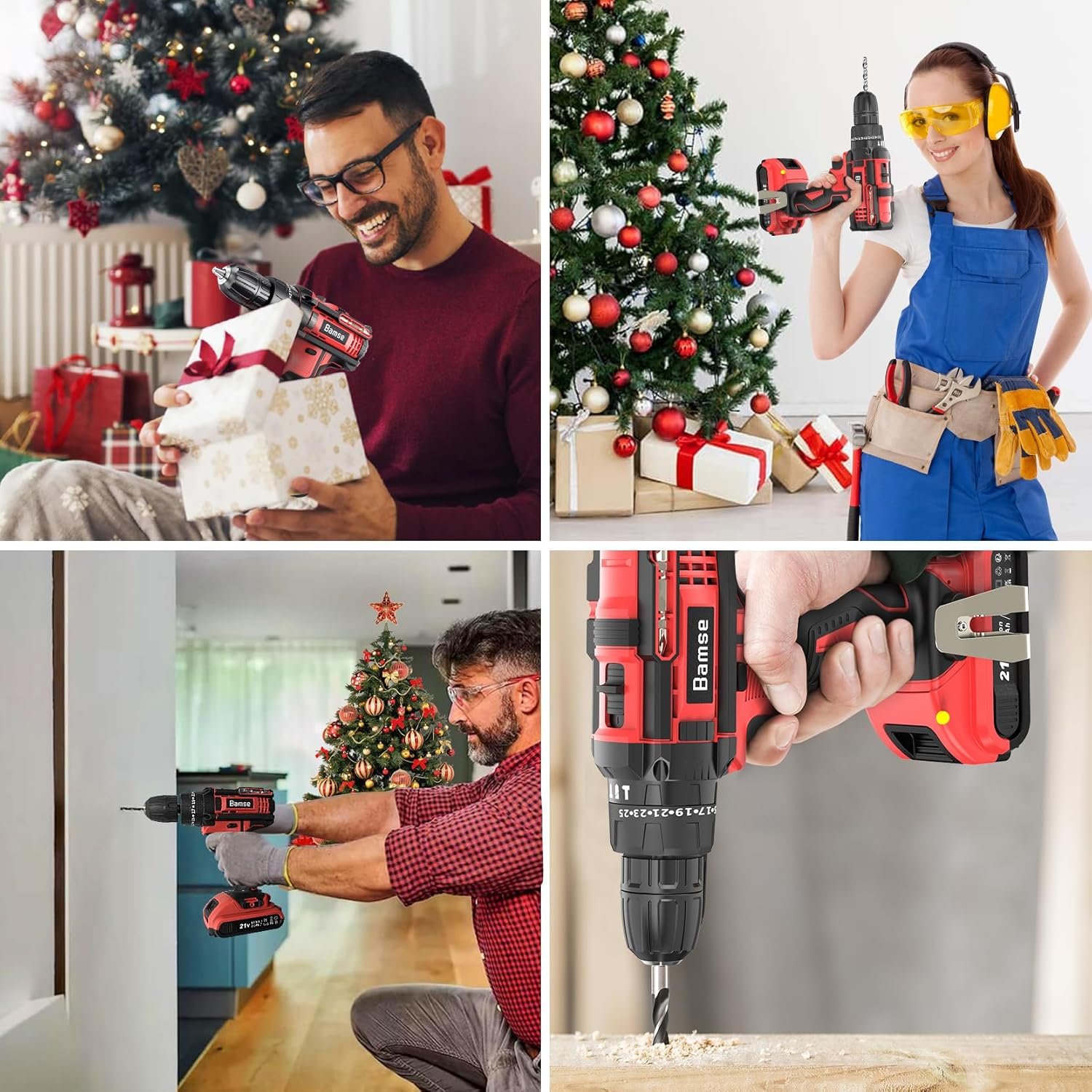
Best Budget-FriFinding the best budget-friendly power tools for DIY is not about buying the cheapest tool on the shelf. It is about choosing tools that solve real home repair problems, feel comfortable to use, and give you enough power without forcing you to pay for professional features you may never need.
For most homeowners, a smart DIY setup starts with a cordless drill, a few cutting tools, basic accessories, and reliable safety gear. The best budget tools should help with furniture assembly, light woodworking, home repairs, trim work, craft projects, and weekend upgrades without making every project feel like a wrestling match with plastic and disappointment.
What Are the Best Budget-Friendly Power Tools for DIY Projects?
The best budget-friendly power tools for DIY projects are affordable, easy to control, and useful across common home tasks like drilling, fastening, cutting, sanding, trimming, and small repairs. A good starter setup usually includes a cordless drill, rotary tool, miter saw, oscillating blades, and helpful accessories that reduce frustration.
A good DIY tool should answer three questions quickly:
- Can it handle the projects you actually do?
- Is it comfortable enough to use for more than five minutes?
- Does it include the accessories needed to start working right away?
For beginners and casual DIYers, the best value usually comes from tools that offer:
- Cordless convenience
- Adjustable torque settings
- Keyless chuck or tool-free changes
- LED work light
- Lightweight design
- Included bits, blades, or accessories
- Battery and charger included
- Enough power for light to medium home projects
Quick Comparison: Best Budget DIY Power Tools
A quick comparison helps DIY buyers choose faster by matching each tool to a clear use case. Instead of comparing only price, look at the project type, included accessories, comfort, power level, and limitations. This makes the buying decision easier and reduces the chance of choosing the wrong tool.
| Tool | Best For | Main Benefit | Best Buyer |
| Bamse 21V Cordless Drill | Home repairs and light woodworking | Strong starter drill with useful bit set | DIY beginners |
| PULITUO 20V Drill Set | Furniture assembly and repairs | Two batteries and torque control | Value-focused users |
| FADAKWALT 12V Drill | Light-duty home tasks | Compact and beginner-friendly | Casual homeowners |
| WEN Rotary Tool Kit | Crafts, sanding, polishing, detail work | Flexible shaft and many accessories | Hobbyists |
| HORUSDY Magnetic Pickup Tool | Retrieving screws and bolts | Saves time in tight spaces | Garage users |
| WEN Scroll Saw | Detailed woodworking | Better precision for curves and patterns | Woodworking DIYers |
| AIFICUT Oscillating Blades | Cutting wood, plastic, and metal | Affordable blade upgrade | Multi-tool users |
| Metabo HPT 10-Inch Miter Saw | Trim, framing cuts, angled cuts | Accurate cutting on a budget | Weekend builders |
| Pink Cordless Drill | Basic drilling and fastening | Lightweight starter drill | Home users |
1. Best Overall: Bamse 21V Cordless Power Drill
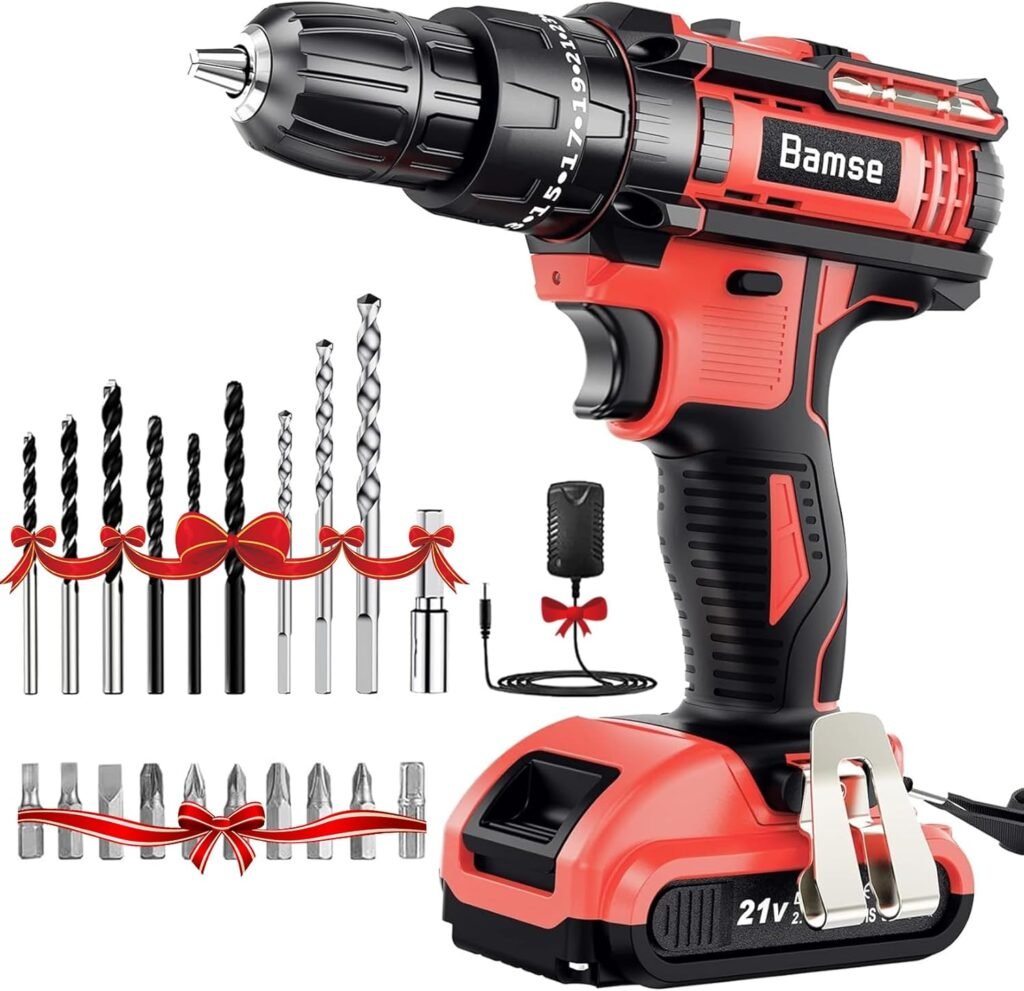
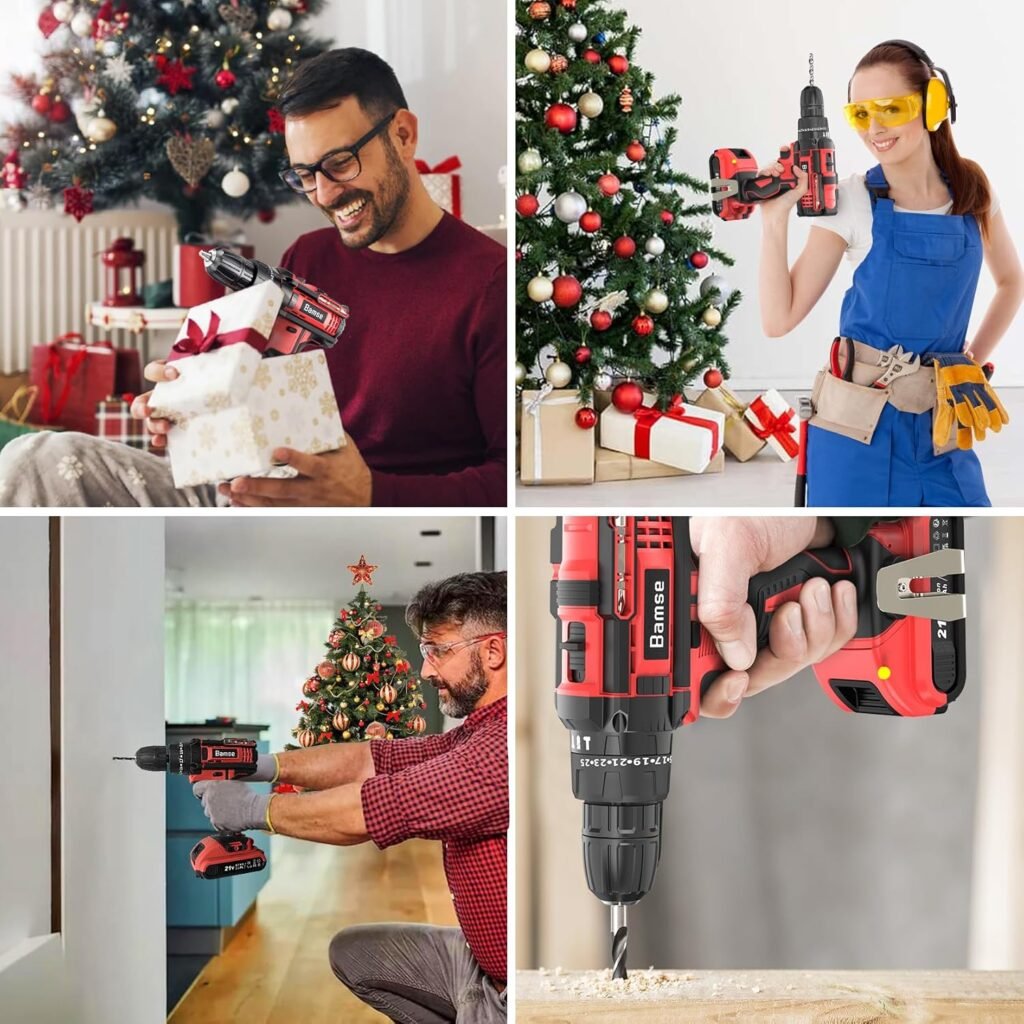
The Bamse 21V cordless power drill is a strong budget pick for DIYers who need one tool for everyday drilling, fastening, furniture assembly, and light woodworking. It offers cordless freedom, dual-speed control, an LED light, and included driver bits, making it useful for most common home repair tasks.
Why It Converts Well for DIY Buyers
This drill works well because it solves the most common beginner problem: needing a simple drill that is ready to use without buying extra accessories immediately.
Key benefits:
- 21V lithium-ion battery for cordless movement
- Dual-speed settings for drilling and screwdriving
- Included 20-piece driver bit set
- Built-in LED light for dark corners
- Lightweight body for easier control
- Good fit for light to medium projects
Best For
- Furniture assembly
- Hanging shelves
- Basic home repairs
- Light woodworking
- Weekend DIY projects
- First-time power tool buyers
Skip It If
Skip this drill if you regularly drill into dense materials, need professional-grade torque, or want a heavy-duty tool for daily jobsite use. It is better for home projects than serious construction work.
2. Best Value Drill Kit: PULITUO Compact 20V Cordless Drill Set
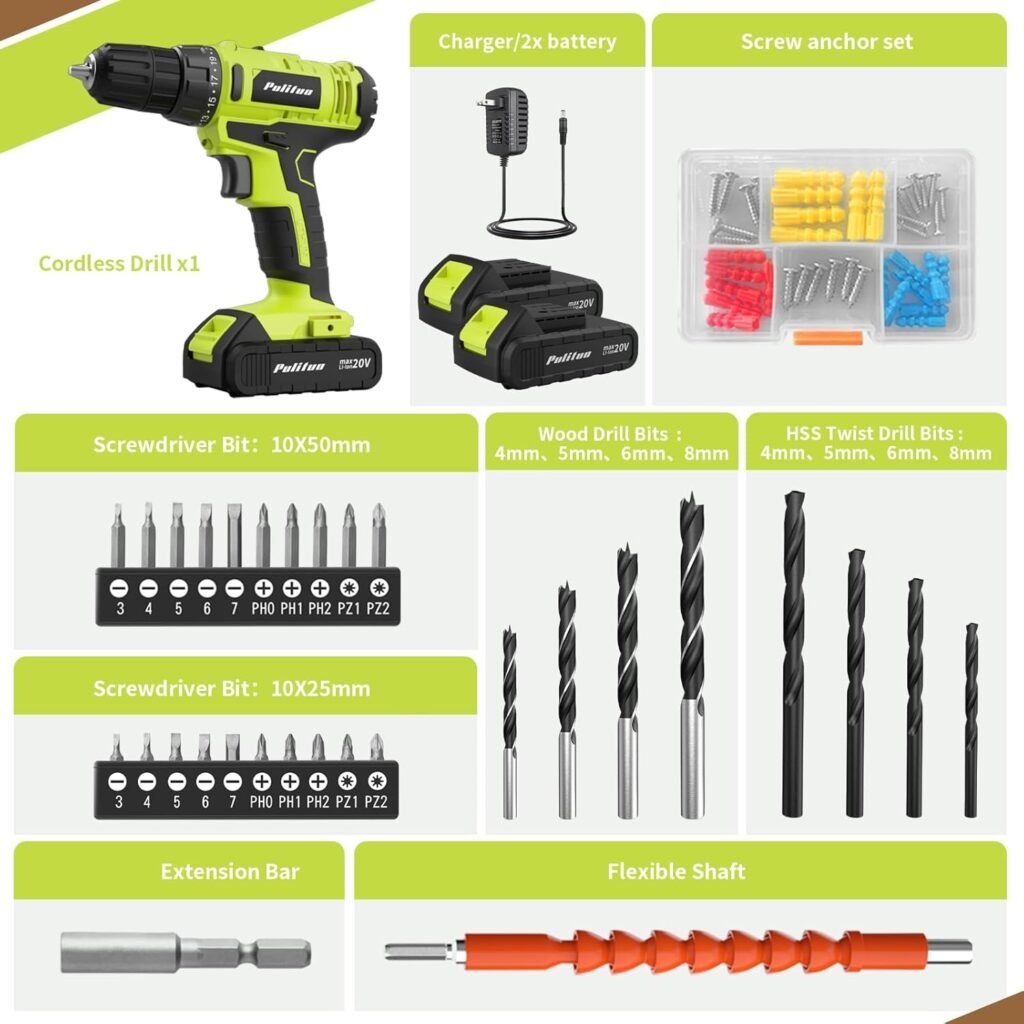
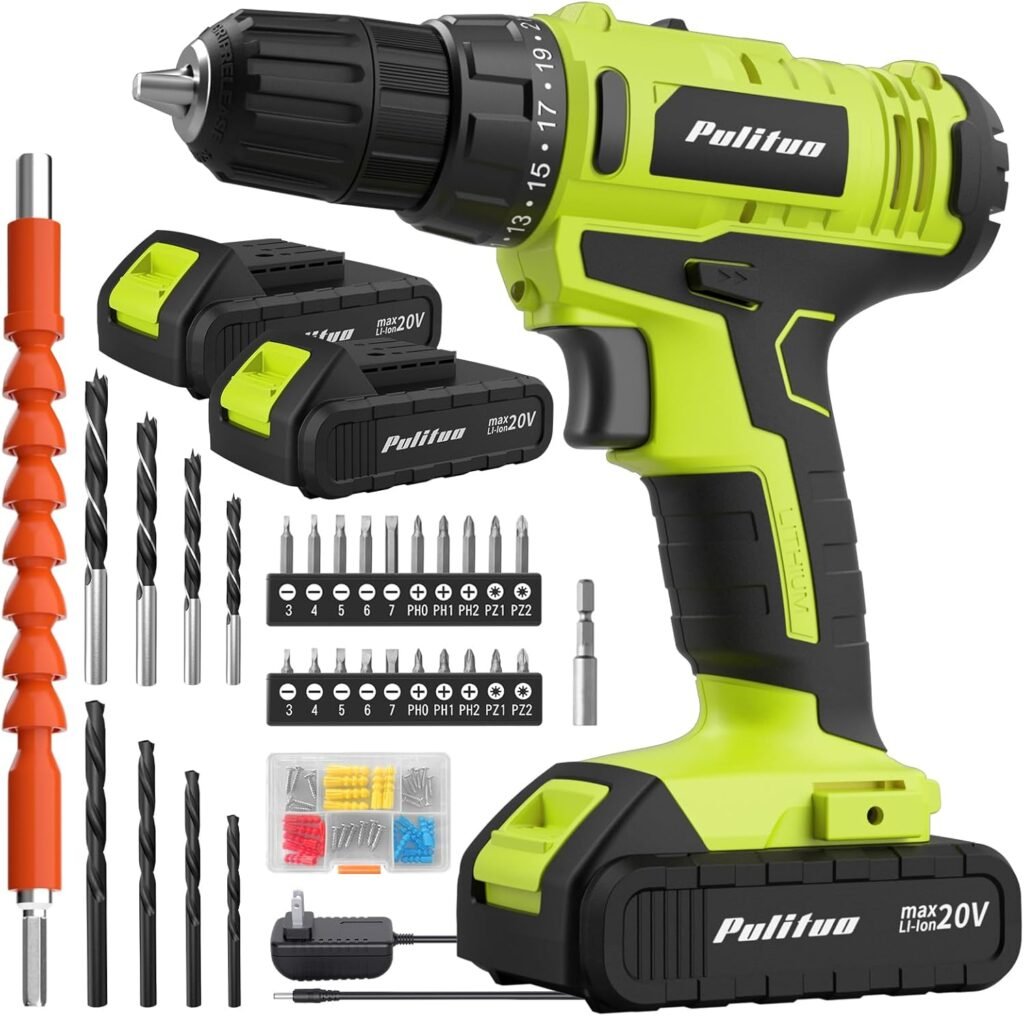
The PULITUO 20V cordless drill set is a strong value choice for DIY users who want control, accessories, and backup battery convenience. Its 21+1 torque settings, two-speed operation, keyless chuck, LED light, and included bits make it practical for home repairs, furniture assembly, and light remodeling jobs.
Why It Is a Smart Budget Buy
The biggest selling point is convenience. Many budget tools look cheap because they leave out the extras. This set gives DIYers more of what they actually need.
Key benefits:
- 20V cordless power
- Two batteries for less downtime
- 21+1 torque settings
- Keyless chuck for quick bit changes
- LED work light
- Compact grip for tight spaces
- Useful accessory kit included
Best For
- DIYers who want one complete starter kit
- People who dislike stopping to recharge
- Light remodeling
- Assembling cabinets, shelves, and furniture
- Screwdriving with better torque control
Skip It If
Skip this tool if you need very high torque for construction-grade drilling. It is designed for household and moderate DIY use, not heavy-duty framing or daily trade work.
3. Best Lightweight Drill: FADAKWALT 12V Cordless Drill Set
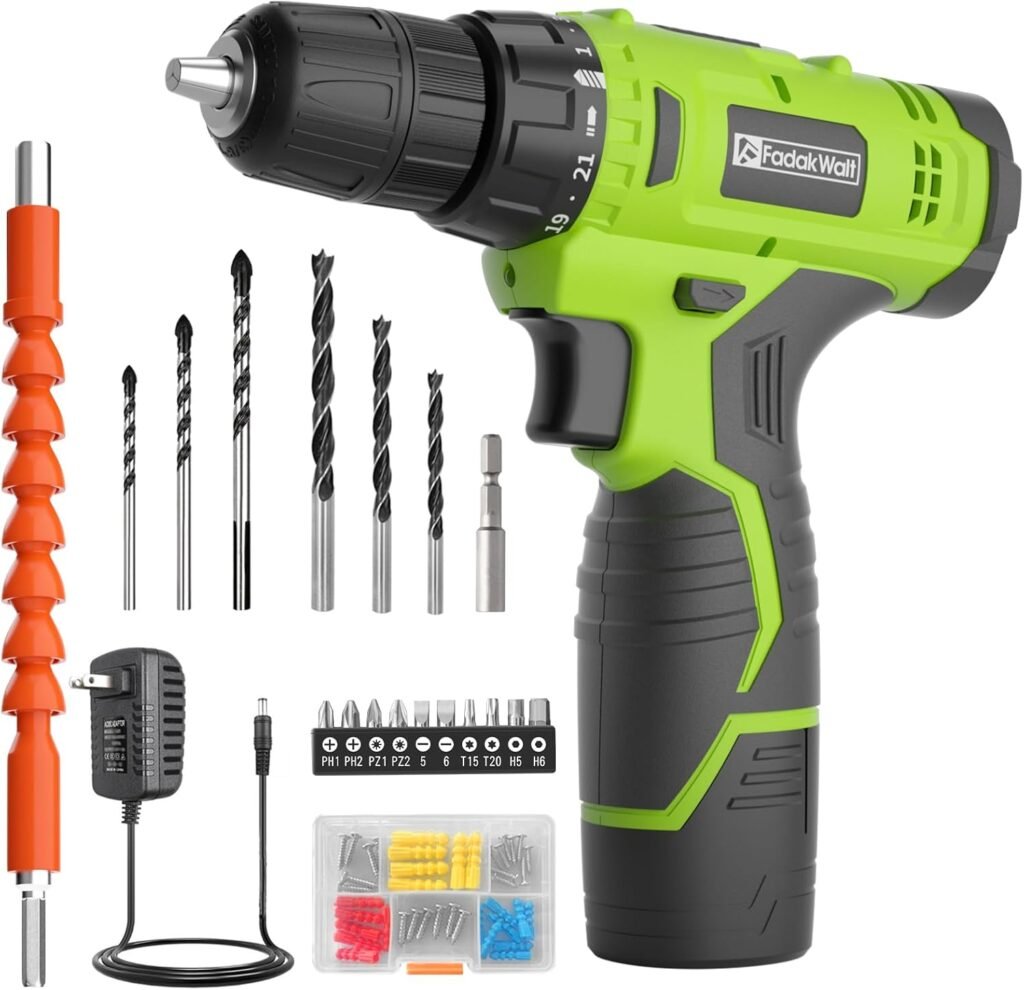
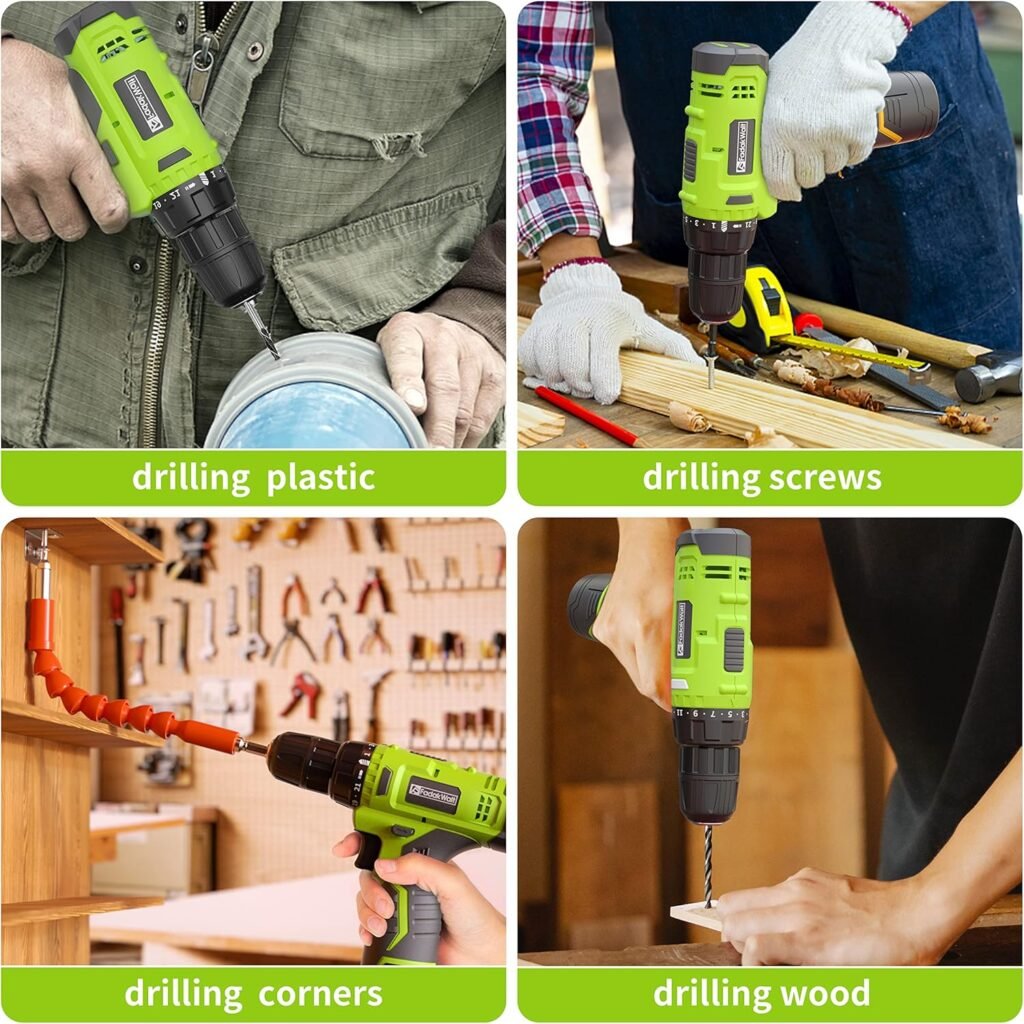
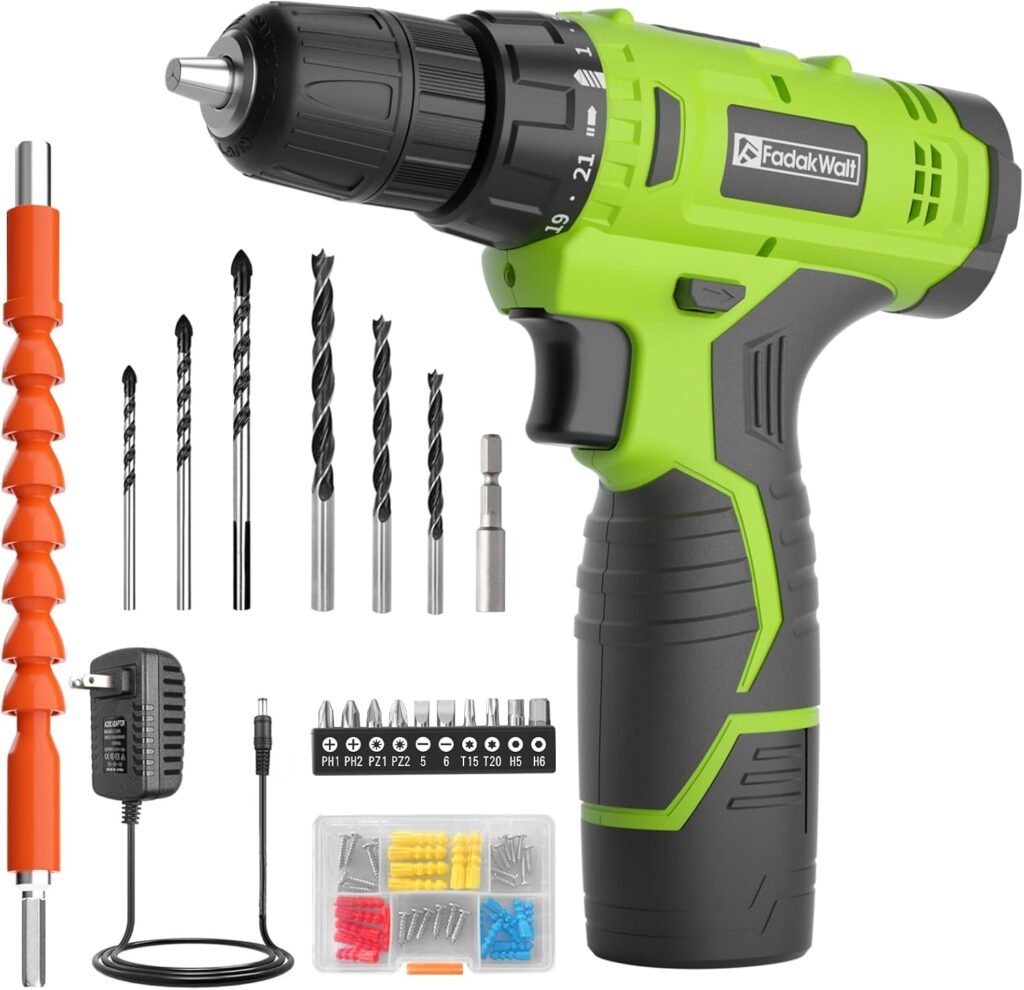
The FADAKWALT 12V cordless drill set is best for light DIY tasks where comfort, control, and low weight matter more than maximum power. It is a practical option for beginners, renters, and homeowners who mainly need a drill for furniture, small repairs, plastics, thin wood, and simple household projects.
Why Beginners May Like It
Not every DIYer needs a high-voltage drill. Sometimes a compact, controlled tool is easier and safer to use, especially for smaller jobs around the house.
Key benefits:
- Lightweight 12V design
- 21+1 torque settings
- LED light for low-light work
- Rubber grip for comfort
- Electric brake for better control
- Battery and charger included
- Useful bits included
Best For
- Apartment repairs
- Furniture assembly
- Light drilling
- Small home fixes
- Users who prefer low tool weight
Skip It If
Skip this drill if you plan to drill large holes, work with dense lumber, or use it for long heavy-duty sessions. A 12V drill is comfortable, but it is not built to replace a stronger 20V or 21V tool.
4. Best Detail Tool: WEN Rotary Tool Kit With Flex Shaft
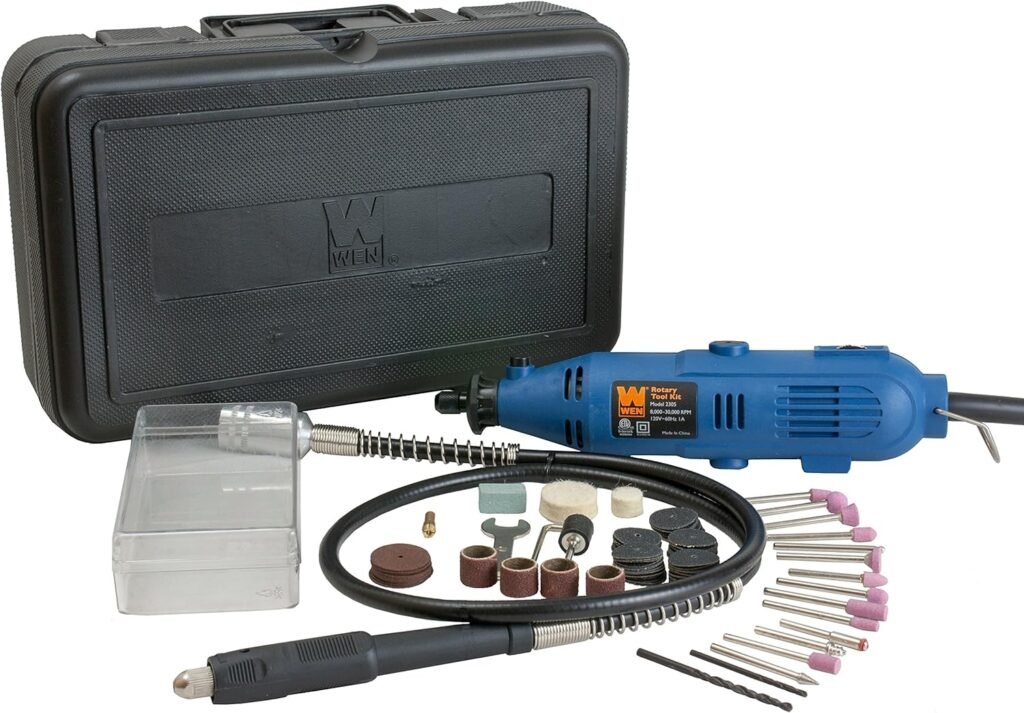
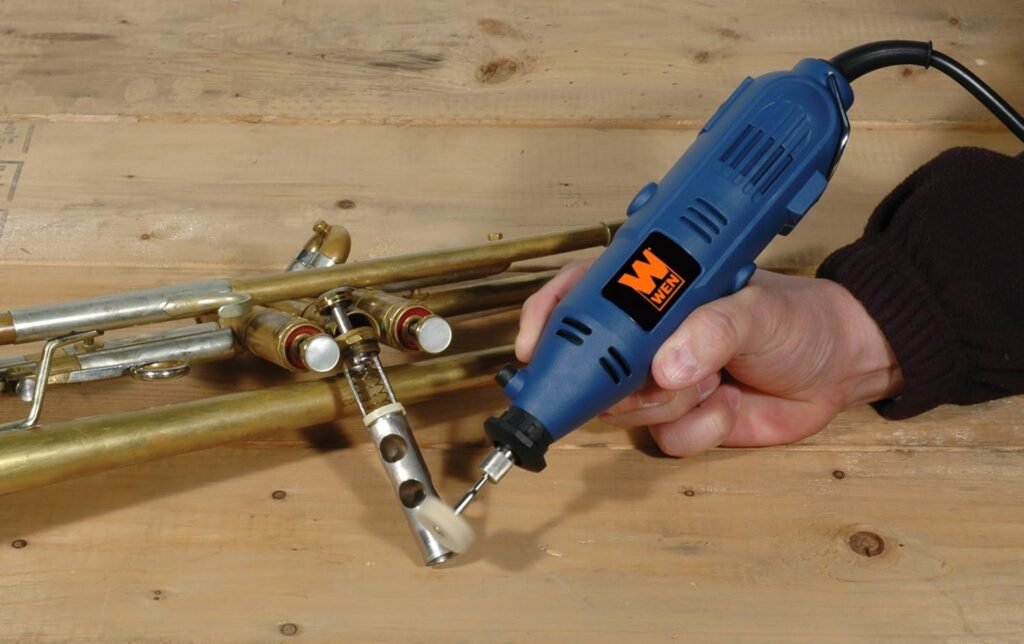
The WEN rotary tool kit is a budget-friendly choice for detailed DIY work like sanding, polishing, cutting, engraving, drilling small holes, and craft repairs. Its variable speed range, accessory set, and flex shaft attachment make it useful for precise work where a full-size drill or saw would feel too bulky.
Why This Tool Belongs in a DIY Kit
A rotary tool is not always the first tool beginners buy, but it often becomes one of the most used. It handles small jobs that larger tools cannot do cleanly.
Key benefits:
- Variable speed control
- Wide accessory set
- Flex shaft for detailed work
- Lightweight design
- Easy bit changes with spindle lock
- Good for crafts and small repairs
Best For
- Sanding small parts
- Polishing metal or plastic
- Craft projects
- Model work
- Engraving
- Cutting small materials
- Tight-space repairs
Skip It If
Skip this tool if you need heavy cutting power or long industrial use. Rotary tools are best for detail, control, and versatility, not brute force.
5. Best Workshop Helper: HORUSDY Flexible Magnetic Pickup Tool Set
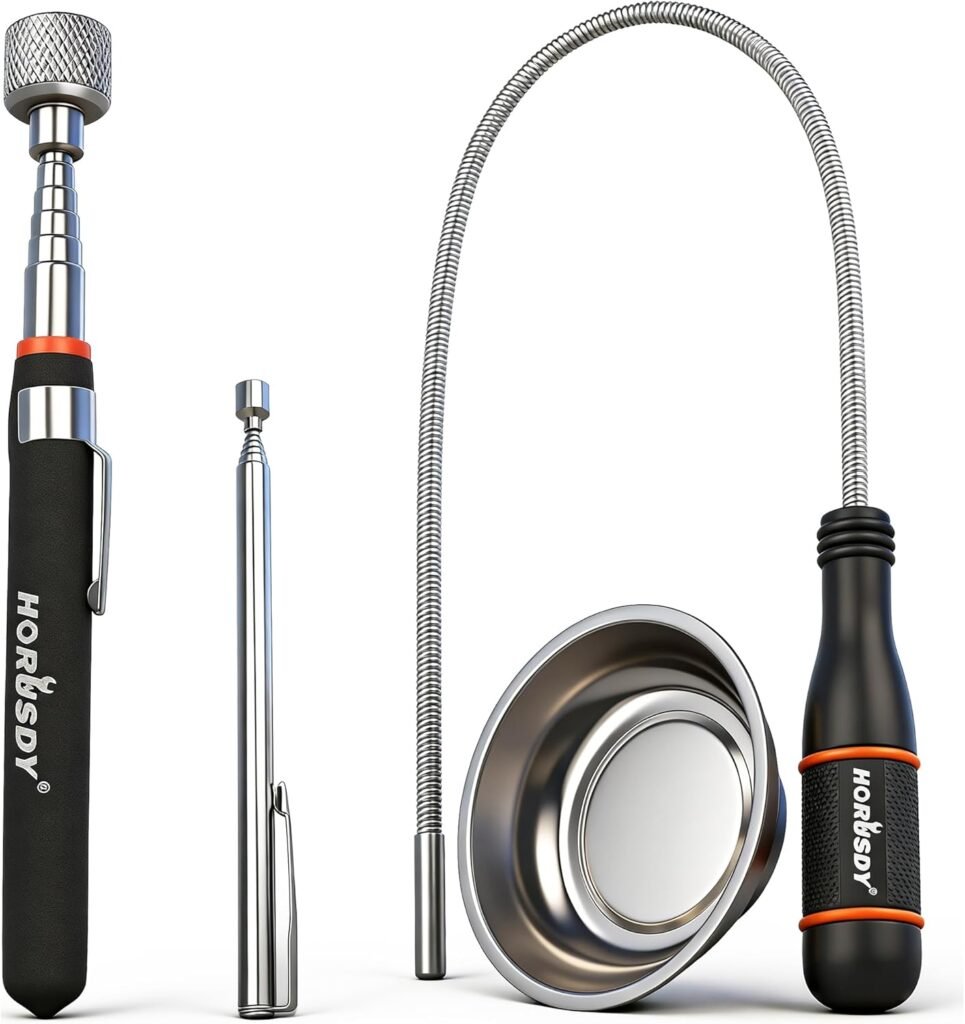
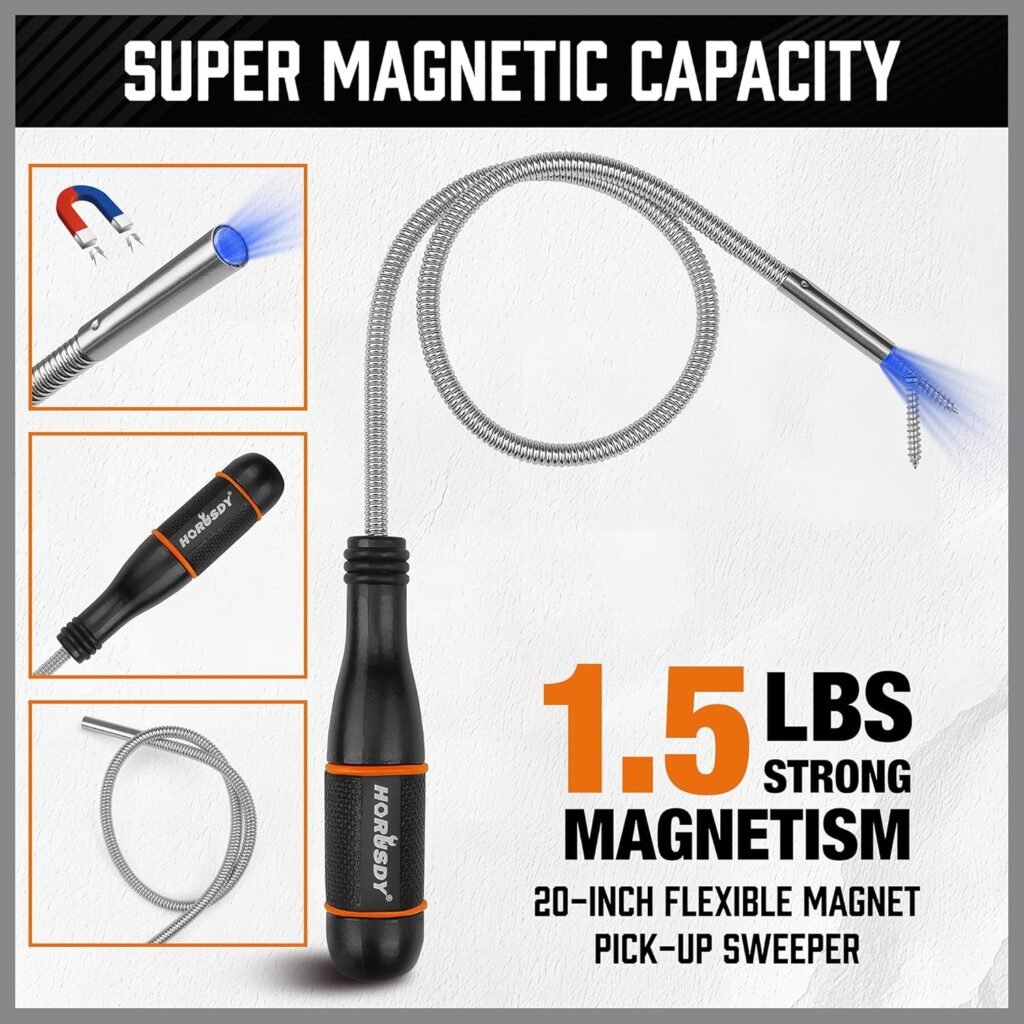

The HORUSDY flexible magnetic pickup tool set is a low-cost accessory that helps DIYers retrieve dropped screws, nuts, bolts, and small metal parts from tight spaces. It is not a power tool, but it saves time during repairs and belongs in any practical home workshop or garage toolkit.
Why It Helps More Than Expected
This is one of those small tools that feels unnecessary until you drop a screw behind a cabinet, inside a machine, or under a workbench. Then suddenly it becomes the hero of the day.
Key benefits:
- Flexible shaft reaches tight spaces
- Magnetic heads pick up small metal parts
- Lightweight and easy to store
- Useful in garages, workshops, and home repairs
- Helps reduce wasted time during projects
Best For
- Retrieving dropped screws
- Automotive DIY
- Garage repairs
- Furniture assembly
- Working in tight corners
- Keeping small hardware under control
Skip It If
Skip this tool if you need to pick up non-magnetic items or heavy metal parts. It works best for light ferrous metal objects like screws, nuts, bolts, and small tools.
6. Best for Detailed Woodworking: WEN 16-Inch Variable Speed Scroll Saw
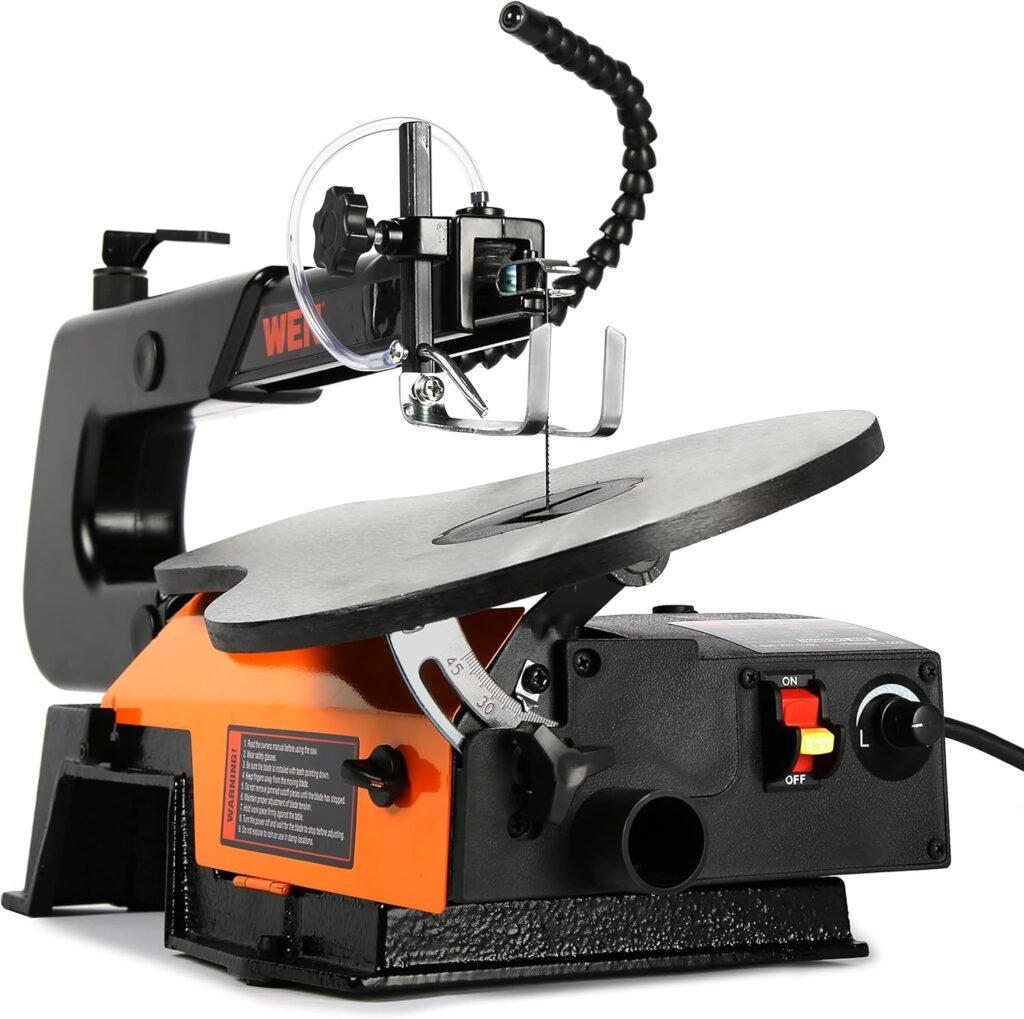
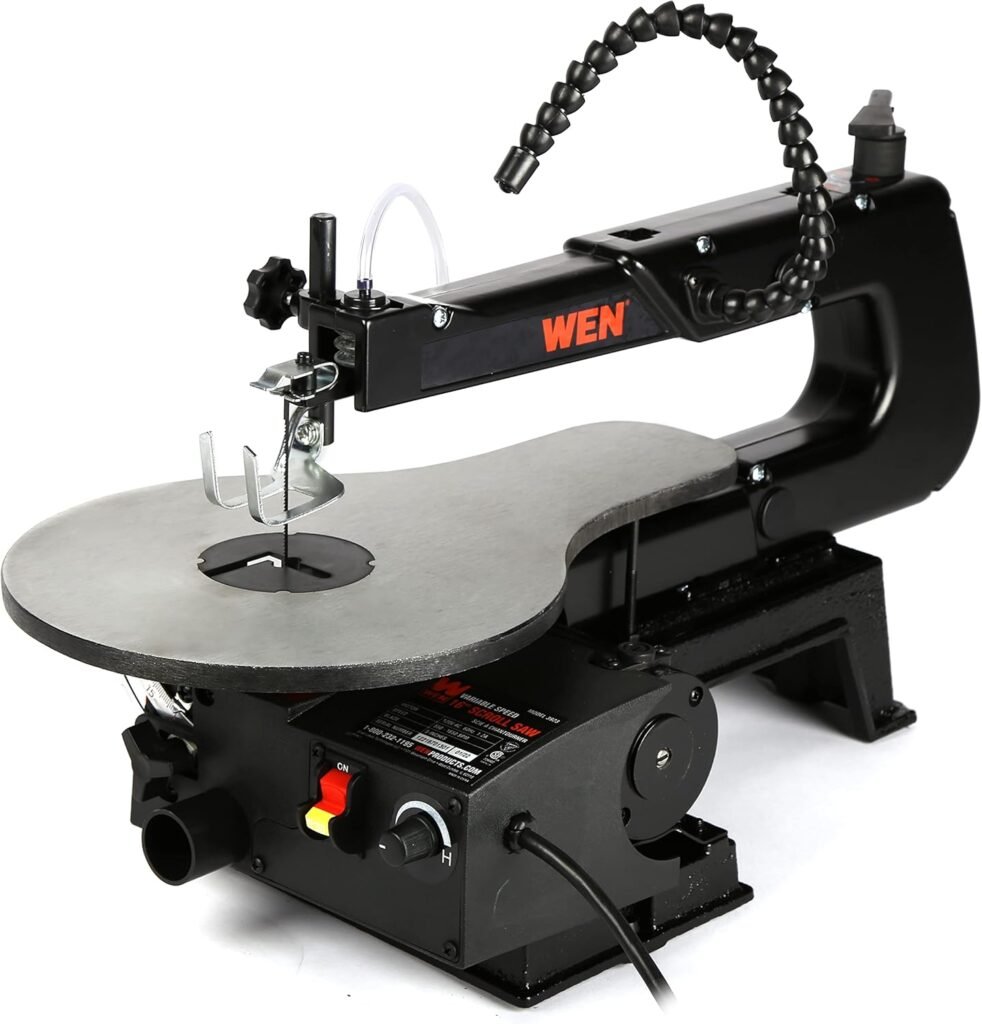
The WEN 16-inch variable speed scroll saw is a good budget option for DIYers who want detailed woodworking cuts, curves, patterns, and craft pieces. Its variable speed control, large work table, tool-free blade changes, and work light make it useful for hobby projects that require more precision than a jigsaw.
Why Woodworkers Should Consider It
A scroll saw is not for every DIY buyer, but it is valuable if your projects involve shapes, decorative cuts, letters, curves, or small wood designs.
Key benefits:
- Variable speed cutting
- Tool-free blade changes
- Large table support
- Built-in work light
- Bevel capability
- Good for patterns and detailed cuts
Best For
- Decorative woodworking
- Wooden signs
- Curved cuts
- Pattern cutting
- Craft projects
- Small workshop setups
Skip It If
Skip this saw if you mostly need straight cuts, rough construction cuts, or heavy material cutting. A scroll saw is a precision tool, not a replacement for a circular saw or miter saw.
8. Best Blade Upgrade: AIFICUT Oscillating Saw Blades Set
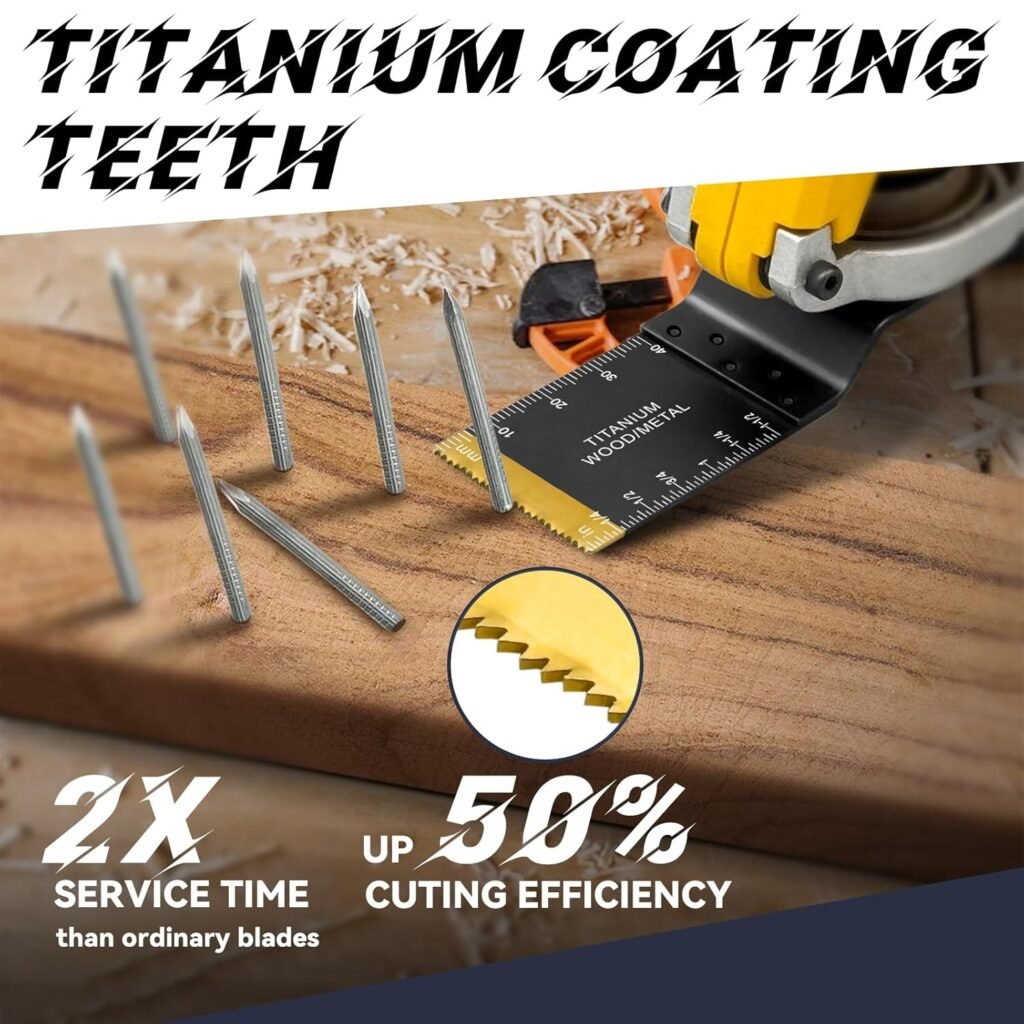
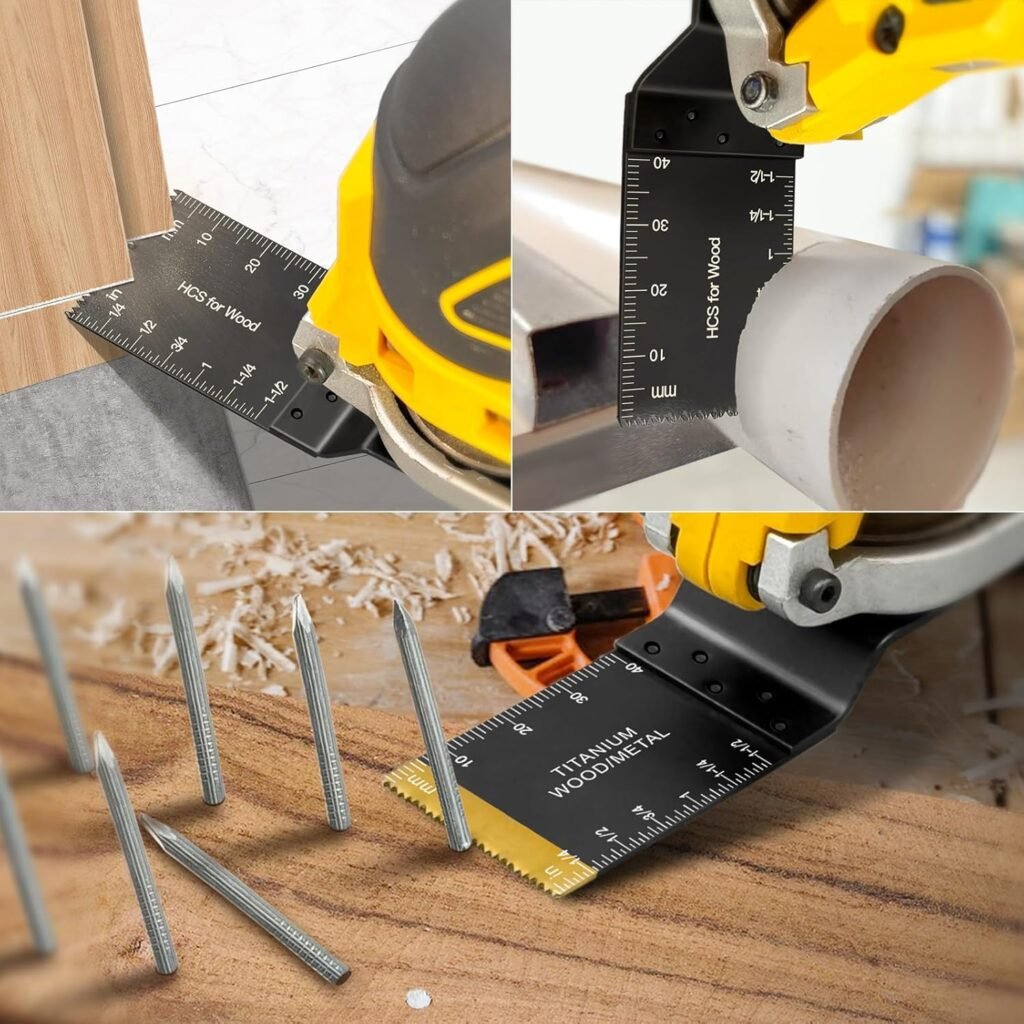
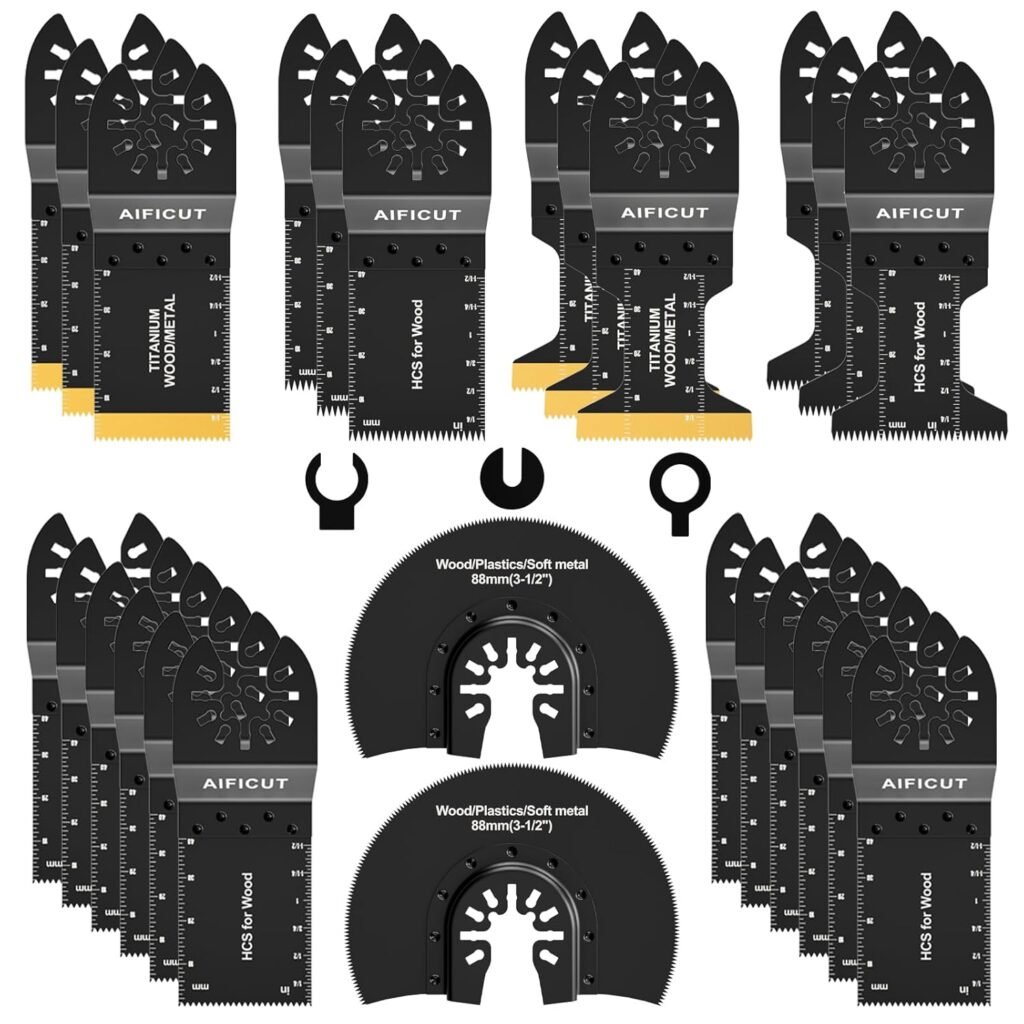
The AIFICUT oscillating saw blades set is a budget-friendly upgrade for DIYers who already own an oscillating multi-tool. With multiple blades for wood, plastic, and metal, it helps users cut, trim, scrape, and handle repair jobs without buying expensive individual replacement blades every time.
Why Blades Matter
Many DIYers blame the tool when the real problem is the blade. A fresh, correct blade can make cutting smoother, cleaner, and faster.
Key benefits:
- 26-piece blade set
- Works with many oscillating tools
- Useful for wood, plastic, and metal
- Good for tight-space cuts
- Cost-effective for mixed projects
- Great backup set for repairs
Best For
- Cutting trim
- Flush cuts
- Plastic cuts
- Small metal cuts
- Repair work
- Multi-material DIY projects
Skip It If
Skip this set if you need premium specialty blades for professional finish work or heavy industrial use. It is better for general-purpose DIY cutting than extreme-duty applications.
9. Best Budget Saw for Trim and Framing: Metabo HPT 10-Inch Miter Saw
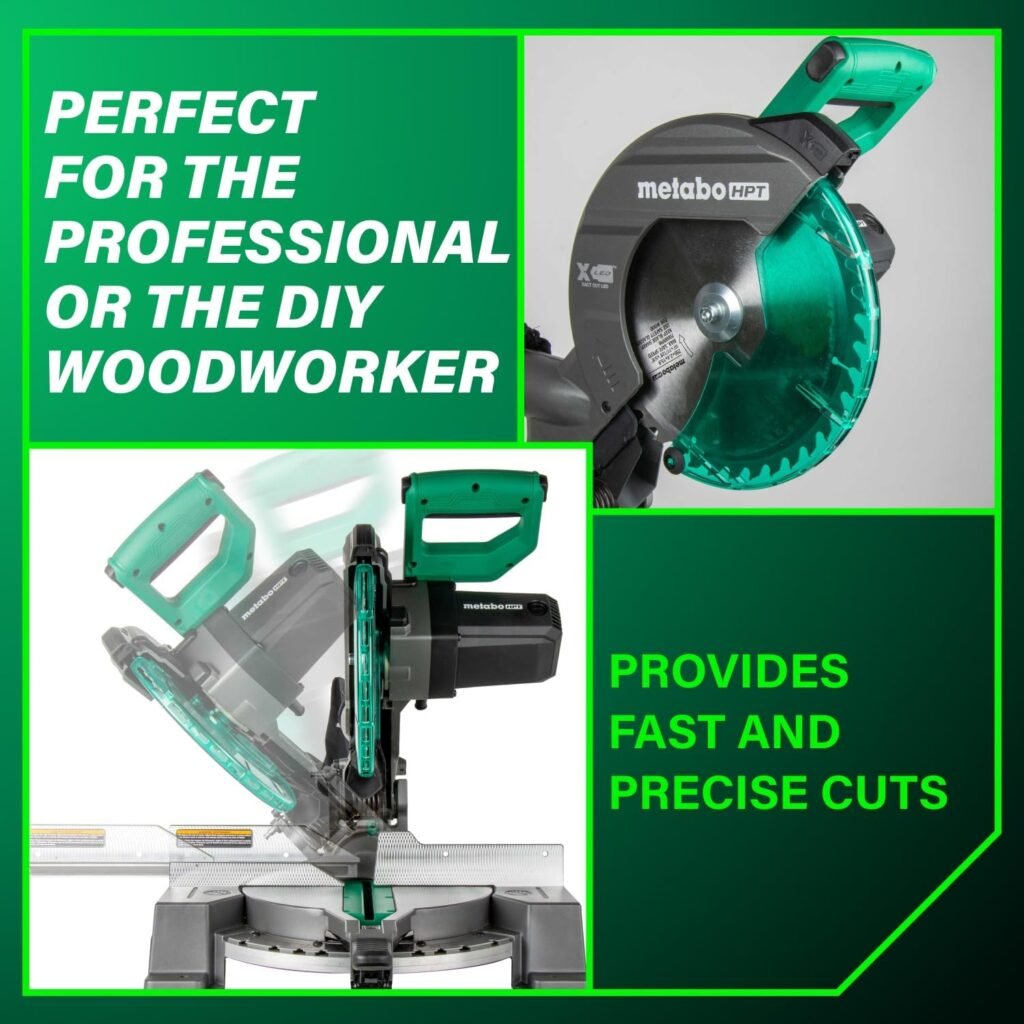
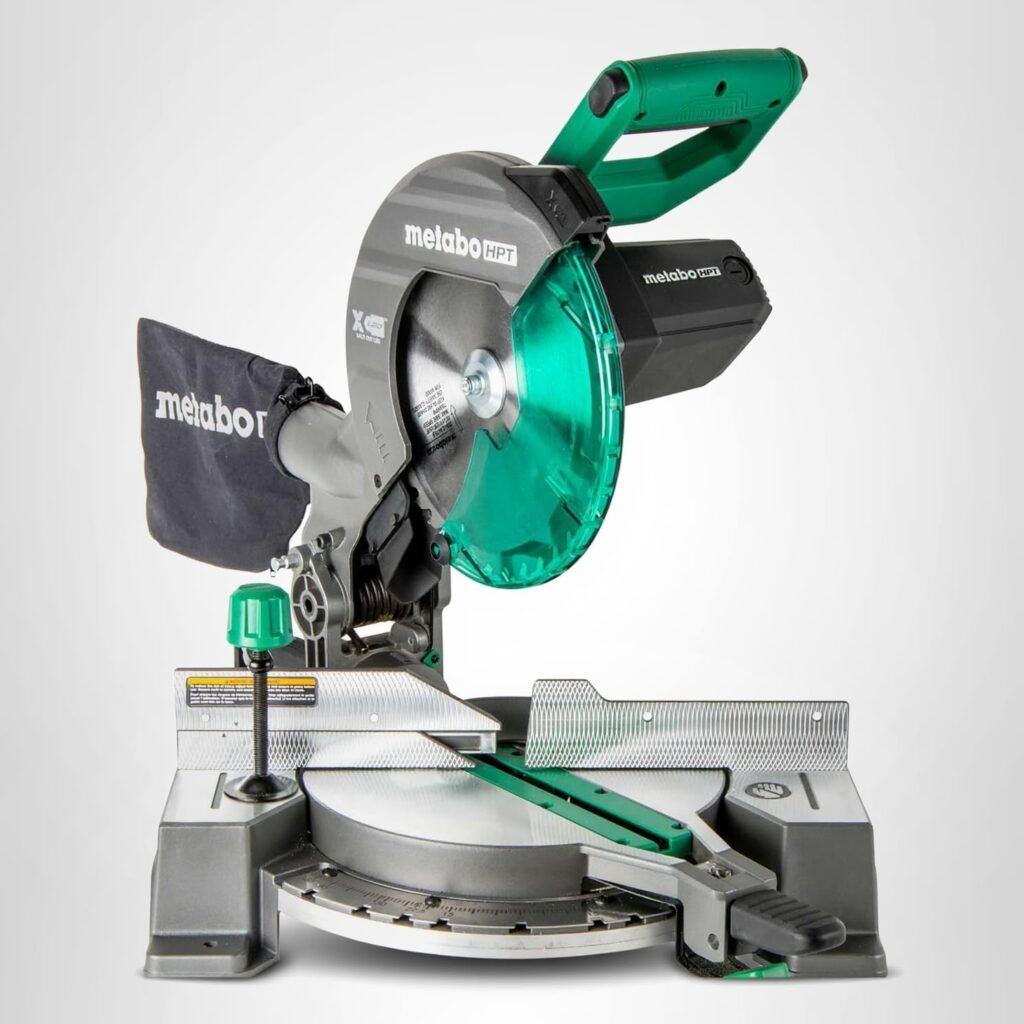
The Metabo HPT 10-inch miter saw is one of the strongest budget choices for DIYers who need cleaner crosscuts, angled cuts, trim cuts, and small framing work. Its 15-amp motor, compact body, miter adjustments, and work clamp make it practical for weekend builders and home workshop users.
Why It Is Worth Buying
A miter saw is often the tool that makes DIY projects look less “homemade in a panic.” It helps with repeatable, cleaner, more accurate cuts.
Key benefits:
- 15-amp motor
- 10-inch blade size
- Compact and portable design
- Miter and bevel adjustments
- Large table support
- Work clamp for better material control
Best For
- Trim work
- Baseboards
- Small framing cuts
- Shelving projects
- Woodworking
- Accurate angled cuts
Skip It If
Skip this saw if you need dual-bevel cutting, advanced laser guides, or a tool for heavy continuous jobsite use. It is a strong DIY saw, but it is still built around budget-friendly simplicity.
10. Best Starter Drill With Style: Pink Cordless Drill for DIY
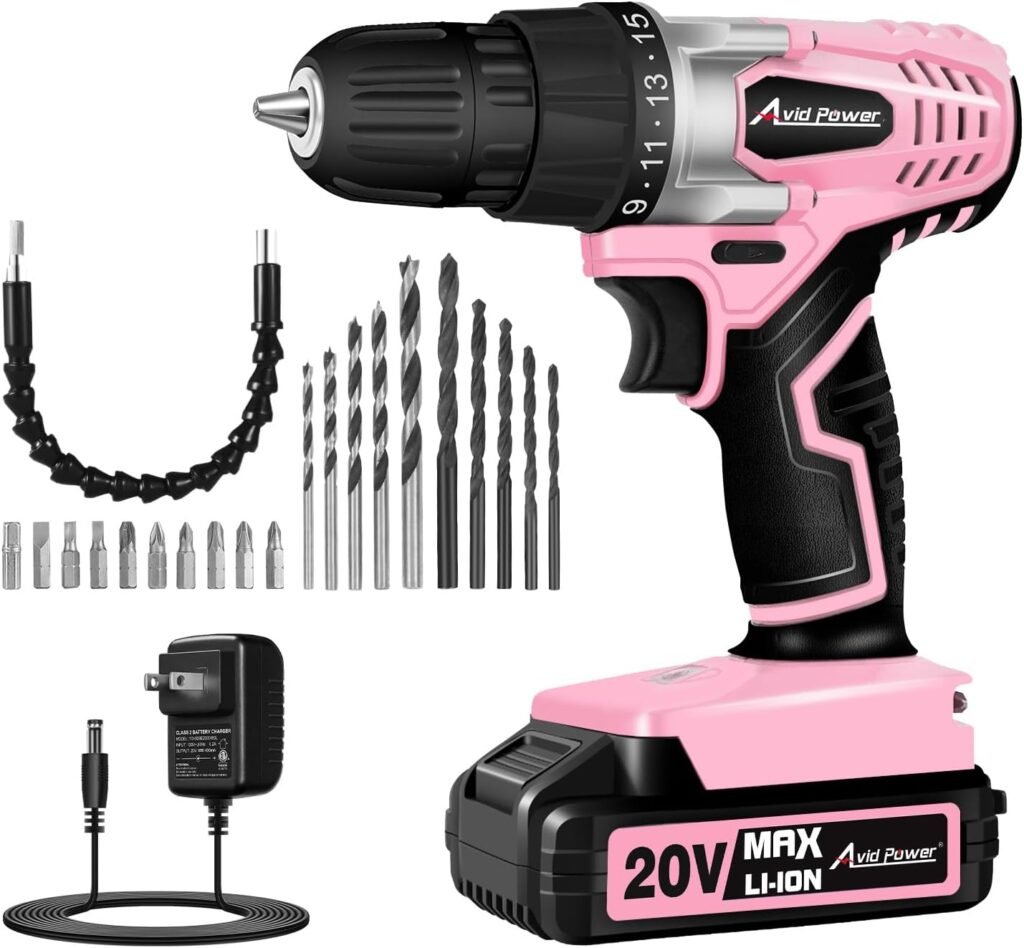
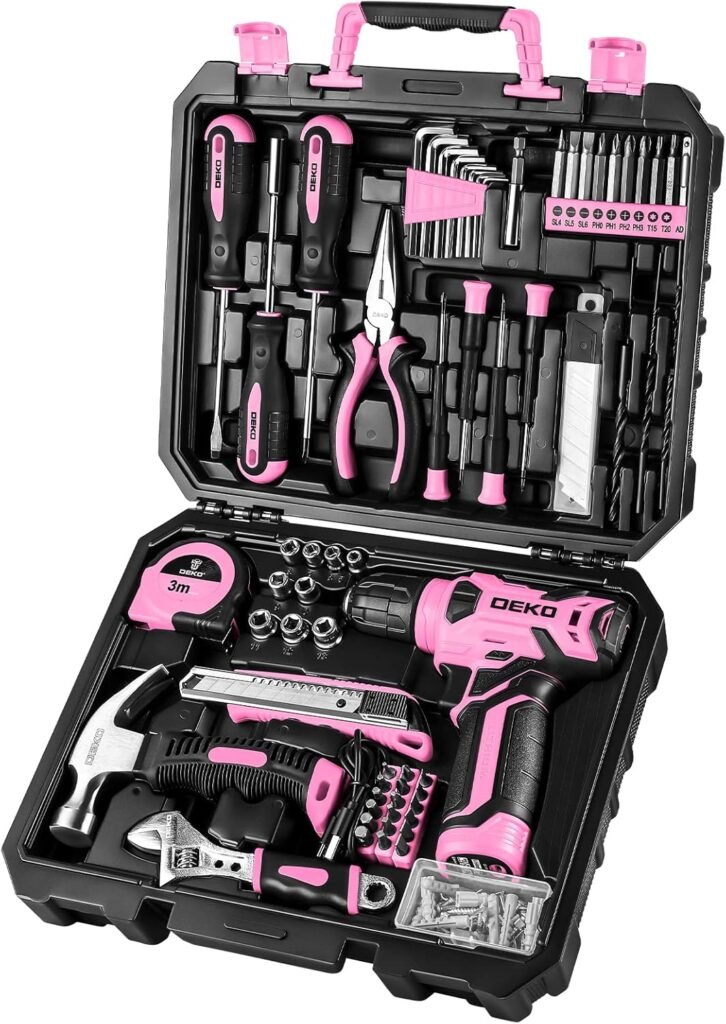
The pink cordless drill for DIY is a beginner-friendly option for users who want a lightweight, easy-to-handle drill for basic home repairs, furniture assembly, and simple drilling tasks. It offers cordless convenience, dual-speed control, a keyless chuck, LED light, and included driver bits for everyday household use.
Why Some Buyers Will Love It
This drill is not just about color. The real value is that it offers common beginner features in a simple, approachable package.
Key benefits:
- Cordless design
- Dual-speed settings
- Keyless chuck
- LED light
- Lightweight grip
- 20-piece driver bit set
- Good starter option for home users
Best For
- Beginners
- Home repairs
- Furniture assembly
- Dorm or apartment tool kits
- Light woodworking
- Users who want a more personal-looking tool
Skip It If
Skip this drill if you need maximum torque, professional durability, or a neutral tool design. It is best for casual and moderate DIY work.
How to Choose Budget-Friendly Power Tools Without Wasting Money
Choose budget-friendly power tools by matching the tool to your most common projects, not the biggest advertised number. Prioritize battery life, torque settings, comfort, accessory support, warranty, and safety features. The right budget tool should feel useful immediately and avoid expensive extras you do not need.
Before buying, ask yourself:
- Will I use this tool monthly or only once?
- Does it include a battery and charger?
- Can I find replacement bits, blades, or accessories easily?
- Is it comfortable enough for longer use?
- Does it have enough power for my materials?
- Is the tool too advanced for my actual needs?
- Can I store and maintain it properly?
Best Features to Look For
- Lithium-ion battery
- 20V or 21V power for drills
- Adjustable torque settings
- Two-speed control
- Keyless chuck
- LED work light
- Rubberized grip
- Tool-free blade changes
- Included accessories
- Clear safety instructions
Features You May Not Need
- Smart app connectivity
- Premium brushless motor for occasional use
- Oversized batteries for short projects
- Laser guides if you rarely make precision cuts
- Industrial-grade torque for light repairs
- Expensive brand ecosystems if you only need one tool
Budget Power Tool Buying Checklist
A budget power tool is worth buying when it fits your project type, includes essential accessories, feels comfortable, and has enough power for the materials you use most. Use a checklist before purchasing so you do not get distracted by voltage claims, flashy colors, or features that add cost without helping your work.
Use this 30-second checklist:
- Does it match your main project type?
- Is the tool light enough to control?
- Does it include a battery and charger?
- Are bits or blades included?
- Can you replace accessories easily?
- Does it have adjustable speed or torque?
- Is the grip comfortable?
- Does it include a light for dark spaces?
- Can it handle wood, plastic, or metal if needed?
- Is it beginner-friendly?
Simple Buying Rule
Buy the tool that solves your next three projects, not the tool that looks powerful enough for a fantasy workshop you may build “one day.” That one day has been under construction since 2018.
Common Mistakes to Avoid When Buying Cheap Power Tools
The most common mistake when buying cheap power tools is choosing the lowest price without checking battery life, torque control, accessory compatibility, comfort, and intended use. A tool that cannot finish your actual project is not a bargain. Budget-friendly should mean useful, reliable, and matched to your tasks.
Mistake 1: Buying Too Little Power
A weak tool may work for tiny jobs but struggle with wood, metal, or repeat drilling. For cordless drills, many DIYers are safer starting with a 20V or 21V option if they want more flexibility.
Mistake 2: Ignoring Battery Setup
A tool with one weak battery can slow every project. If you work longer sessions, choose a kit with a spare battery or make sure extra batteries are available.
Mistake 3: Skipping Torque Settings
Torque settings help prevent stripped screws and damaged materials. Beginners especially benefit from adjustable torque because it gives better control.
Mistake 4: Forgetting Comfort
Heavy tools make simple work feel harder. Look for ergonomic grips, balanced weight, and easy controls.
Mistake 5: Buying Tools Without Accessories
A cheap drill with no bits may cost more after you buy everything separately. Kits can be better value if the included accessories are actually useful.
Safety Tips Before Using DIY Power Tools
Before using DIY power tools, read the manual, wear safety goggles, check cords and batteries, secure the workpiece, keep hands away from moving parts, and remove loose clothing or jewelry. Budget tools still require serious safety habits because drills, saws, rotary tools, and blades can cause injuries when misused.
Basic safety tips:
- Read the owner’s manual before first use
- Wear safety goggles
- Use hearing protection when needed
- Keep hands away from blades and bits
- Clamp the material before cutting or drilling
- Keep cords away from heat, oil, and sharp edges
- Do not use damaged cords or cracked batteries
- Avoid wet areas with corded electric tools
- Remove batteries before changing blades or bits
- Store tools in a dry place
Quick Safety Reminder
A budget tool should save money, not create an emergency room side quest. Take your time, use the right accessory, and let the tool do the work.
FAQs About Budget-Friendly Power Tools for DIY
Budget-friendly power tools are a good choice for DIY projects when they match the user’s workload, material type, and comfort level. Most homeowners do not need professional-grade tools for basic repairs, furniture assembly, crafts, or light woodworking. The best results come from choosing practical features over brand hype.
Are budget power tools good enough for home projects?
Yes, budget power tools are good enough for many home projects, including furniture assembly, hanging shelves, light drilling, small repairs, craft work, and basic woodworking. They may not be suitable for heavy daily use, dense materials, or professional construction jobs.
What power tool should a beginner buy first?
A cordless drill is usually the best first power tool for beginners because it handles drilling, screwdriving, furniture assembly, shelves, cabinet hardware, and basic repairs. Choose one with adjustable torque, two-speed settings, a keyless chuck, LED light, and a battery included.
Is a 12V or 20V drill better for DIY?
A 12V drill is better for light tasks, small repairs, and users who prefer a compact tool. A 20V drill is better for wider DIY use, thicker wood, longer projects, and more demanding jobs. For most homeowners, 20V offers more flexibility.
Do I need a miter saw for DIY projects?
You need a miter saw if your DIY projects include trim, baseboards, angled cuts, shelving, frames, or repeated wood cuts. If you only drill, assemble furniture, or make occasional rough cuts, a miter saw may not be your first priority.
Are rotary tools useful for DIY?
Yes, rotary tools are useful for small cutting, sanding, polishing, engraving, craft work, and tight-space repairs. They are not heavy-duty cutting tools, but they are excellent for detail work where larger tools feel too bulky.
Should I buy a tool kit or individual power tools?
A tool kit is better if you are starting from zero and need batteries, chargers, bits, and basic accessories. Individual tools are better if you already own batteries or want to build a higher-quality setup one piece at a time.
What is the best budget DIY tool setup?
The best budget DIY tool setup includes a cordless drill, drill bits, screwdriver bits, oscillating blades, measuring tape, clamps, safety goggles, rotary tool, and a saw if you cut wood regularly. This setup covers most basic repairs and weekend projects.
Final Buying Advice
The best budget-friendly power tools for DIY are the ones that make your next project easier without pushing you into features you do not need. For most users, start with a cordless drill, add cutting accessories, then upgrade into saws or specialty tools as your projects grow.
If you want the safest all-around starting point, choose a drill kit with a battery, charger, torque settings, LED light, and included bits. If you already own a drill, consider adding a rotary tool, oscillating blades, or a miter saw based on what you build most often.
Best overall starting choice: Bamse 21V Cordless Drill
Best complete value kit: PULITUO 20V Cordless Drill Set
Best lightweight option: FADAKWALT 12V Drill Set
Best detail tool: WEN Rotary Tool Kit
Best cutting upgrade: Metabo HPT 10-Inch Miter Saw
Compare the latest prices, choose the tool that fits your next project, and build your DIY kit without overspending.

Michael Harris is an experienced woodworker and power tool expert with over 12 years in woodworking. Specializing in functional, high-quality furniture, he offers expert advice on tool selection, maintenance, and sharpening for both beginners and professionals.