
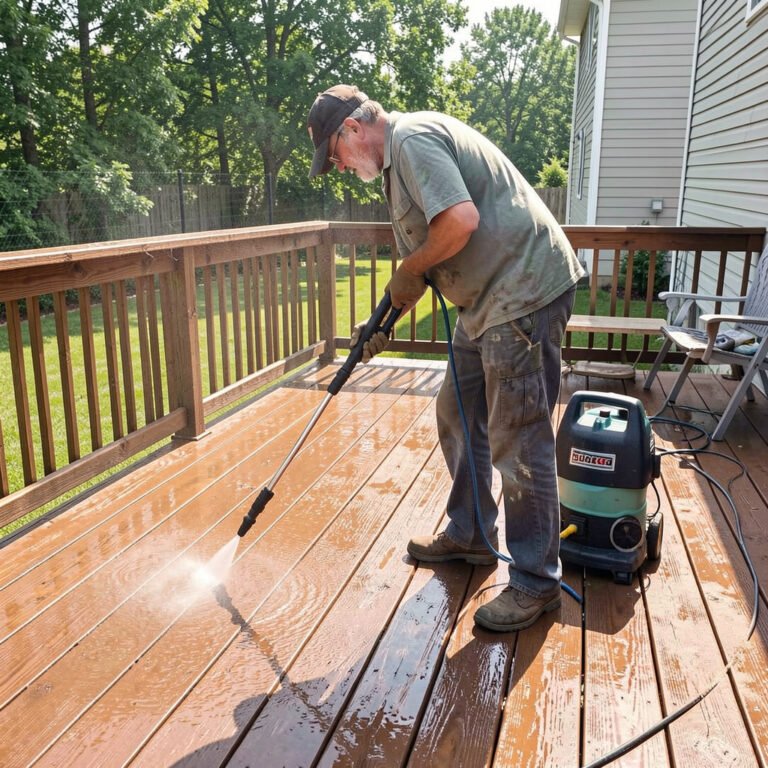
To clean a deck with a pressure washer, remove furniture, sweep debris, apply a deck-safe cleaner, use a wide fan nozzle, keep pressure low, test a small area first, rinse with the wood grain, and let the deck dry fully before sealing, staining, or replacing furniture.
A pressure washer can remove dirt, algae, mildew, pollen, and old surface grime from a deck. However, too much pressure can damage wood fibers, strip finishes, or leave marks on composite decking.
For the safest result, focus on control instead of raw power.
Quick process:
- Clear the deck
- Sweep loose dirt
- Protect nearby plants
- Apply deck cleaner
- Use low pressure first
- Choose a wide spray tip
- Wash with the grain
- Rinse thoroughly
- Let the deck dry
- Seal or stain if needed
The goal is simple: clean the deck without carving your initials into the boards by accident. Pressure washers are dramatic like that.
Can You Pressure Wash a Deck?
Yes, you can pressure wash a deck, but only if you use the right pressure, nozzle, cleaner, and technique for the material. Wood decks need lower pressure and gentle movement, while composite decks should follow the manufacturer’s cleaning instructions to avoid surface damage or warranty issues.
Pressure washing is useful for:
- Dirty wood decks
- Weathered deck boards
- Algae and mildew buildup
- Pollen and dust
- Mud stains
- Prepping before sealing or staining
But it may not be safe for every deck.
Avoid pressure washing if your deck has:
- Rotten boards
- Loose fasteners
- Splintered wood
- Peeling paint
- Weak railing sections
- Old untreated wood
- Damaged composite boards
A pressure washer should clean the surface, not remove the surface. If the wood starts looking fuzzy, scratched, or deeply grooved, the pressure is too high or the nozzle is too close.
Best Power Washer Pressure for Deck Cleaning
The best power washer pressure for deck cleaning is usually low to moderate pressure, depending on deck material and condition. For wood decks, start low and increase only if needed. For composite or Trex-style decking, follow the manufacturer’s PSI limit and use a fan tip instead of a narrow nozzle.
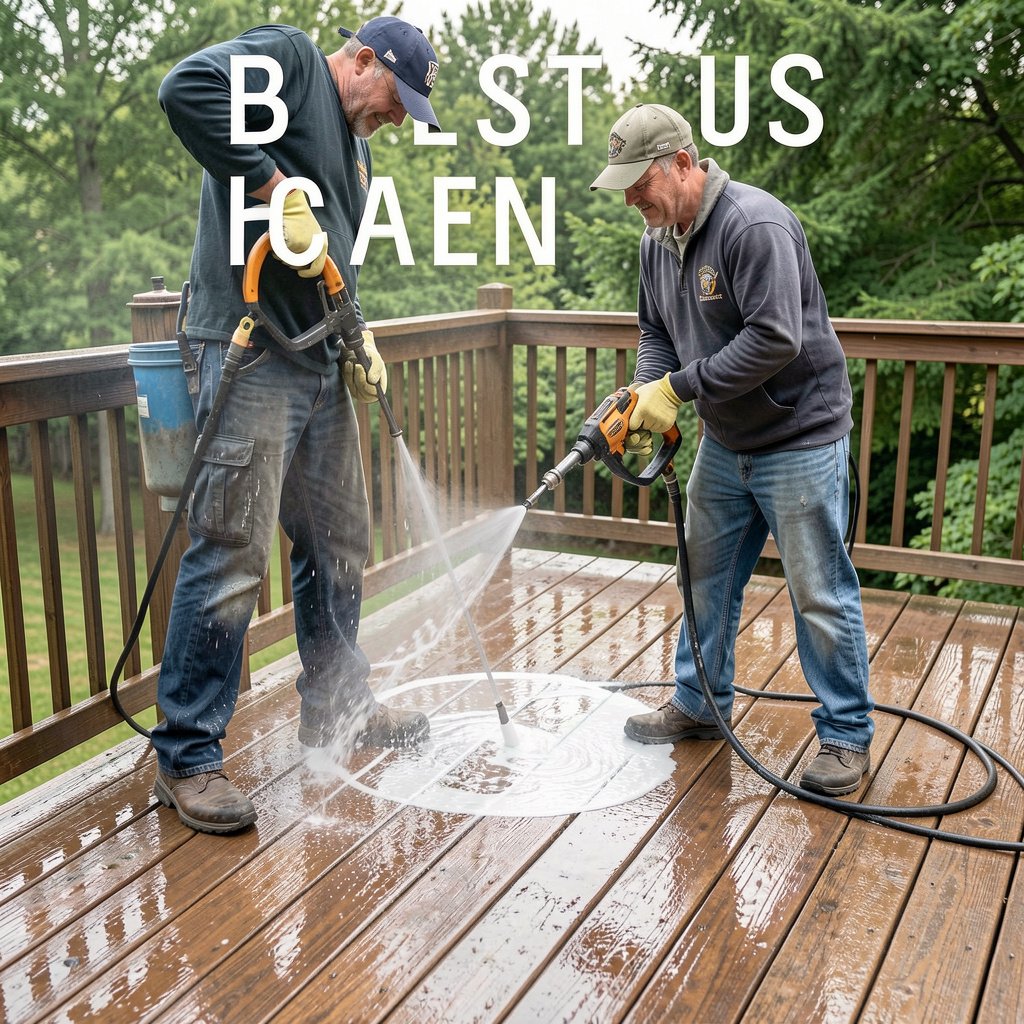
A good deck cleaning setup usually includes:
- Low PSI setting
- 25-degree or 40-degree fan nozzle
- Deck-safe detergent
- Soft-bristle brush
- Slow, even rinsing
- Test spot before full cleaning
General pressure guide:
| Deck Type | Suggested Approach | Notes |
| Soft wood deck | Start low | High pressure can scar wood |
| Hardwood deck | Low to moderate | Test first before full cleaning |
| Composite deck | Follow manufacturer guide | Use fan tip and gentle cleaning |
| Painted deck | Use caution | Pressure may lift paint |
| Old deck | Very low pressure or manual cleaning | Weak boards can be damaged |
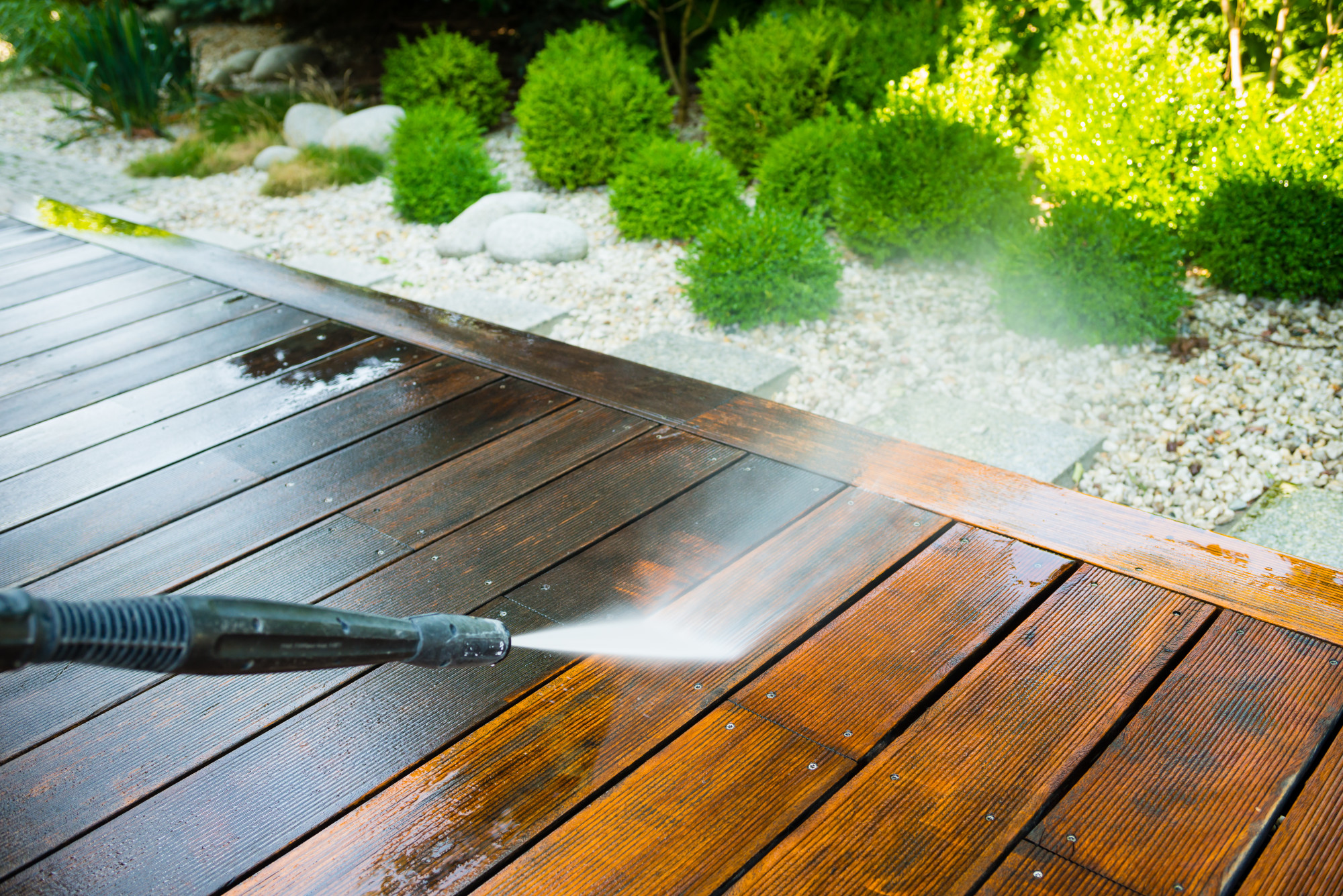
Credit: hurricleanlouisville.com
Do not start at maximum pressure. A deck is not a driveway, and treating it like one is how boards end up looking like they survived a bear fight.
Best Pressure Washer for Wood Deck
The best pressure washer for a wood deck is an adjustable electric pressure washer or light-duty machine with variable pressure, a soap tank, and wide-angle nozzles. It should give enough cleaning power to remove grime without forcing you to use aggressive pressure that can damage the wood grain.
Look for these features:
- Adjustable PSI
- 25-degree and 40-degree nozzles
- Detergent tank or soap attachment
- Lightweight body
- Stable hose connection
- Easy pressure control
- Long enough hose for deck movement
- Reliable safety lock
For most homeowners, an electric pressure washer is easier to control than a powerful gas model. Gas pressure washers can clean faster, but they can also damage wood faster if used carelessly.
Best for most deck owners:
- Electric pressure washer
- Adjustable pressure setting
- Wide fan nozzle
- Deck-safe cleaner
- Moderate water flow
If your deck is large, heavily stained, or professionally maintained, a stronger machine may help. Still, pressure control matters more than raw power.
Best Deck Cleaner for Pressure Washer
The best deck cleaner for a pressure washer is a deck-safe formula made for your surface type. Wood decks often need oxygen-based or wood-safe cleaners, while composite decks should use manufacturer-approved cleaners. Avoid harsh cleaners that can damage boards, harm plants, or leave residue behind.
A cleaner helps loosen dirt before rinsing. That means you do not have to rely only on water pressure.
Common deck cleaner types:
- Wood deck cleaner
- Composite deck cleaner
- Oxygen-based cleaner
- Mildew remover
- Pressure washer-safe detergent
- Brightener for wood restoration
Avoid using:
- Harsh bleach on wood
- Random household cleaners
- Undiluted chemicals
- Acidic cleaners unless recommended
- Detergents not made for pressure washers
A cleaner should match the deck material. If your deck is composite, check the brand’s care guide first. If your deck is wood, choose a cleaner made for wood grain, weathering, mildew, and outdoor buildup.
How to Prepare Your Deck Before Pressure Washing
Before pressure washing a deck, remove furniture, planters, grills, rugs, toys, and loose items. Sweep the surface, inspect boards, tighten loose screws, cover nearby plants, and check for damaged areas. Good preparation helps prevent accidents, protects the deck, and makes cleaning more effective.
Preparation is where most people either win or mess up the job.
Before starting:
- Move all furniture off the deck
- Remove outdoor rugs
- Sweep leaves and dirt
- Clear gaps between boards
- Check for loose nails or screws
- Inspect railings and stairs
- Cover delicate plants
- Close nearby windows and doors
- Keep children and pets away
- Read the pressure washer manual
Do not pressure wash over loose debris. Small stones, chips, and dirt can get pushed around by the spray and scratch the deck surface.
Also, avoid pressure washing a deck on a windy day. Overspray can hit windows, siding, furniture, plants, and anyone standing nearby.
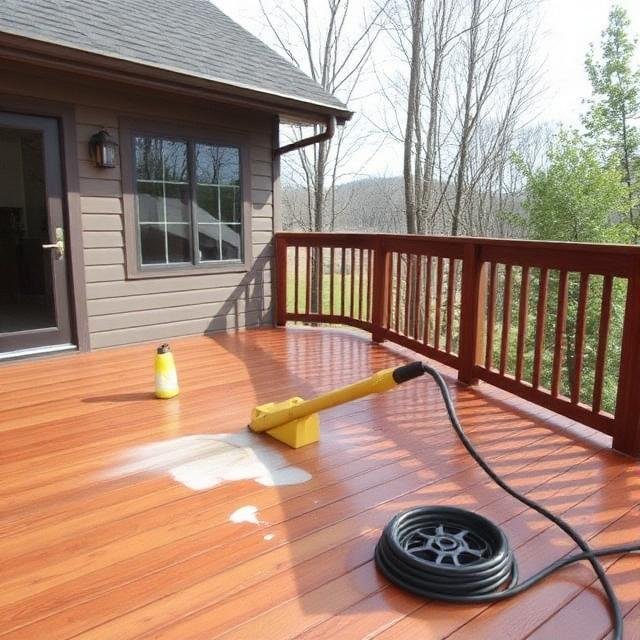
Image:How to Prepare Your Deck Before Pressure Washing
Step-by-Step: How to Clean a Deck With a Power Washer
To clean a deck with a power washer, apply cleaner first, let it sit for the recommended time, scrub tough spots, then rinse with a wide fan nozzle using steady, overlapping passes. Work in sections and follow the grain of the boards to reduce visible marks.
Use this simple cleaning flow:
1. Test a Small Area First
Pick a hidden corner and test your pressure, nozzle, and cleaning pattern. If the wood looks rough, fuzzy, or lighter in streaks, reduce pressure or move the spray farther away.
2. Apply Deck Cleaner
Use a deck-safe cleaner with a pump sprayer, brush, or pressure washer soap tank. Let it sit according to the product label, but do not let it dry on the surface.
3. Scrub Stubborn Areas
Use a soft-bristle brush for algae, mildew, or stained spots. Scrubbing reduces the need for aggressive pressure.
4. Rinse With a Wide Fan Tip
Use a 25-degree or 40-degree nozzle and rinse with smooth, even passes. Keep movement steady to avoid stripes or wand marks.
5. Work Board by Board
Follow the direction of the wood grain. Overlap each pass slightly so the deck dries evenly.
6. Rinse Thoroughly
Remove all cleaner residue. Leftover detergent can leave film, attract dirt, or affect future staining.
7. Let the Deck Dry
Allow the deck to dry fully before adding furniture, staining, sealing, or inspecting final results.
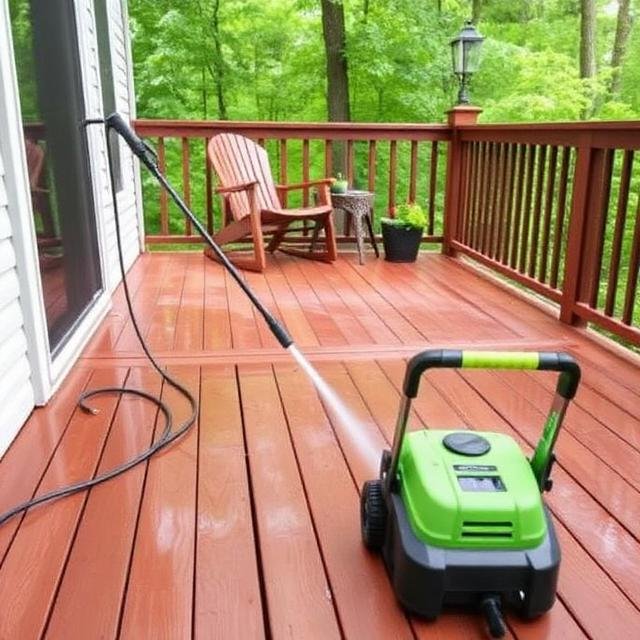
How to Pressure Wash a Wood Deck Without Damage
To pressure wash a wood deck without damage, use low pressure, a wide nozzle, a safe distance, and slow overlapping strokes. Always test first, move with the grain, avoid narrow spray tips, and never hold the stream in one spot because concentrated pressure can scar wood quickly.
Wood is softer than concrete, brick, or stone. That means your technique needs to be gentle.
Wood deck pressure washing tips:
- Start with the lowest effective pressure
- Use a wide spray pattern
- Keep the wand moving
- Wash along the boards
- Avoid direct spraying into gaps
- Do not blast railings too closely
- Do not use a zero-degree nozzle
- Stop if wood fibers lift or fuzz
Signs you are using too much pressure:
- Fuzzy wood texture
- Visible wand lines
- Deep grooves
- Uneven color patches
- Splintering
- Raised grain
If your wood deck is already weak or splintered, manual cleaning may be safer than pressure washing.
How to Clean a Composite or Trex Deck With a Pressure Washer
To clean composite or Trex decking with a pressure washer, follow the manufacturer’s care guide, use a fan tip, apply approved soap, gently scrub each board, and rinse thoroughly. Composite surfaces can still be damaged by high pressure, narrow nozzles, or dirty water left to dry.
Composite decking is lower maintenance than wood, but it is not indestructible. Pressure, heat, harsh chemicals, and poor rinsing can leave marks or residue.
Composite deck cleaning tips:
- Check the brand’s cleaning guide first
- Use a fan attachment
- Avoid narrow nozzles
- Use approved soap or cleaner
- Scrub with a soft-bristle brush
- Rinse each board thoroughly
- Do not let dirty water dry
- Avoid abrasive brushes
For Trex-style decking, the safest approach is usually soap, gentle brushing, and careful rinsing. A pressure washer may be allowed on some product lines, but the PSI limit and nozzle distance matter.
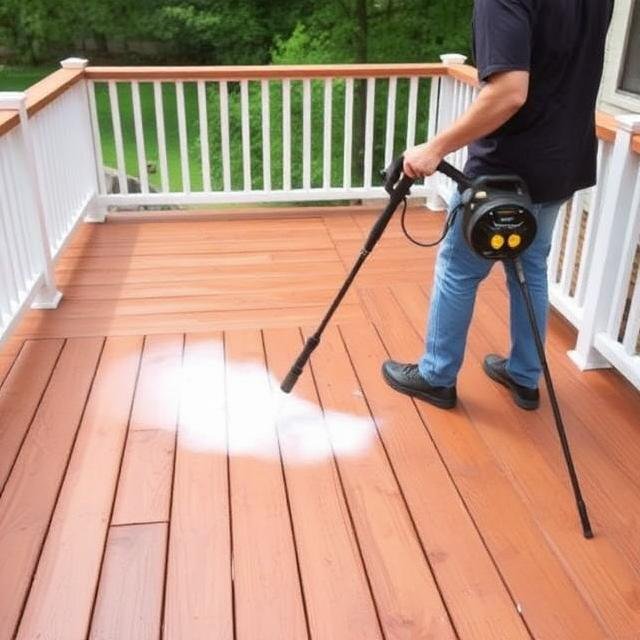
image:How to Clean a Composite or Trex Deck With a Pressure Washer
What Nozzle Should You Use for Deck Cleaning?
The best nozzle for deck cleaning is usually a 25-degree or 40-degree fan nozzle because it spreads water over a wider area and reduces the risk of surface damage. Avoid zero-degree nozzles on decks because the narrow stream can cut, scar, or strip the surface.
Nozzle choice controls how aggressive the water feels on the deck.
| Nozzle Type | Spray Angle | Deck Use |
| Red nozzle | 0 degrees | Avoid for decks |
| Yellow nozzle | 15 degrees | Use with extreme caution |
| Green nozzle | 25 degrees | Good for tougher grime |
| White nozzle | 40 degrees | Safer for gentle rinsing |
| Black nozzle | Soap nozzle | Good for detergent application |
For most deck cleaning jobs, start with a 40-degree nozzle. If that is too gentle, move to a 25-degree nozzle carefully.
The red zero-degree nozzle is too concentrated for deck cleaning. It is the “villain arc” of pressure washer attachments.
Should You Power Wash a Deck Before Staining?
Yes, you can power wash a deck before staining if the deck is structurally sound and you use gentle pressure. Cleaning removes dirt, mildew, and old residue so the stain can bond better, but the deck must dry fully before stain or sealer is applied.
Pressure washing before staining can help prepare the surface, but only when done correctly.
Before staining:
- Remove dirt and mildew
- Rinse away cleaner residue
- Let the wood dry fully
- Sand rough or fuzzy areas
- Check moisture level if possible
- Follow stain manufacturer instructions
Do not stain a wet deck. Moisture trapped in wood can affect absorption, color, and finish durability.
If pressure washing raises the wood grain, light sanding may be needed before applying stain.
Common Mistakes to Avoid When Pressure Washing a Deck
The most common pressure washing mistakes are using too much PSI, choosing a narrow nozzle, washing too close to the boards, skipping cleaner, ignoring a test spot, and moving the wand unevenly. These mistakes can leave streaks, splinters, raised grain, or permanent surface damage.
Avoid these mistakes:
- Starting with high pressure
- Using a zero-degree nozzle
- Holding the spray too close
- Staying in one spot too long
- Spraying against the grain
- Skipping deck cleaner
- Letting detergent dry
- Ignoring loose boards
- Washing damaged wood
- Not wearing eye protection
- Letting children or pets nearby
- Staining before the deck dries
Pressure washing is not just “spray and pray.” A calm, controlled approach gives a cleaner deck and fewer repair headaches.
Pressure Washer Safety Tips for Deck Cleaning
Pressure washers can cause serious injuries, so safe handling matters. Wear eye protection, use hearing protection when needed, keep both hands on the wand, avoid spraying people or pets, keep the stream away from skin, and never use the machine around electrical hazards or standing water.
Important safety tips:
- Read the machine manual first
- Wear safety glasses
- Wear closed-toe shoes
- Keep children and pets away
- Hold the wand with both hands
- Avoid ladders while spraying
- Do not point the wand at anyone
- Keep away from outlets and wiring
- Do not use damaged hoses
- Turn off pressure before changing nozzles
- Use outdoor-rated extension cords if needed
- Let an adult handle the machine when minors are present
The spray may look like water, but at high pressure it can injure skin, eyes, and nearby people. Treat it like a serious tool, not a garden hose with confidence issues.
How Often Should You Pressure Wash a Deck?
Most decks only need pressure washing once a year or when dirt, algae, mildew, or stains become difficult to remove with normal cleaning. Overwashing can damage wood, remove protective finishes, or shorten the life of stain, so regular sweeping and gentle cleaning should come first.
A good deck care schedule:
- Sweep weekly during heavy leaf season
- Clean spills quickly
- Wash mild dirt with soap and water
- Deep clean once or twice per year
- Pressure wash only when needed
- Seal or stain wood when required
Pressure washing is a maintenance tool, not a weekly routine. If the deck only has dust or light dirt, a broom, hose, and mild cleaner may be enough.
Best Time to Pressure Wash a Deck
The best time to pressure wash a deck is on a mild, dry day with no strong wind and no immediate rain in the forecast. This helps the deck dry evenly, keeps cleaner from drying too fast, and gives you better control during washing and rinsing.
Ideal conditions:
- Mild temperature
- Dry weather
- Low wind
- Cloudy or partly sunny sky
- No rain expected soon
- Enough daylight to finish safely
Avoid pressure washing:
- During strong wind
- In freezing weather
- During heavy heat
- Right before staining
- When the deck is structurally unsafe
- When people or pets are nearby
If you plan to stain or seal afterward, check the product label for drying time and weather requirements.
Quick Checklist for Pressure Washing a Deck
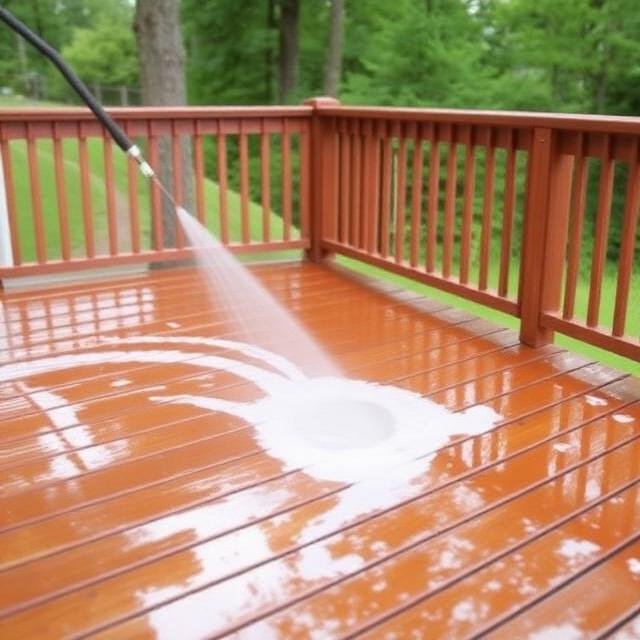
The safest way to pressure wash a deck is to prepare the area, use the correct cleaner, start with low pressure, choose a wide nozzle, test first, wash with the grain, rinse thoroughly, and let the deck dry before adding furniture or applying finish.
Use this checklist before starting:
- Furniture removed
- Deck swept
- Loose screws fixed
- Plants protected
- Cleaner selected
- Pressure washer inspected
- Correct nozzle attached
- Test spot completed
- Safety glasses worn
- Children and pets away
- Low pressure selected
- Boards rinsed evenly
- Cleaner fully removed
- Deck left to dry
This checklist helps prevent damage and keeps the cleaning process simple.
FAQs About Cleaning a Deck With a Pressure Washer
Most deck pressure washing questions focus on PSI, nozzle choice, cleaner type, wood safety, composite decking, and whether pressure washing is better than scrubbing. The simple answer is that pressure washing works well when used gently, but the wrong setup can damage the deck quickly.
What PSI pressure washer is best for cleaning decks?
The best PSI for cleaning decks depends on the material. Wood decks usually need low to moderate pressure, while composite decks should follow the manufacturer’s PSI guidance. Always start low, test a hidden spot, and increase only if needed.
Can you pressure wash a wood deck?
Yes, you can pressure wash a wood deck if the boards are strong and you use gentle pressure with a wide fan nozzle. Avoid high pressure, narrow tips, and holding the stream too close to the wood.
Can you pressure wash Trex decking?
Some Trex decking can be pressure washed if you follow Trex’s care instructions, use a fan tip, and rinse thoroughly. Always check the product line’s official cleaning guide before using pressure on composite decking.
What is the best deck cleaner for a pressure washer?
The best deck cleaner for a pressure washer is a cleaner made for your specific deck type. Use wood-safe cleaner for wood decks and manufacturer-approved cleaner for composite decking. Avoid harsh chemicals that may damage boards or plants.
Should I use soap before pressure washing a deck?
Yes, soap or deck cleaner helps loosen dirt, mildew, and stains before rinsing. This allows you to clean with less pressure, which reduces the chance of damaging wood or composite surfaces.
What nozzle should I use to pressure wash a deck?
A 25-degree or 40-degree fan nozzle is usually best for deck cleaning. The 40-degree nozzle is gentler, while the 25-degree nozzle gives more cleaning power. Avoid the zero-degree nozzle on decks.
How long should a deck dry after pressure washing?
A deck should dry fully before staining, sealing, or replacing furniture. Drying time depends on weather, wood type, airflow, and humidity. Many wood decks need at least a full day or more before finishing work.
Is pressure washing better than scrubbing a deck?
Pressure washing is faster for large dirty decks, but scrubbing is safer for delicate, old, painted, or damaged surfaces. For best results, use deck cleaner and light scrubbing before gentle rinsing.
Can pressure washing damage a deck?
Yes, pressure washing can damage a deck if the PSI is too high, the nozzle is too narrow, or the spray is held too close. Damage may include raised grain, splintering, streaks, and surface scars.
Final Recommendation
The best way to clean a deck with a pressure washer is to use a deck-safe cleaner, low pressure, a wide fan nozzle, and slow controlled rinsing. For wood decks, protect the grain. For composite decks, follow the manufacturer’s cleaning instructions before using pressure.
Best overall approach: cleaner first, pressure second.
Best nozzle: 40-degree fan tip for gentle rinsing.
Best PSI strategy: start low and test first.
Best safety rule: never treat a pressure washer like a regular hose.
Best aftercare: let the deck dry fully before sealing, staining, or replacing furniture.
A clean deck should look refreshed, not sandblasted. If the pressure washer starts acting like a tiny water-powered chainsaw, turn it down.

Michael Harris is an experienced woodworker and power tool expert with over 12 years in woodworking. Specializing in functional, high-quality furniture, he offers expert advice on tool selection, maintenance, and sharpening for both beginners and professionals.

