Best Jigsaw for Cutting Metal 2026: Top Picks for Precision Cutting
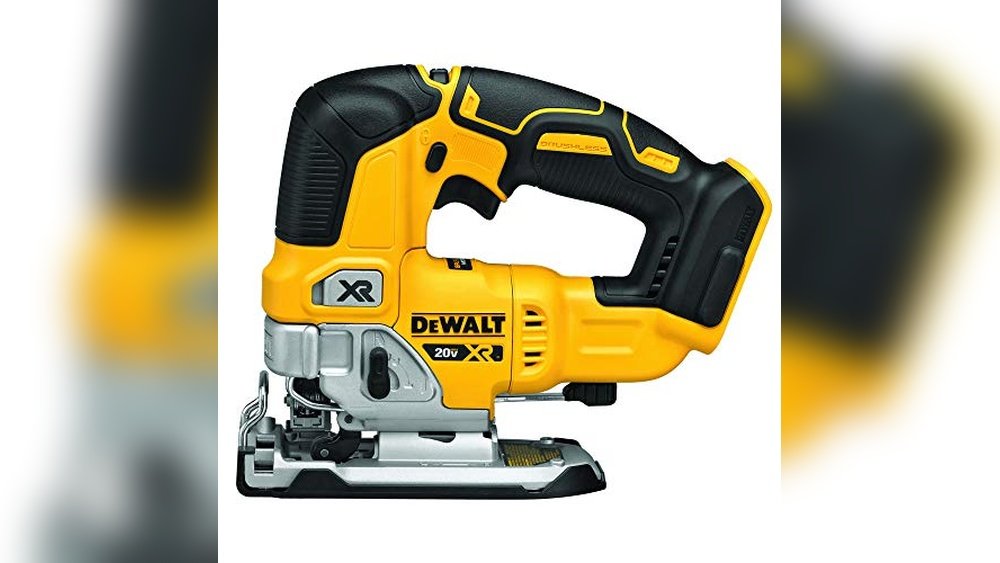
The best jigsaw for cutting metal is one with variable speed control, strong motor power, a stable shoe plate, low-vibration handling, and compatibility with metal-cutting blades. For most DIY and workshop users, a corded jigsaw offers steady power, while a cordless metal jigsaw is better for portability and job-site flexibility.
A jigsaw can cut metal when it is paired with the correct blade and used for the right material thickness. It is especially useful for thin sheet metal, aluminum, light steel, metal profiles, and curved cuts where larger saws may feel too aggressive.
For metal cutting, the tool matters, but the blade matters even more. Bosch, for example, describes its PRO Metal T123XF jigsaw blade as suitable for thick and thin metal, using bi-metal construction and progressive tooth pitch for different metal thicknesses.
Can a Jigsaw Cut Metal?
Yes, a jigsaw can cut metal if you use a metal-cutting blade, secure the workpiece, choose the right speed, and avoid forcing the saw. A jigsaw is best for thin to medium metal, curved shapes, small cutouts, sheet metal, aluminum, and light fabrication work—not heavy industrial steel cutting.
A jigsaw metal cutting setup usually needs:
- A metal-rated blade
- Variable speed control
- A firm base plate
- Low or no orbital action
- Eye and hearing protection
- A securely clamped workpiece
- A tool that matches the metal thickness
Many people ask, “Can a jigsaw cut metal?” The answer is yes, but not every jigsaw is ideal for the job. Metal creates more resistance than wood, so blade quality, stroke control, and tool stability become much more important.
Best Jigsaws for Cutting Metal Compared
The best metal cutting jigsaw depends on how often you cut metal, what type of metal you cut, and whether you need portability or continuous power. Cordless models are great for flexible movement, while corded models are usually better for long sessions, steady output, and repeated workshop use.
| Jigsaw Type | Best For | Key Features to Look For | Avoid If |
|---|---|---|---|
| Cordless brushless jigsaw | Job sites, outdoor work, mobile cutting | Brushless motor, LED light, strong battery system | You need nonstop runtime |
| Corded jigsaw | Workshop metal cutting | Strong amp rating, variable speed, stable power | You need full portability |
| Compact jigsaw | Light sheet metal and aluminum | Lightweight body, easy handling, lower vibration | You cut thick metal often |
| Orbital jigsaw | Mixed materials | Adjustable orbit settings | You need ultra-clean metal cuts |
| Budget jigsaw | Occasional DIY use | Metal blade compatibility, speed control | You need heavy-duty performance |
DEWALT Cordless Metal Cutting Jigsaw
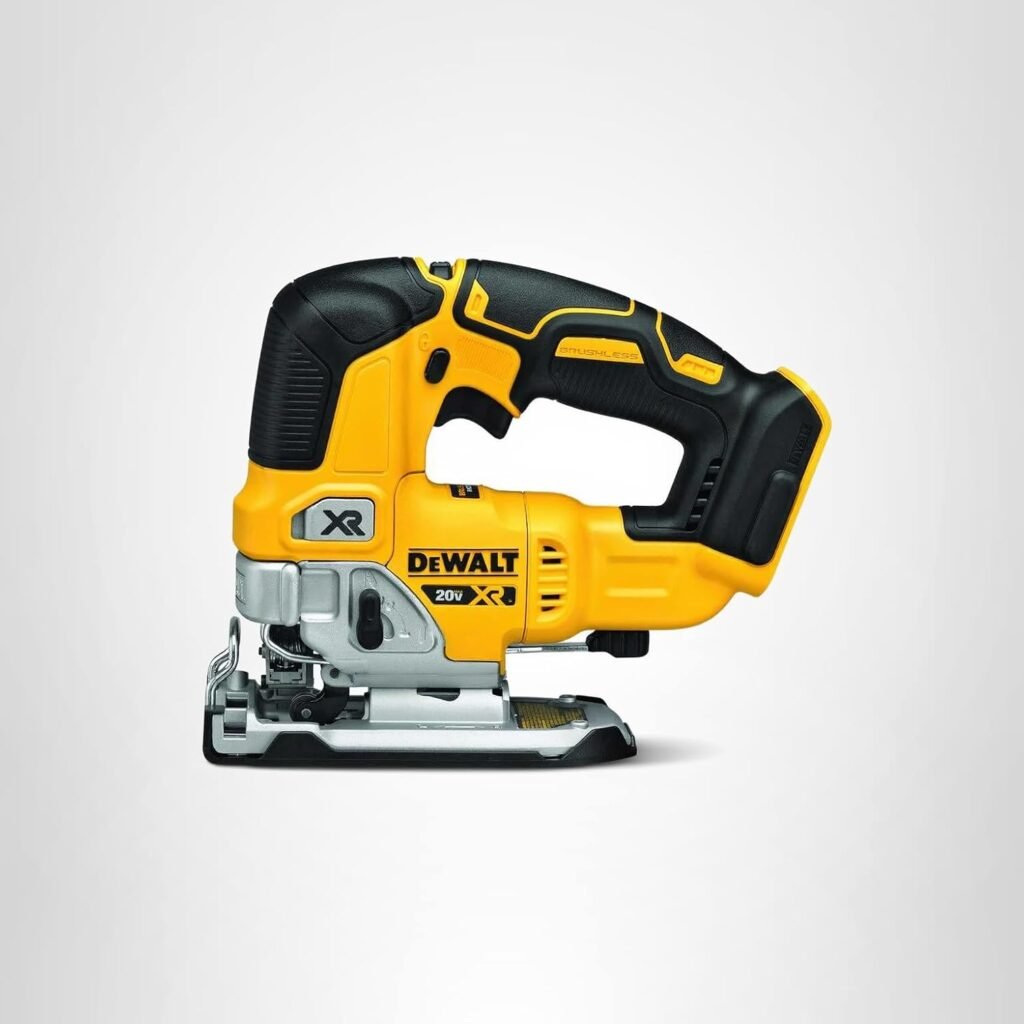
The DEWALT cordless metal cutting jigsaw is a strong choice for users who want portability, controlled cuts, and reliable cordless performance. Its brushless motor, LED light, variable speed control, compact design, and keyless blade change make it useful for detailed metal work and mobile cutting tasks.
This model is best for users who already own compatible DEWALT batteries. Since it is commonly sold as a bare tool, the battery and charger may need to be purchased separately.
Why it works well for metal:
- Brushless motor helps maintain steady power
- Variable speed supports better control on metal
- LED light improves cut-line visibility
- Keyless blade change saves time
- Cordless design helps in tight or outdoor spaces
Best for: DIYers, remodelers, field work, and users who value cordless convenience.
Not ideal for: Buyers who want a complete ready-to-use kit or users cutting thick metal for long periods.
Eastwood Metal Cutting Jig Saw
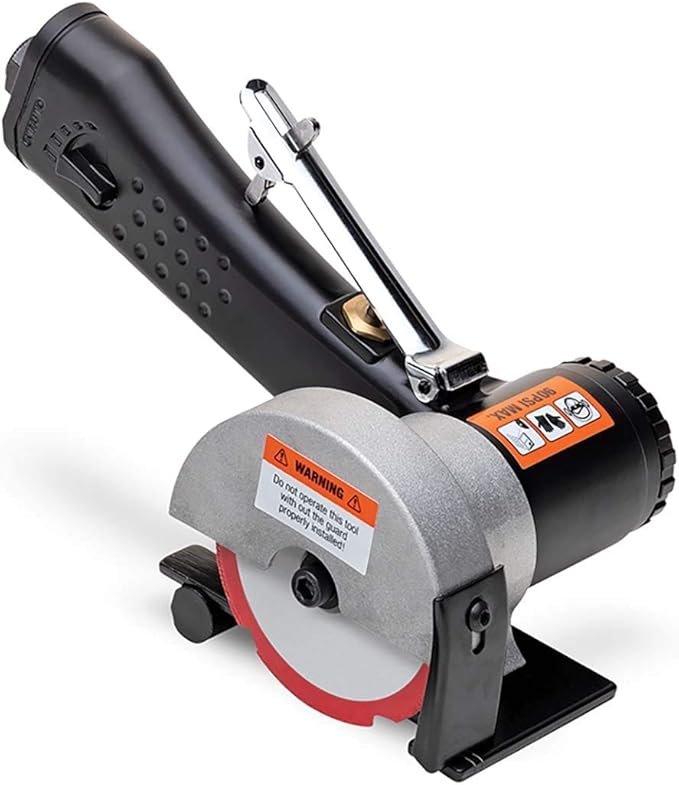
The Eastwood metal cutting jig saw is a practical corded option for hobbyists and light professionals who need steady power for metal projects. Its 6.5-amp motor, orbital blade settings, balanced body, and straightforward blade changes make it suitable for light to medium sheet metal work.
A corded jigsaw can be a better fit if you work mainly in a garage, workshop, or fixed workspace. You do not need to worry about battery runtime, and the tool can deliver more consistent power during repeated cuts.
Good points:
- 6.5-amp motor for regular metal cutting
- Adjustable orbital settings
- Balanced handling
- Simple blade changes
- Suitable for home workshop use
Limitations:
- Less portable than cordless models
- Not made for heavy industrial metal cutting
- Better for light to medium jobs
Best for: Home workshops, sheet metal projects, DIY repairs, and hobby metalwork.
WORKPRO Corded Metal Jigsaw
The WORKPRO corded metal jigsaw is a good pick for DIY users who want variable speed, bevel cutting, and consistent plugged-in power. It includes features such as tool-free blade changes, LED lighting, a dust blower, and adjustable cutting control for metal, wood, and plastic projects.
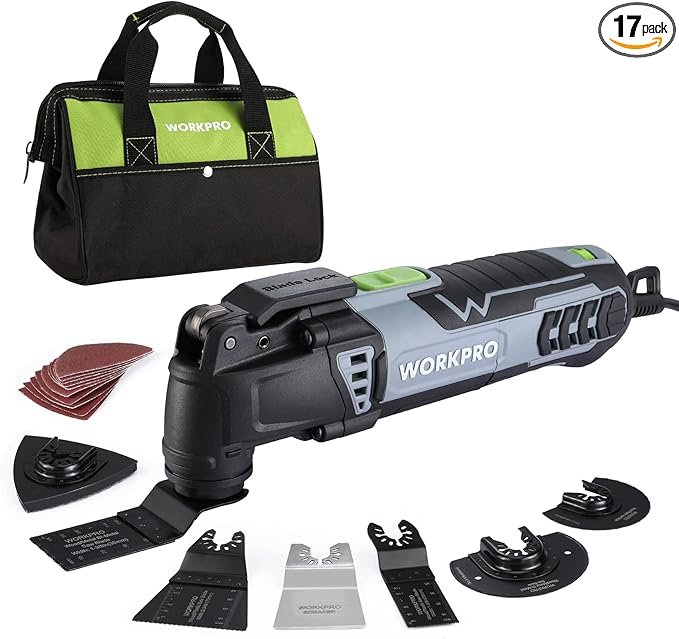
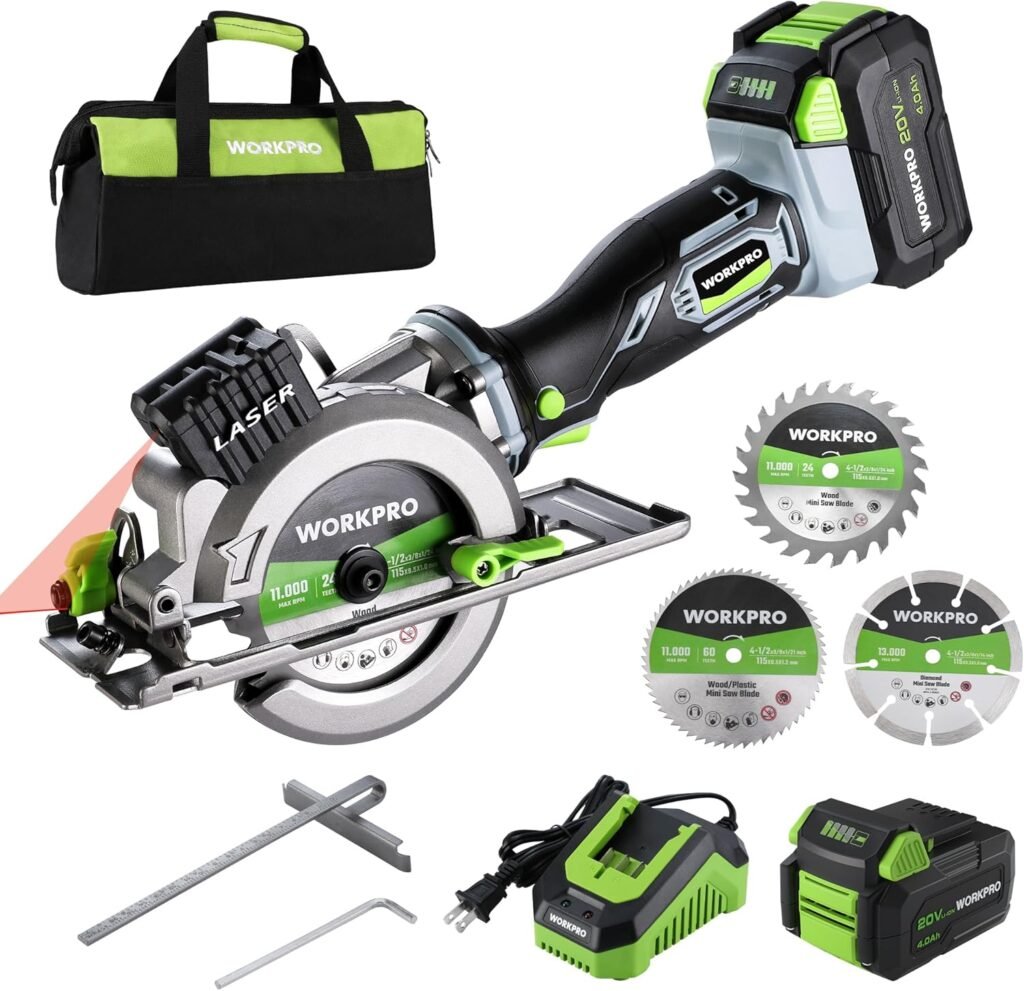
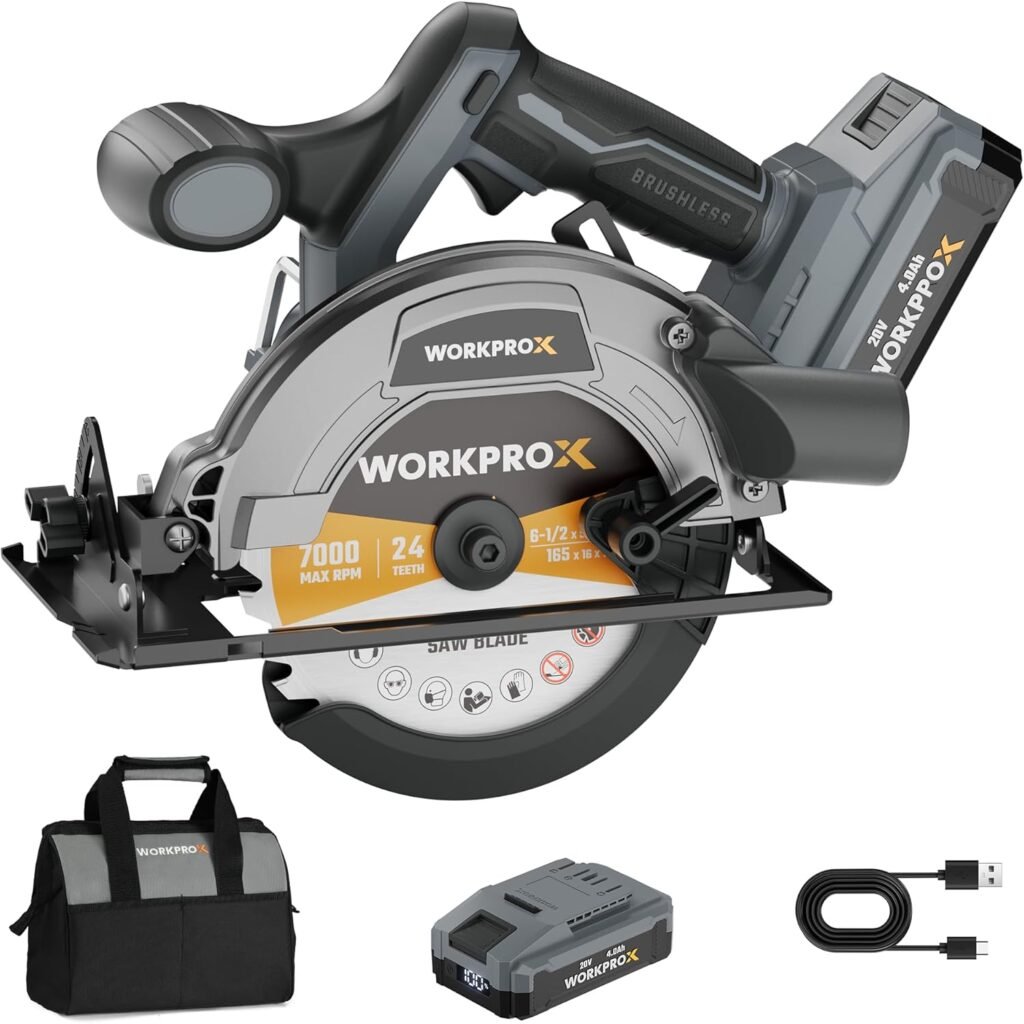
This is a good option when you want one jigsaw for mixed-material work. It can handle metal tasks, but users should still buy quality metal cutting jigsaw blades if the included blade set is more focused on wood.
Useful features:
- Variable speed control
- Bevel cutting up to 45 degrees
- Tool-free blade change
- LED light
- Dust blower for better visibility
Best for: DIY metal cutting, occasional sheet metal work, and mixed home projects.
Not ideal for: Users who need a very lightweight or cordless tool.
BLACK+DECKER Compact Metal Jig Saw
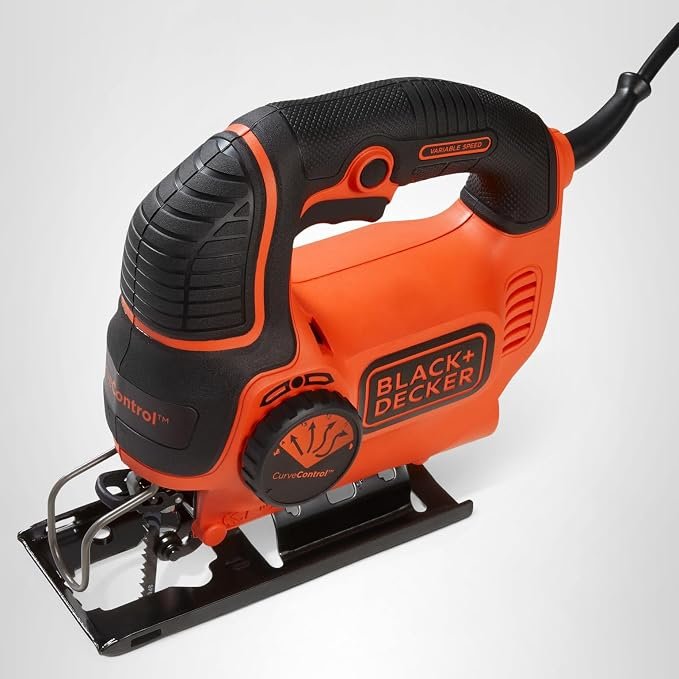
The BLACK+DECKER compact metal jig saw is best for light to medium metal cutting where comfort and easy handling matter. Its 4.5-amp motor, variable speed, bevel capacity, lighter body, and clear wire guard make it beginner-friendly for occasional metal, aluminum, and household repair tasks.
This is not the strongest option for thick steel, but it is useful for lighter projects. For small repairs, thin sheet metal, or basic workshop tasks, its compact body makes it easier to control than heavier tools.
Why choose it:
- Lightweight design
- Easy handling
- Variable speed up to 3,000 SPM
- Bevel cutting support
- Good visibility around the cut line
Best for: Beginners, hobby users, aluminum cuts, thin sheet metal, and small home projects.
WEN Variable Speed Orbital Jig Saw
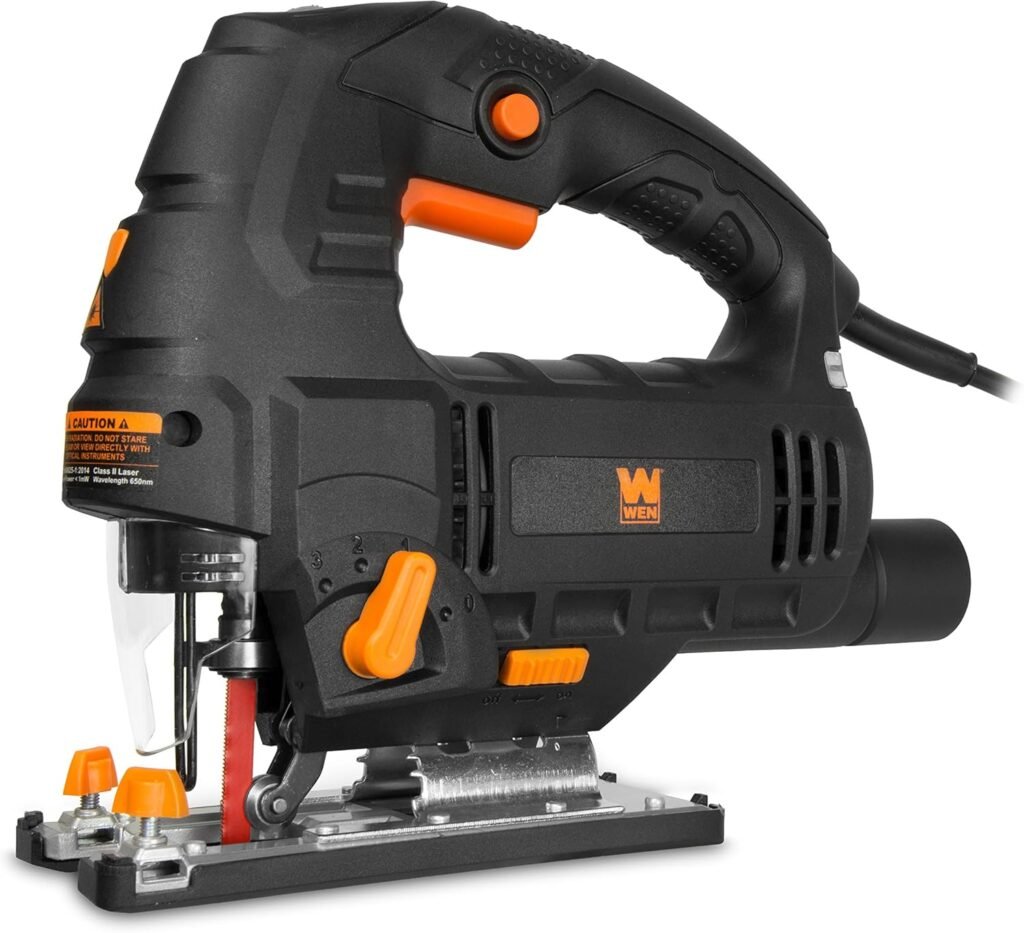
The WEN variable speed orbital jig saw is a versatile choice for users who cut metal occasionally but also work with wood and plastic. Its variable speed motor, orbital settings, LED light, laser guide, dust port, and included metal blade make it flexible for general DIY work.
For metal cutting, use the lower orbital setting or turn orbital action off when clean control matters. Orbital motion can speed up cutting, but it may also make fine metal cuts rougher.
Strong points:
- Variable speed up to 3,300 SPM
- Laser and LED guide
- Dust blower and port
- Multiple orbital settings
- Includes wood and metal blades
Best for: Users who want one affordable jigsaw for multiple materials.
Hammerhead 4.8-Amp Jigsaw
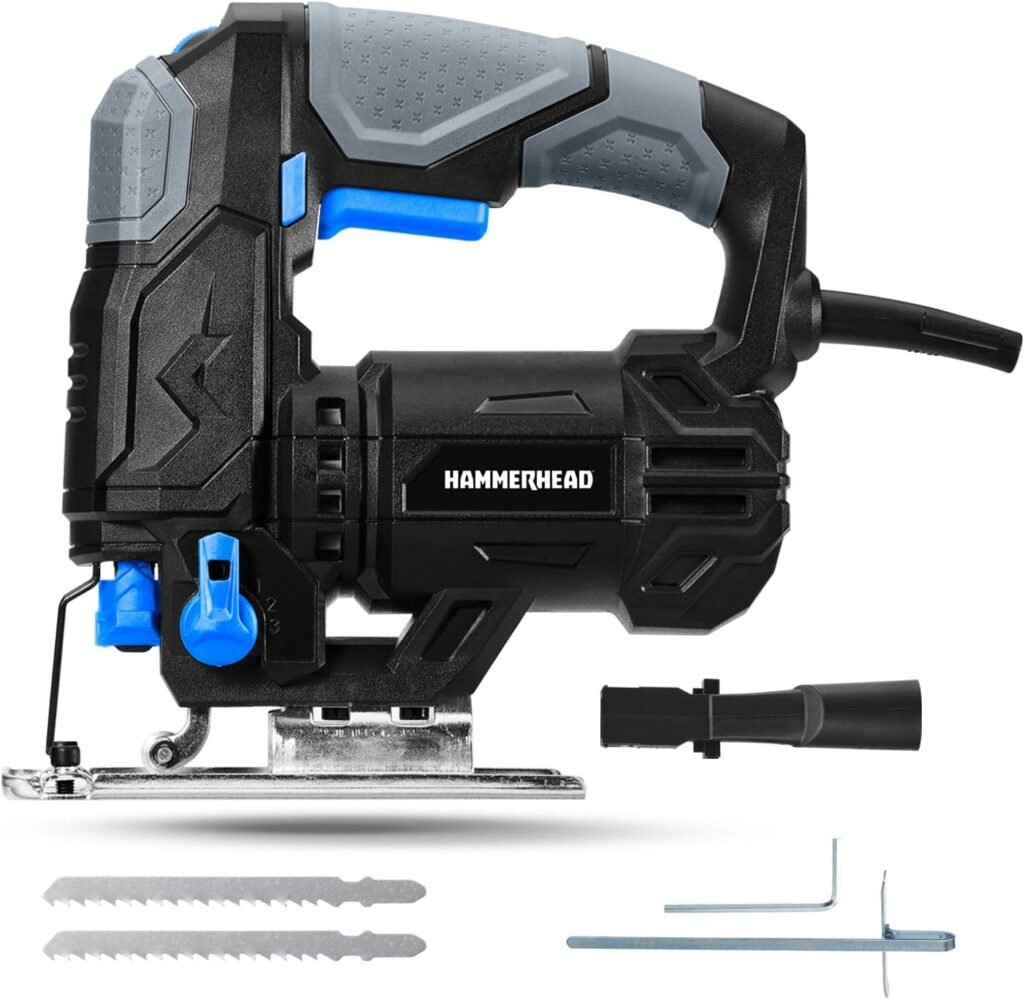
The Hammerhead 4.8-amp jigsaw is a budget-friendly option for casual metal cutting and mixed-material projects. It offers variable speed, tool-free T-shank blade changes, four-stage orbital control, and bevel cutting, making it useful for DIY users who need flexibility without paying for a professional-grade tool.
This is a practical choice for occasional metal work. It is not the right tool for thick steel or long industrial use, but it can handle light to medium jobs when paired with the correct metal blade.
Best for:
- DIY repairs
- Light metal sheets
- Mixed material cutting
- Users who want easy blade changes
- Budget-conscious buyers
DEKOPRO Corded Electric Jigsaw
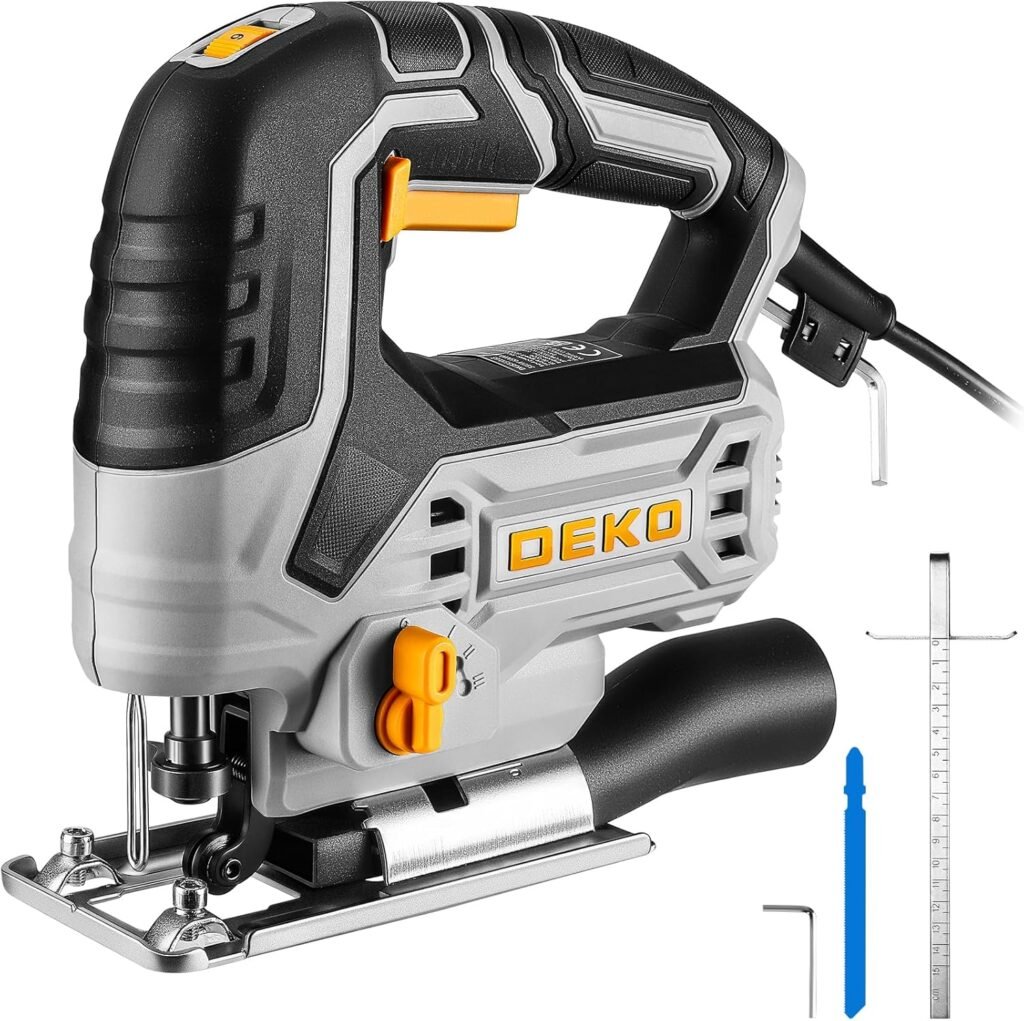
The DEKOPRO corded electric jigsaw is a value-focused choice for users who want speed control, bevel adjustment, orbital settings, and tool-less blade changes. It works best for hobbyists and beginners who cut thin metal occasionally and need a stable, adjustable jigsaw for general home projects.
This model is better viewed as a versatile DIY jigsaw rather than a dedicated metal-cutting machine. It can cut metal with the right blade, but the user should not expect industrial-level performance.
Key features:
- Six variable speed settings
- Four orbital settings
- ±45-degree bevel base
- Tool-less blade clamp
- Dust port support
Best for: Beginners, home use, thin metal, wood, and plastic.
Tollkye Brushless Jigsaw
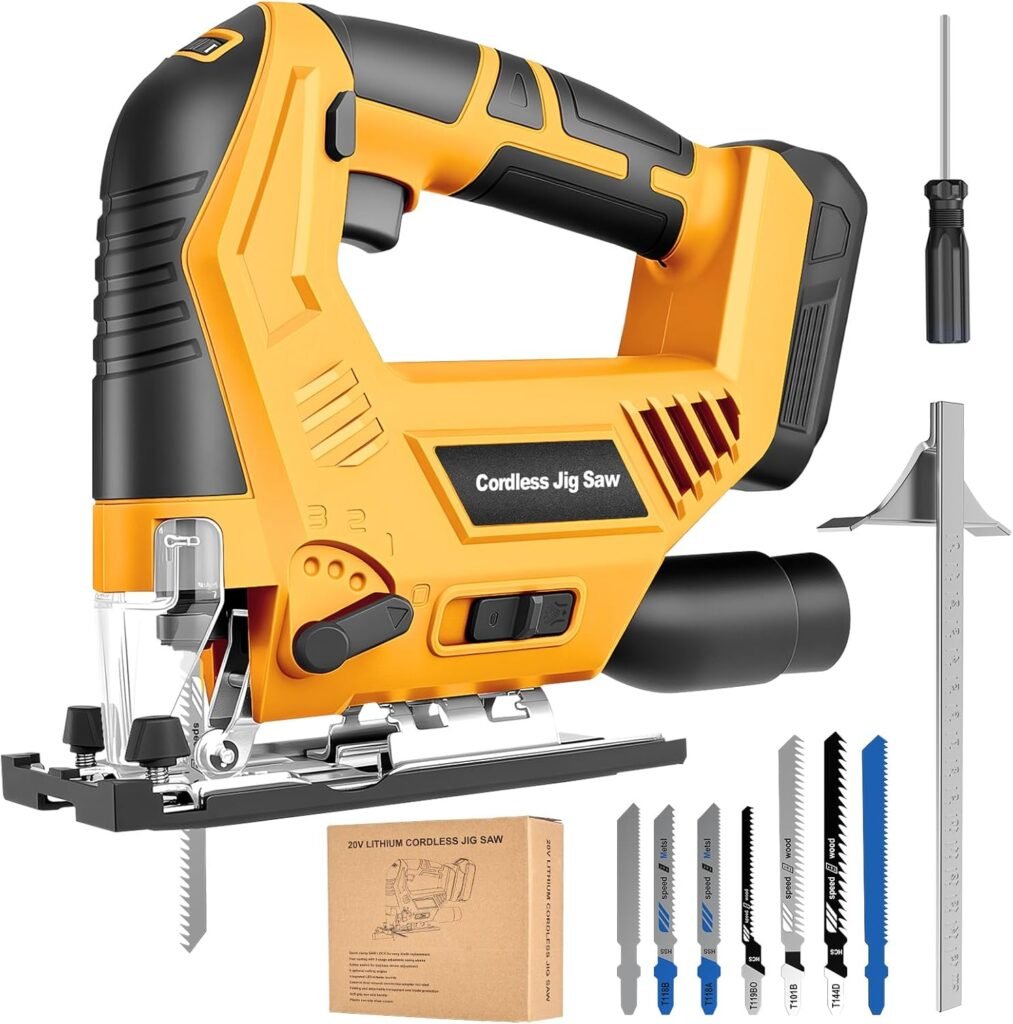
The Tollkye cordless brushless jigsaw is useful for users who already own Milwaukee 18V batteries and want a lightweight cordless tool for metal, wood, and PVC. Its brushless motor, LED light, bevel cutting, and battery compatibility make it convenient for mobile cutting tasks.
Because it may not include a battery, buyers should check compatibility before purchase. It is best for people already invested in the Milwaukee-style 18V battery system.
Best for:
- Cordless convenience
- Light to medium metal cutting
- Users with compatible batteries
- Portable workshop tasks
- Quick cuts in tight areas
GEARLASSO Cordless Jig Saw
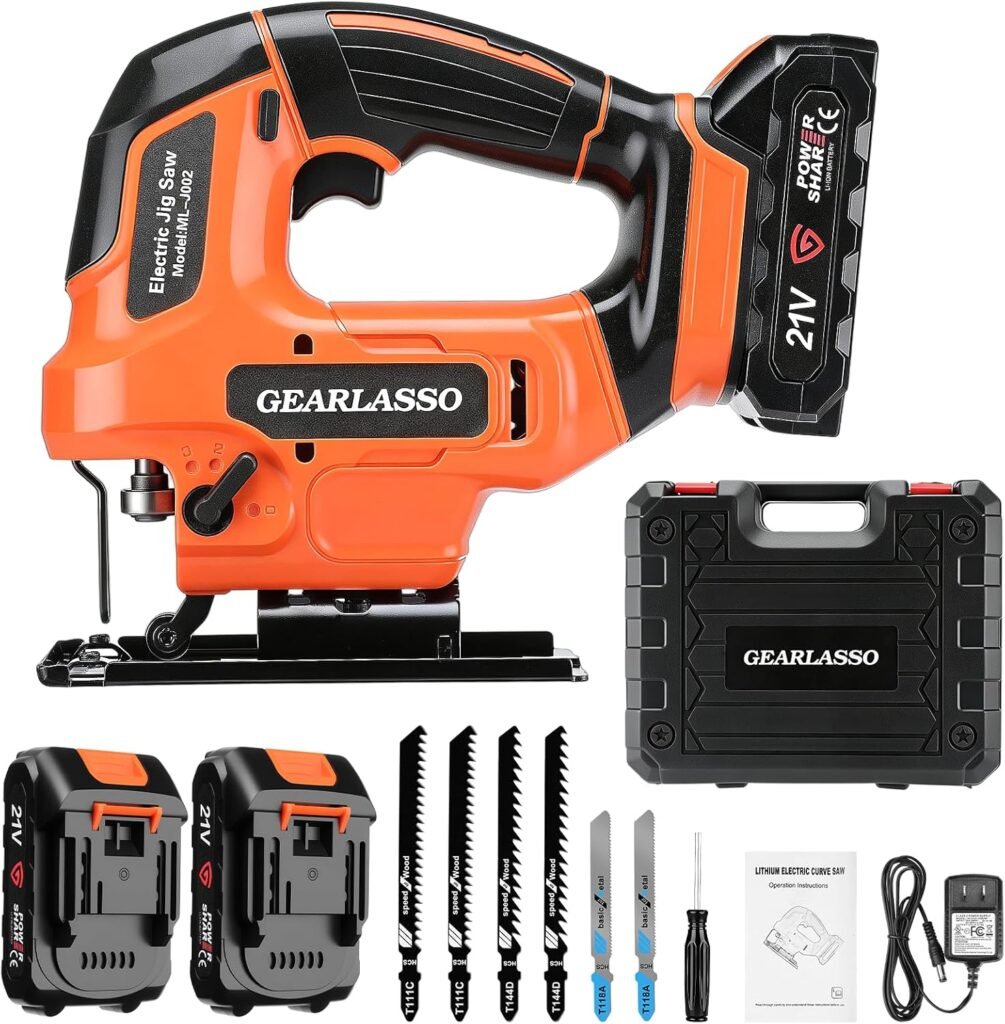
The GEARLASSO cordless jig saw is a good fit for users who want portable metal cutting with batteries included. It offers variable speed, LED lighting, tool-free blade changes, bevel adjustment, and cordless movement for light to medium metal, wood, and plastic projects.
This model is useful when mobility matters more than maximum power. It can support general workshop and DIY metal cutting, but users cutting thick metal regularly should consider a stronger corded option.
Good for:
- Mobile DIY work
- Light metal sheets
- Quick job-site cutting
- Users who want included batteries
- Mixed material projects
How to Choose the Best Jigsaw for Cutting Metal
Choose the best jigsaw for cutting metal by matching the tool to your metal type, thickness, blade system, power source, speed control, and comfort needs. The most important features are metal blade compatibility, variable speed, low vibration, stable shoe plate, and enough motor power for controlled cutting.
When comparing a metal jigsaw, focus on these buying factors:
1. Blade Compatibility
Metal cutting depends heavily on blade quality. Bosch notes that bi-metal jigsaw blades combine hard teeth with a flexible body, while progressive tooth pitch helps cut different material thicknesses.
Look for:
- T-shank compatibility
- Bi-metal or HSS blades
- Fine teeth for metal
- Proper TPI for the material
- Blade length that matches the cut depth
2. Variable Speed Control
Variable speed is essential for cutting metal with a jigsaw. Slower speeds usually give more control and reduce heat buildup, while higher speeds may be useful for softer or thinner material. A single-speed jigsaw is less flexible for metal work.
3. Corded vs Cordless Power
Corded jigsaws are better for long workshop sessions. Cordless jigsaws are better for portability, outdoor work, and tight spaces. The best choice depends on whether you need continuous power or movement freedom.
4. Orbital Settings
Orbital action moves the blade slightly forward during the stroke. This can make cutting faster, but it is usually better to use low or no orbital action for cleaner metal cuts.
5. Comfort and Control
Metal cutting can create vibration. Choose a jigsaw with a comfortable grip, balanced weight, and stable shoe plate. A tool that feels awkward in your hand can make the cut less accurate.
Cutting Sheet Metal With a Jigsaw
Cutting sheet metal with a jigsaw is possible when the material is thin enough, the workpiece is secured, and the blade is designed for metal. A jigsaw is especially useful for curved cuts, small openings, and controlled shapes where a circular saw or grinder may be too aggressive.
For cutting sheet metal with jigsaw searches, the user usually wants to know whether the tool is suitable and what features matter. The cleanest answer is: yes, but use a fine-tooth metal blade and a tool with variable speed.
Best jigsaw features for sheet metal:
- Fine-tooth metal blade
- Low vibration
- Adjustable speed
- Strong base plate
- Good visibility
- Comfortable grip
Avoid using wood blades on metal. Wood blades are not designed for metal’s hardness and can wear quickly, cut poorly, or create rough edges.
Jigsaw for Cutting Aluminum
A jigsaw for cutting aluminum should have variable speed, good blade control, and compatibility with fine-tooth or non-ferrous metal blades. Aluminum is softer than steel, but it can still create rough edges if the blade is wrong or the tool moves too aggressively.
A jigsaw for cutting aluminum is useful for DIY projects, panels, thin profiles, and small repair work. Since aluminum is easier to cut than steel, many standard jigsaws can handle it with the correct blade.
For aluminum, look for:
- Metal or non-ferrous blade compatibility
- Smooth speed adjustment
- Low vibration body
- Stable shoe plate
- LED or clear cut-line visibility
Best Metal Cutting Jigsaw Blades
The best metal cutting jigsaw blades are usually bi-metal or high-speed steel blades with fine teeth and the correct TPI for the material. For thin sheet metal, higher TPI blades create smoother cuts. For thicker metal, progressive tooth pitch can help balance speed and control.
Bosch lists its PRO Metal T123XF blade with 10–21 TPI, HSS material, and a recommended material thickness range of 1.5 mm to 8 mm for sheet metal. It also notes a cut capacity up to 25 mm for pipes and profiles.
Blade buying checklist:
- Use metal-specific blades
- Match TPI to metal thickness
- Choose bi-metal for durability
- Use T-shank blades if your jigsaw supports them
- Keep spare blades ready for longer jobs
Jigsaw Safety for Metal Cutting
Metal cutting with a jigsaw should be treated as a high-risk power tool task, especially for inexperienced users. Always follow the manufacturer’s manual, use proper PPE, secure the workpiece, keep bystanders away, and stop if the tool vibrates, binds, overheats, or feels unstable.
OSHA’s hand and power tool guidance emphasizes that power tools can be hazardous when used improperly and highlights the need for protective equipment, guards, and safe tool handling practices.
For safer use:
- Wear eye protection
- Use hearing protection when needed
- Keep hands away from the blade path
- Use the correct blade for the metal
- Secure the material before cutting
- Do not force the tool
- Disconnect power or remove the battery before changing blades
- Follow the manufacturer’s instructions
Quick Buying Checklist
The best jigsaw for cutting metal should be easy to control, compatible with metal blades, powerful enough for the material, and comfortable for the user. Before buying, check the tool’s speed control, blade system, power source, weight, visibility features, bevel capacity, and real-world suitability for metal.
Use this quick checklist before buying:
- Does it support metal cutting blades?
- Does it have variable speed?
- Is it corded or cordless?
- Is the tool comfortable to hold?
- Does it have LED light or a clear cut-line view?
- Can it bevel cut if needed?
- Are replacement blades easy to find?
- Is it suitable for sheet metal, aluminum, or light steel?
- Does it match your battery platform?
- Is it made for casual, DIY, or professional use?
Best Jigsaw for Cutting Metal by Use Case
The best jigsaw for cutting metal changes by use case. For portability, choose a cordless brushless jigsaw. For workshop cutting, choose a corded model. For thin sheet metal, prioritize blade quality and speed control. For beginners, choose a lightweight tool with simple blade changes.
| Use Case | Best Type | Recommended Feature |
|---|---|---|
| Sheet metal | Variable speed jigsaw | Fine-tooth metal blade |
| Aluminum | Lightweight jigsaw | Non-ferrous metal blade |
| Job-site work | Cordless jigsaw | Brushless motor and LED |
| Workshop use | Corded jigsaw | Strong motor and stable power |
| Beginner DIY | Compact jigsaw | Easy blade change |
| Repeated metal cutting | Higher-power corded model | Low vibration and durable blade system |
FAQs About the Best Jigsaw for Cutting Metal
The most common questions about metal jigsaws focus on whether a jigsaw can cut metal, which blade to use, whether cordless models are strong enough, and how to cut sheet metal or aluminum cleanly. The simple answer is that blade choice and speed control matter as much as the jigsaw itself.
Can I cut metal with a regular jigsaw?
Yes, you can cut metal with a regular jigsaw if it accepts metal-cutting blades and has enough power for the material. A variable speed jigsaw is better because it gives more control than a single-speed model.
Can a jigsaw cut sheet metal?
Yes, a jigsaw can cut sheet metal when fitted with a fine-tooth metal blade. It works well for thin sheets, curved cuts, and small cutouts, but the sheet should be secured properly before cutting.
What blade is best for cutting metal with a jigsaw?
A bi-metal or HSS jigsaw blade with fine teeth is usually best for metal. Choose the TPI based on the metal thickness. Higher TPI blades are better for thin sheet metal, while progressive tooth blades can handle mixed thicknesses.
Can a jigsaw cut aluminum?
Yes, a jigsaw can cut aluminum with the right blade. Aluminum is softer than steel, so many jigsaws can handle it, but a metal or non-ferrous blade gives cleaner results.
Is a cordless jigsaw good for cutting metal?
A cordless jigsaw can cut light to medium metal if it has enough power, a good battery, and the right blade. For long cutting sessions or thicker metal, a corded jigsaw usually provides more consistent power.
Should I use orbital action when cutting metal?
Use low or no orbital action for cleaner metal cuts. Orbital action can cut faster, but it may create rougher edges and less control on thin or delicate metal.
What is the best jigsaw for cutting metal at home?
For home use, the best jigsaw for cutting metal is usually a variable speed corded model or a compact cordless model with metal blade compatibility. Choose based on whether you need steady power or portability.
Final Recommendation
The best jigsaw for cutting metal is the one that matches your material, blade type, and workflow. For most users, prioritize variable speed, metal blade compatibility, low vibration, and stable handling. Corded models are better for steady workshop use, while cordless jigsaws are better for flexible, mobile cutting.
For the safest and cleanest results, do not choose a jigsaw based on motor power alone. Choose the full system: tool, blade, speed control, comfort, and safety setup. Tiny blade, big responsibility — classic power-tool drama.

Michael Harris is an experienced woodworker and power tool expert with over 12 years in woodworking. Specializing in functional, high-quality furniture, he offers expert advice on tool selection, maintenance, and sharpening for both beginners and professionals.