How to Choose the Right John Deere Lawn Mower Hitch
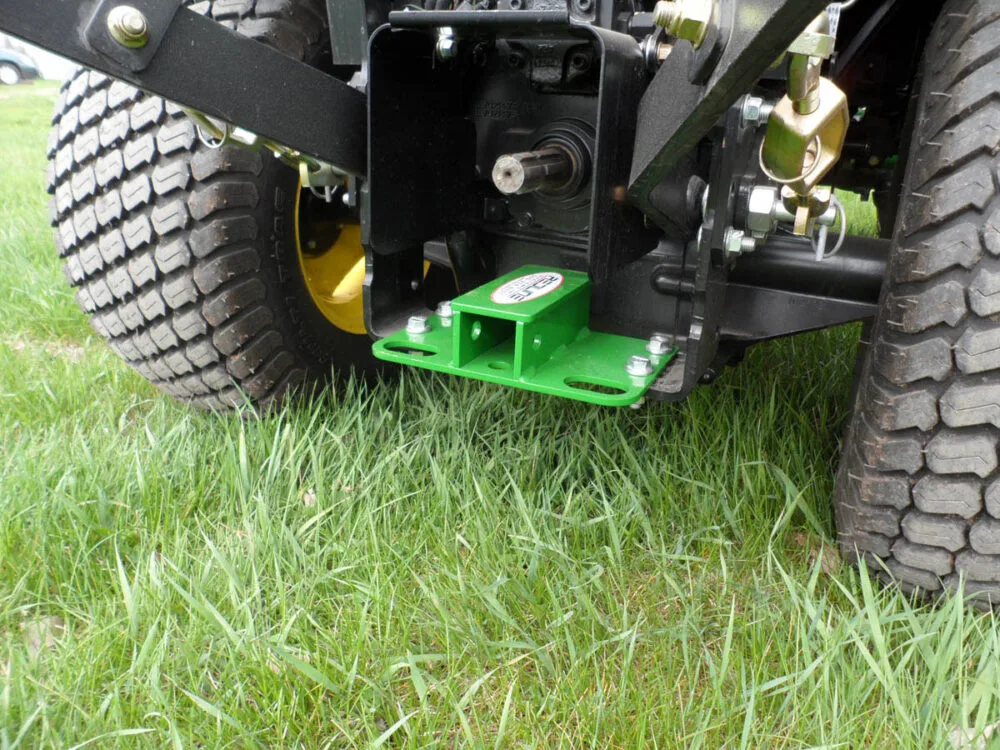
A john deere lawn mower hitch transforms your garden tractor into a capable hauling machine. You can tow light trailers, drag a utility cart, or attach landscape implements with ease. But picking the right one matters more than you might think.
Get it wrong and you risk frame damage, unsafe towing, or a hitch that simply won't fit.
Manufacturer specifications vary widely across John Deere's lawn and garden lineup. A compact 100 Series tractor has very different towing capacity than an X500 with a heavy-duty transaxle. This guide breaks down every option so you can make the right call for your specific machine.
Quick Answer
A john deere lawn mower hitch is a metal bracket that attaches to your tractor's frame or mounting points. It accepts ball mounts or other tow accessories for hauling trailers and implements. Most John Deere lawn tractors support rear receiver hitches rated between 200 and 600 pounds of tongue weight.
Always verify your model's tow rating before purchasing.
Check your operator's manual for the exact Gross Trailer Weight limit. Never exceed the manufacturer's specified tongue weight rating. Class I hitches handle up to 2,000 lbs GTW.
Class II handles up to 3,500 lbs GTW. Most lawn tractors need Class I or small Class II setups.
Rear Receiver Hitches vs Front Tow Hooks: Which Fits Your John Deere?
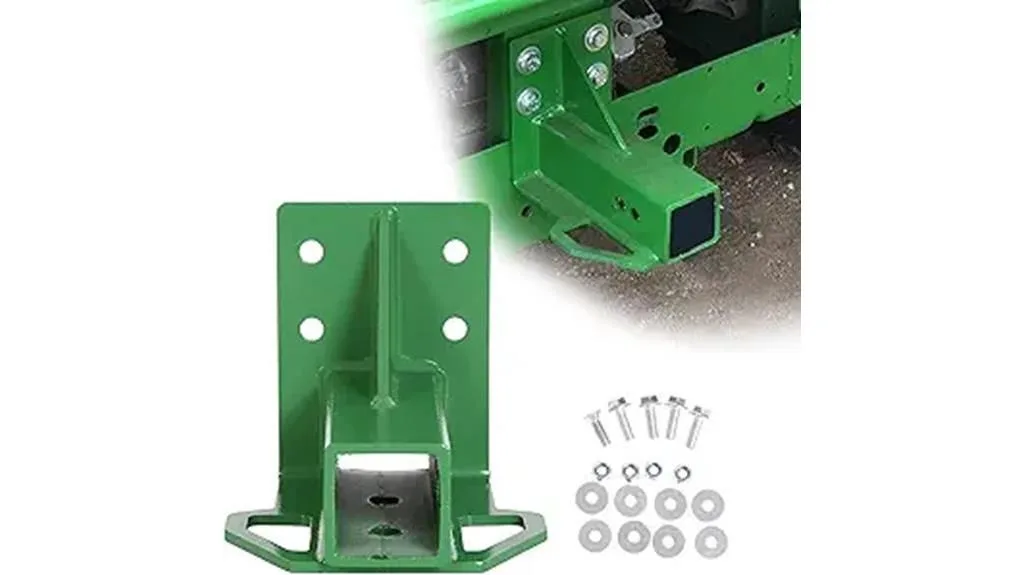
Image source: Bing (Web (fair-use with source credit))
Your John Deere tractor likely offers one of two towing attachment points. Understanding the difference between them prevents costly mistakes.
Rear Receiver Hitches
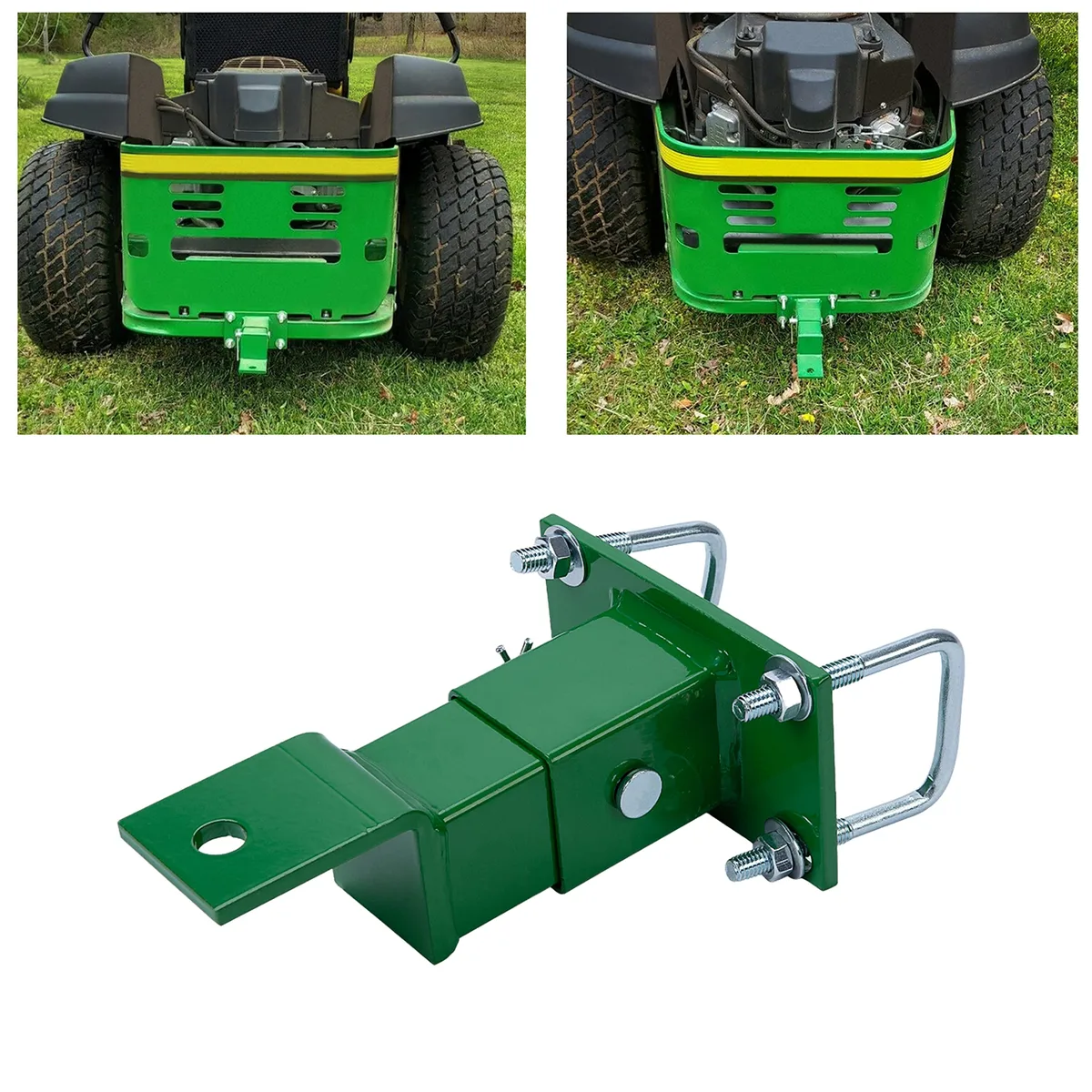
A rear receiver hitch bolts to the back of your tractor frame. It accepts a square tube receiver where you insert ball mounts, cargo carriers, or bike racks. This is the most common setup on John Deere garden tractors.
Most models in the 100, 200, and 300 Series come with factory mount points at the rear. The X300 and X500 series also offer rear receiver options. These hitches typically accept a 1-1/4-inch or 2-inch square receiver tube.
Rear hitches keep your towed load low and stable. The weight sits close to the rear axle for better traction and control. They work well for utility trailers, landscape carts, and small equipment haulers.
Front Tow Hooks
Front tow hooks or drawbars mount to the front of your tractor. They're mainly used for pushing snow, dragging land levelers, or pulling heavy objects forward. Some owners weld or bolt custom brackets here for specialized attachments.
Front towing changes your tractor's balance. It lifts weight off the rear wheels. That means less traction when pulling.
Front hitches work best for pushing applications rather than traditional trailer towing.
Which Should You Choose?
The answer depends on how you plan to use your tractor. If you want to tow a trailer behind you, go with a rear receiver hitch. If you need a front implement for snow or grading, a front tow hook makes more sense.
Many owners install both.
Here's a quick way to decide:
- Tow trailers or carts behind you → Rear receiver hitch
- Push snow or drag front implements → Front tow hook
- Need maximum versatility → Install both if your model supports it
- Haul light loads under 500 lbs → Rear receiver, Class I
- Haul medium loads 500-1,500 lbs → Rear receiver, Class II
Your operator's manual lists which attachment points your specific model supports. Check there first before ordering any hardware.
OEM vs Aftermarket Hitches: The Real Difference
John Deere sells genuine hitch assemblies through their dealer network. Several third-party manufacturers also build compatible units. Both paths have real tradeoffs.
OEM John Deere Hitches
OEM hitches are engineered specifically for each John Deere model. They bolt directly into pre-drilled frame holes. Installation usually requires no modifications.
You get a finish that matches your tractor's paint and styling.
OEM units carry John Deere's warranty coverage. That means if something fails, you're covered. Dealer pricing runs higher though.
Expect to pay $150 to $400 for a genuine John Deere rear receiver hitch depending on your model.
The fit is guaranteed. Every bolt line matches perfectly. You don't need to measure or adjust anything.
Aftermarket Hitches
Companies like Powermate, Curt, and Tow Ready build hitches that fit many John Deere models. These often cost $50 to $200. That's a significant savings over OEM parts.
Aftermarket hitches use the same SAE J684 standards as OEM units. Quality varies by manufacturer. Reputable brands build their hitches from thick gauge steel with proper welds.
Cheaper no-name options sometimes cut corners on material thickness and weld quality.
Fitment isn't always perfect. Some aftermarket hitches require minor adjustments during installation. You may need to measure bolt patterns carefully.
Always verify your tractor's model number against the manufacturer's fitment guide before ordering.
The Real Question: Does It Matter?
If you plan to keep your tractor for many years and want guaranteed fitment, OEM is worth the premium. If you're on a budget and know which aftermarket brand to trust, you can save meaningful money without sacrificing safety.
The key is verifying weight ratings. Whether OEM or aftermarket, the hitch must be rated for your intended load. Don't compromise on that number.
Your tractor's frame isn't worth risking.
| Factor | OEM John Deere | Aftermarket |
|---|---|---|
| Price | $150-$400 | $50-$200 |
| Fitment | Guaranteed for your model | Verify fitment chart |
| Warranty | John Deere coverage | Varies by brand |
| Build Quality | Consistent | Depends on manufacturer |
| Availability | Dealers only | Online and retail |
Hitch Class Breakdown: Class I, II, and III Explained
Hitch classes define how much weight a receiver system can safely handle. Picking the wrong class is one of the most common mistakes John Deere owners make.
What Determines Hitch Class?
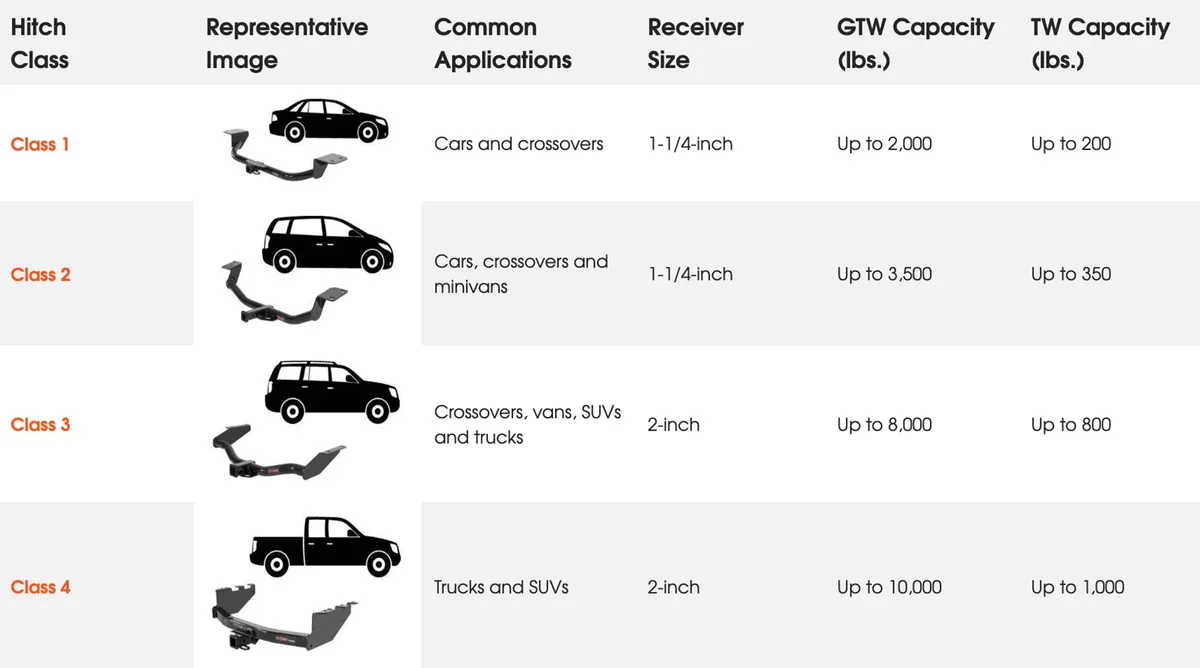
SAE J684 establishes the standard for receiver hitch classifications. Each class specifies a maximum Gross Trailer Weight (GTW) and a maximum tongue weight. These ratings are fixed.
They don't change based on your tractor's strength.
Your John Deere tractor's own tow rating is a separate limit. The hitch class you choose must not exceed what your tractor can safely pull. Both numbers matter.
Class I: Light Duty
Class I hitches support up to 2,000 pounds Gross Trailer Weight. Tongue weight capacity is typically 200 pounds. This is the most common class for lawn and garden tractors.
A Class I setup works well for:
- Small utility trailers carrying 300 to 800 pounds
- Garden carts and wagons
- Lightweight landscape equipment
- Bike racks and cargo carriers
Most John Deere 100, 200, and 300 Series tractors are rated for Class I loads. Check your manual. Some older models may have even lower tow ratings.
Class II: Medium Duty
Class II hitches support up to 3,500 pounds Gross Trailer Weight. Tongue weight capacity rises to around 300 pounds. This class still fits within the capabilities of many John Deere garden tractors.
A Class II setup is appropriate for:
- Medium utility trailers loaded with soil or mulch
- Small enclosed cargo trailers
- Landscape trailers with heavier equipment
- Trailers carrying up to 1,000 pounds of payload
Only select Class II if your tractor's owner manual confirms it can handle the tongue weight. An X300 or X500 series tractor may support Class II. A lighter 100 Series model likely will not.
Class III: Heavy Duty — Usually Too Much
Class III hitches support 5,000 pounds GTW and 500 pounds tongue weight. These are built for half-ton trucks and heavier SUVs. They are almost never appropriate for a John Deere lawn tractor.
Installing a Class III hitch on a garden tractor creates a false sense of security. The hitch itself may be strong enough. Your tractor's frame, transmission, and brakes are not.
Exceeding your tractor's tow rating risks serious mechanical damage.
Stick to Class I or Class II unless your operator's manual explicitly rates your model for higher towing. When in doubt, go lighter. Your tractor will thank you.
| Hitch Class | Max GTW | Max Tongue Weight | Best For John Deere? |
|---|---|---|---|
| Class I | 2,000 lbs | 200 lbs | Yes — most lawn tractors |
| Class II | 3,500 lbs | 300 lbs | Yes — heavier garden tractors |
| Class III | 5,000 lbs | 500 lbs | Rarely — too heavy for most |
Always cross-reference the hitch class rating with your tractor's own tow rating in the owner's manual. The lower of the two numbers is your real limit.
Who Each Hitch Is For: Matching Your Tractor to the Right Option
Not every John Deere lawn tractor is built the same way. Your model determines which hitch options are safe and practical. Here is how the most popular series break down.
John Deere 100 Series
The entry-level 100 Series tractors are built for mowing, not hauling. Most models in this line carry a tow rating between 200 and 400 pounds of tongue weight. A Class I rear receiver hitch is usually the only safe option.
If your 100 Series supports a hitch at all, it will likely be a small 1-1/4-inch receiver. Some base models lack factory mounting points entirely. Check your manual before assuming compatibility.
Heavy towing on a 100 Series risks damaging the transaxle over time.
John Deere 200 and 300 Series
These mid-range tractors sit in a sweet spot for hitch use. Tow ratings typically land between 400 and 700 pounds of tongue weight. Most 200 and 300 Series models come with factory rear hitch mounting points.
A Class I hitch handles light utility trailers with ease. A small Class II setup may work if your manual confirms the higher rating. These tractors feel stable with a loaded garden cart or a small cargo trailer.
They are not built for steep hill towing though. Weight distribution matters even at moderate loads.
John Deere X300 and X500 Series
The X-series tractors are the heavy hitters in the lawn tractor world. Tow ratings often reach 700 to 1,100 pounds of tongue weight depending on the exact model. Rear receiver hitches are widely available for these machines.
You have more flexibility here. A Class I or even a Class II hitch can work well. The X300 and X500 frames are reinforced for occasional towing duty.
Just stay within the published limits. Going beyond them is how transmissions fail.
The Bottom Line
Your operator's manual is the final authority. It lists your tractor's exact tow rating and approved hitch points. Model numbers matter more than series names.
Two tractors in the same series can have different ratings depending on production year and engine size.
When in doubt, choose the lighter hitch class. Your transmission and frame will last longer. You can always upgrade to a higher capacity hitch later if your needs change.
Installation Walkthrough: Bolt-On Steps That Actually Work
Installing a rear receiver hitch is one of the simpler modifications you can make to a John Deere lawn tractor. Most units are pure bolt-on jobs. You do not need special fabrication skills.
Tools You Will Need
Before you start, gather the right equipment. Having the right tools for the job makes the difference between a smooth install and a frustrating afternoon.
Most installations require:
- Socket set with extensions
- Ratchet and wrenches
- Torque wrench
- Measuring tape
- Threadlocker compound
- Basic hand tools
Step-by-Step Installation
Here is how the process typically goes for a standard rear receiver hitch.
Step 1: Park on a level surface. Engage the parking brake. Remove the key. Make sure the tractor is completely stable before working underneath it.
Step 2: Locate the mounting points. Most John Deere tractors have pre-drilled holes in the frame near the rear axle. Clean away any dirt, grass clippings, or debris from the bolt holes. A clogged hole can strip threads or prevent proper seating.
Step 3: Position the hitch. Align the hitch plate with the frame mounting holes. Some hitches use spacer blocks or alignment brackets. Follow the manufacturer's instructions precisely.
Do not force the hitch into place.
Step 4: Hand-tighten the bolts. Start all bolts by hand before using a wrench. This prevents cross-threading. Once everything is started, use a ratchet to snug the bolts down evenly.
Step 5: Apply threadlocker. A small amount of medium-strength threadlocker on each bolt helps prevent vibration loosening. This is especially important on tractors that see bumpy terrain. Apply it sparingly and wipe away excess.
Step 6: Torque to spec. This is the step most people skip. Understanding torque settings on your tools matters just as much here. Most hitch bolts require between 35 and 50 foot-pounds of torque.
Check the hitch manufacturer's instructions for the exact number. Use a torque wrench. Do not guess.
Step 7: Install the ball mount. Slide your chosen ball mount into the receiver tube. Secure it with the provided pin and clip. Give it a firm tug to confirm it is locked in place.
Step 8: Final inspection. Double-check every bolt. Verify the ball mount is secure. Confirm nothing is resting against the hitch during normal operation.
Start the tractor and iddle it briefly. Listen for any unusual vibrations or rattles.
A proper installation takes about 30 to 60 minutes for most John Deere models. If you find yourself struggling with bolts or alignment, stop and reassess. Forcing hardware rarely ends well.
Costs, Specs, and Where to Buy
Hitch pricing varies significantly based on quality, brand, and hitch class. Understanding the numbers helps you avoid overpaying or buying dangerously cheap hardware.
Price Ranges by Category
OEM John Deere hitches run from $150 to $400 at dealerships. These prices include the receiver assembly and all mounting hardware. You pay a premium for guaranteed fitment and warranty coverage.
Aftermarket hitches from reputable brands like Powermate, Curt, and Tow Ready typically cost $50 to $200. These units meet SAE J684 standards and offer solid build quality. The savings are real, but fitment verification is your responsibility.
Ball mounts and accessories add extra cost. A basic ball mount runs $15 to $40. Adjustable drop or rise mounts cost $30 to $80.
Anti-rattle devices and locking pins run $10 to $25 each.
Key Specifications to Check
When comparing hitches, these specs matter most:
| Spec | What to Look For |
|---|---|
| Receiver size | 1-1/4-inch or 2-inch square tube |
| Hitch class | I, II, or III matching your tow rating |
| Material | Mild steel with powder coat or zinc plating |
| Bolt pattern | Must match your tractor's frame holes |
| Weight rating | Must meet or exceed your trailer's tongue weight |
| SAE certification | Look for J684 compliance marking |
Where to Buy
John Deere genuine parts are available through authorized dealers and online parts stores. Expect faster shipping and full warranty support when buying from official channels.
Aftermarket hitches sell through multiple channels. Major online retailers like Amazon and eBay carry many options. Specialty tractor parts websites like Jacks Small Engines and PartSelect also stock compatible hitches.
Big-box stores sometimes carry them in the automotive or garden sections during spring and summer.
Shopping around pays off. Prices can vary by $50 or more for the same hitch depending on the seller. Compare shipping costs too.
A cheaper hitch with high shipping may cost more than a slightly pricier one with free delivery.
Safety Rules and Common Mistakes to Avoid
Towing with a lawn tractor is perfectly safe when you follow the rules. Most accidents and damage happen because owners skip basic precautions.
The Non-Negotiable Safety Rules
Always start with your operator's manual. It lists your tractor's exact tow rating and any model-specific warnings. Follow it precisely.
Use safety chains whenever you tow a trailer. Cross the chains under the tongue. This creates a safety net if the hitch coupling ever fails.
Proper engine maintenance habits also keep your tractor reliable under load.
Never exceed the tongue weight rating. Overloading a hitch causes frame stress, transmission strain, and loss of steering control. Start with lighter loads and build up only after confirming stability.
Keep your towed load low and centered. A high center of gravity turns a stable trailer into a tipping hazard. Secure everything with straps rated for the load weight.
Drive slowly. Lawn tractors are not built for highway speeds or aggressive cornering. A loaded trailer magnifies every steering input.
Take corners wide and brake early.
Common Mistakes to Watch For
Buying a hitch without checking your tractor's tow rating. This is the single most dangerous mistake owners make. Your tractor's limit is lower than you think.
Using a hitch rated below your trailer's tongue weight. Always match or exceed your expected load. When in doubt, go up a class.
Skipping the torque wrench during installation. Loose bolts vibrate loose over time. A properly torqued hitch lasts years.
An improperly torqued one becomes a hazard.
Ignoring ball size matching. Your trailer coupler must match the ball diameter exactly. A 2-inch ball needs a 2-inch coupler.
Mismatched sizes cause dangerous wobble.
Towing on slick or uneven terrain. Wet grass, mud, and steep slopes reduce traction dramatically. A loaded trailer on a slippery slope can push your tractor backward or sideways with little warning.
Keep your hitch clean and inspected. Rinse off dirt and debris after each use. Check for cracks, rust, or deformation before every tow.
Replace any hitch showing signs of stress.
Frequently Asked Questions
Can I tow a trailer with any John Deere lawn tractor?
Not every John Deere lawn tractor is rated for towing. Base models in the 100 Series sometimes lack factory tow ratings entirely. Always check your operator's manual first.
If the manual lists a tow rating, you can safely tow within those limits.
What is the difference between a receiver hitch and a tow hook?
A receiver hitch accepts interchangeable ball mounts and accessories through a square tube opening. A tow hook is a fixed attachment point, usually at the front. Receiver hitches offer more versatility.
Tow hooks are simpler but limited to one type of attachment.
How do I know if my aftermarket hitch is safe?
Look for SAE J684 certification markings on the hitch itself. Verify the weight rating matches or exceeds your trailer's requirements. Check weld quality and material thickness.
Reputable brands publish detailed specifications. Skip no-name hitches with unclear ratings.
Can I use a weight-distribution system on my John Deere tractor?
Lightweight weight-distribution systems exist for smaller tractors. However, most lawn tractors are not designed to handle the stresses of weight distribution. Stick to simple ball mount hitches unless your operator's manual specifically approves a distribution system.
How often should I inspect my hitch?
Inspect your hitch before every towing session. Check for loose bolts, cracks, rust, and receiver tube wear. Re-torque mounting bolts after the first 25 miles of use and then annually.
Replace any component showing signs of fatigue or deformation.
Is it safe to tow on hills with a loaded trailer?
Towing on hills requires extra caution. Uphill grades strain your transmission. Downhill grades test your brakes.
Reduce speed, avoid sudden steering inputs, and never exceed your tractor's rated tongue weight. If the grade feels unsafe, do not attempt it. Your tractor's stability decreases significantly when loaded and inclined.

Michael Harris is an experienced woodworker and power tool expert with over 12 years in woodworking. Specializing in functional, high-quality furniture, he offers expert advice on tool selection, maintenance, and sharpening for both beginners and professionals.