Spartan Mower Blade Setup: The Right Way to Cut Cleaner
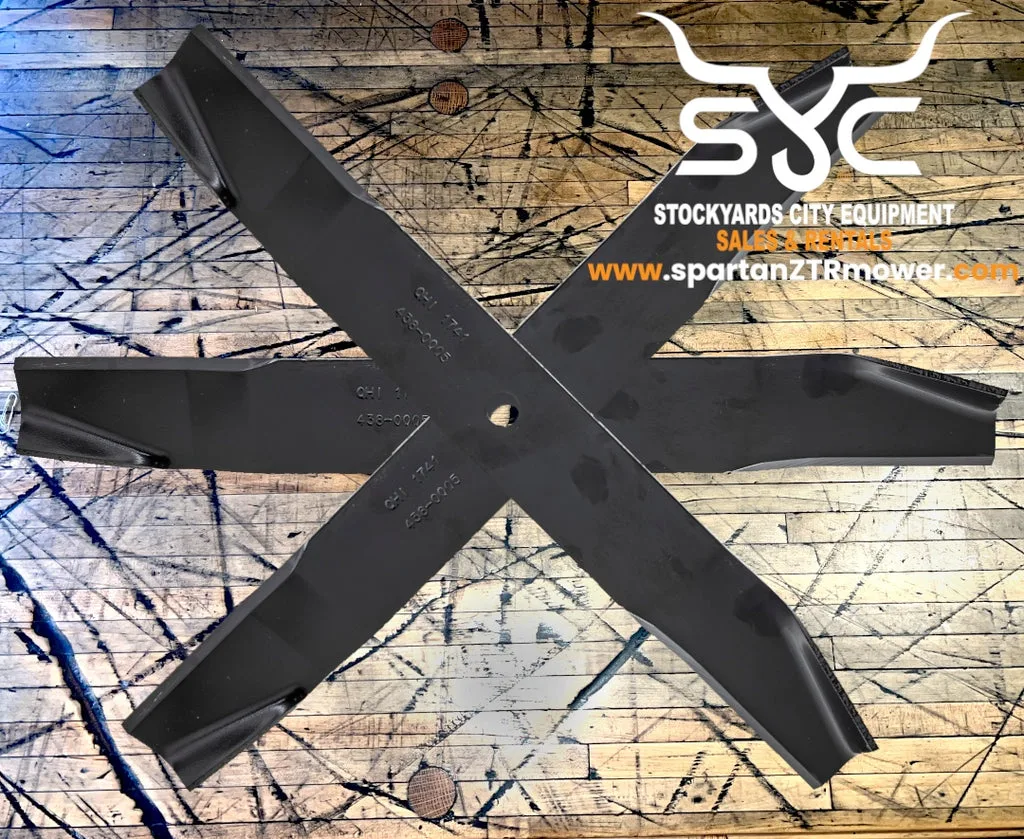
Most bad cuts on a Spartan aren't a sharpening problem. They're a setup problem. The blade is the wrong length, mounted backwards, or fighting the deck lip.
Get that right and most of the frustrating symptoms disappear on their own.
Spartan builds stand-on (SP, SBZ) and tractor-type (RT, SZ, XZ) zero-turn mowers with single-blade, twin-blade, and flip-up decks, and each one handles blade setup differently. Manufacturer specifications confirm deck widths ranging from 36 to 72 inches, with blade diameters from 21 to 26 inches. Let's identify your deck first, because everything after that branches from it.
Image source: Bing (Web (fair-use with source credit))
Quick Answer
Spartan mower blade setup depends on your deck type and grass conditions. Match the blade length and part number to the deck. Install the cutting edge facing the direction of blade rotation.
Point the counterweight end away from the discharge opening. Confirm tip clearance of roughly 3/8 to 1/2 inch. Then balance before you reinstall.
First, Identify Your Deck: Single-Blade, Twin-Blade, or Flip-Up
Every spartan mower blade setup decision starts here. Find the deck label on the front of the deck shell, then match it to the configuration below.
Single-blade decks (common on SP and SBZ stand-ons)
The blade cuts on the way around. The cutting edge leads into the direction of rotation, and the counterweight end trails. Nothing else to worry about.
Just make sure the edge leads. The wrong orientation makes the blade pull grass instead of cutting it.
Twin-blade side-discharge decks
The blades should rotate toward each other. That way the clippings cross in the center and get thrown into the discharge opening. If they rotate away from each other, the discharge side chokes up and the cut goes ragged.
Counterweight ends point outboard on a properly set twin-blade deck. Swap one and you'll see a dull, torn strip on one side of every pass.
Flip-up decks
The flip-up system changes the whole job. You lift each blade, swap it, and drop it back in. No deck removal.
The spring-loaded flap and its lock need attention during the work. Confirm each flap latches fully before you start the engine.
Rear-discharge conversion kits interact with the side-discharge shutter, so blade choice shifts again if you've converted.
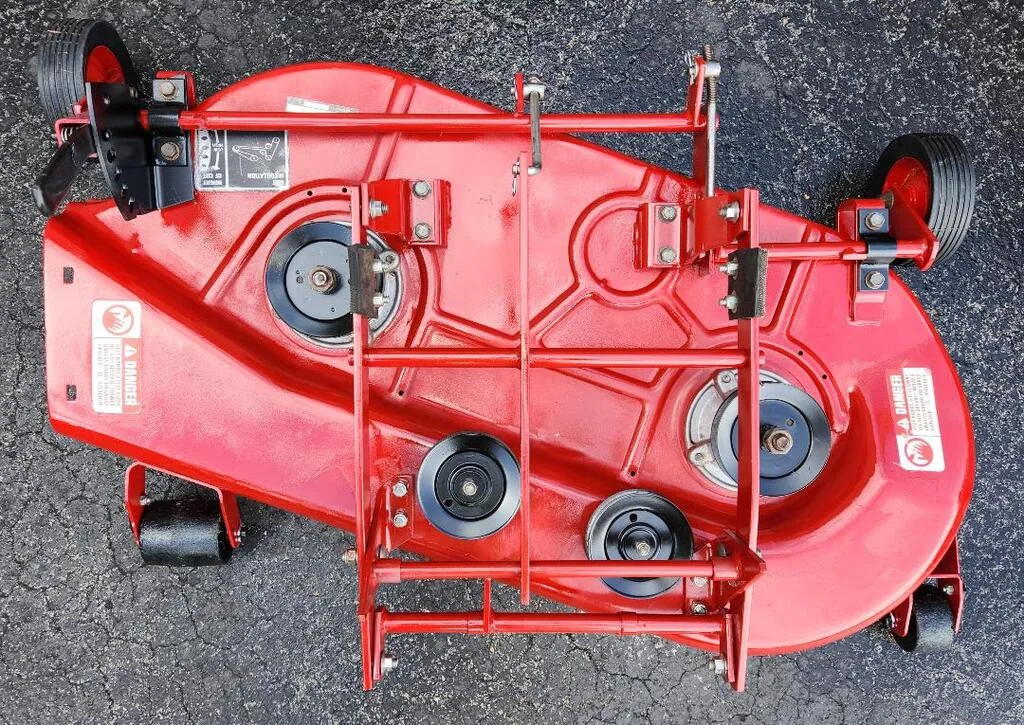
Image source: Bing (Web (fair-use with source credit))
The Decision Tree: Which Blade Do I Actually Need?
Answer three questions in order, then pick.
- What's your deck width and spindle part number?
- Bag, mulch, or side-discharge?
- How tall and how wet is the grass when you mow?
Standard high-lift blade
Choose this for tall, wet, or dense grass. The extra lift throws clippings upward and into a bag or chute better. It's also the easiest blade to sharpen by hand, since it has no serrations to preserve.
Mulching blade
Use it for dry lawns cut on a regular schedule. The tooth profile and shredding wing matter here. Never run it through a bench grinder without understanding the geometry.
A shop can ruin a mulching blade in one pass, and a ruined one just tears grass.
Flip-up blade
If you change blades often, mow near gravel, trees, or edging, this one pays for itself. It stays in the deck and lifts out under the machine. Tip injuries drop dramatically compared to tipping the whole deck.
Material choice
| Blade type | Best for | Watch out for |
|---|---|---|
| Boron steel | Rocks, stumps, high hours | Higher cost, harder to sharpen |
| Standard hardened steel | Everyday cutting | Inspect edges more often |
| Polymer composite | Dry, mulching jobs | Won't handle rocks or stumps |
OEM versus aftermarket
Compare the part number, blade length, pilot hole size, and center hole diameter before buying. Aggregate user reviews report that mismatched pilot holes are the single most common fitment complaint. Check the center bolt size too.
Most Spartan spindles use a 7/8-inch bolt, but verify by part number rather than assumption.
How to Remove and Install the Blade Without Guesswork
You don't need a workshop for this. You need a flat surface, a basic socket set, and 20 minutes.
| Tool | Purpose |
|---|---|
| Socket wrench set | Center bolt removal |
| Nitrile gloves | Grip and safety |
| Straightedge | Blade warping check |
| Blade balancer | Post-sharpening balance |
| Camera or phone | Orientation photo |
Step 1. Shut it down properly.
Park on level ground. Engine off, key removed. Disconnect the spark plug wire before anything else.
On decks with hydraulic deck lift, relieve pressure before you get underneath.
Step 2. Photograph the blade in place.
Do this even if the blade is coming out. One photo of the existing orientation solves half of all reinstall errors. Check with our RC mower setup walkthrough for the same habit on a different platform.
Step 3. Loosen the center bolt.
Snap off a seized bolt with penetrating oil rather than force. Inspect the threads while it's off. Look for rounded, stretched, or oil-contaminated threads.
Replace the washer and O-ring if they're warped.
Step 4. Spin-test the spindle.
Spin the shaft by hand and watch for play at the bushing. Feel for roughness. If there's movement, the spindle assembly is your real problem, not the blade.
A worn bushing mimics a bad blade every time.
Step 5. Install and tighten in sequence.
Seat the blade flat against the spindle flange. Tighten snug, then firm, then re-check by hand. Don't use an impact wrench for the final pull.
The Torque step explained here is worth reading before you pull it tight.
Step 6. Re-level and test.
Put the deck back at height, mow a short strip, and inspect the result. Raising the machine on a simple DIY mower lift makes the inspection far easier later.
Orientation, Pitch, and Clearance: The Three Checks Generic Guides Skip
This is where most spartan mower blade setup guides go quiet. These three checks decide whether the blade actually cuts.
Edge-leading versus edge-trailing
The cutting edge must lead into the direction of rotation. Find rotation direction by watching a raised blade tip at idle with the engine off, or check the deck belt arrows on twin-blade decks. Once installed, you can verify by feel.
A correctly set blade accelerates smoothly under load.
Counterweight end versus cutting end
On twin-blade decks, the counterweight end should point outboard, away from the center overlap. Swapped ends produce a torn, uneven strip on one side of every pass. On single-blade decks, orientation still matters for how clippings feed.
Pitch angle
Don't assume a 45-degree grind. Verify pitch against a known-good blade or a factory service manual. Pitch is how the cutting edge is formed relative to the blade plane.
Get it wrong and the blade will pull rather than slice, no matter how sharp it is.
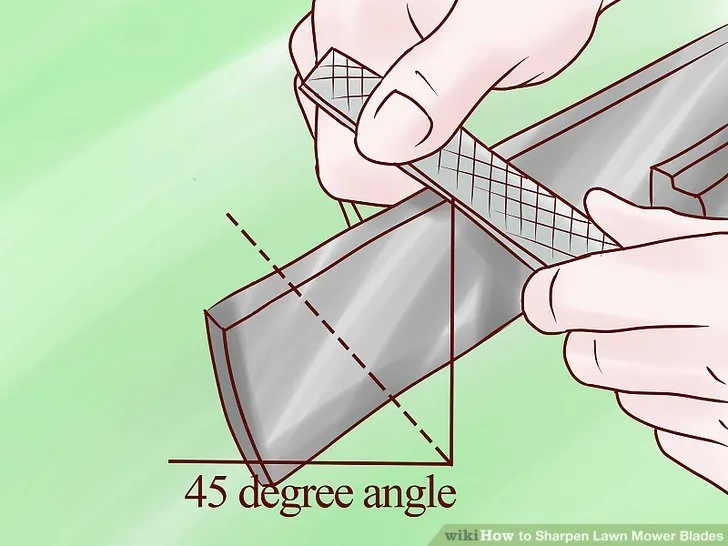
Image source: Web (Bing) / storage.googleapis.com (Web image (fair-use with source credit))
Tip clearance
The blade tip should clear the deck lip by roughly 3/8 to 1/2 inch. Too close and you get scuffing and poor discharge. Too far and clippings stall in the deck.
Also check that the blade sweep clears the discharge flap fully. Per OSHA lawn mower safety guidance, guarding must stay in place during every operation, so the flap has to work with the blade installed.
Deck level after the swap
A blade change throws off deck level more often than most people expect. Re-level and reset cutting height before you mow a full lawn.
Balance, Inspection, and the Problems That Masquerade as Blade Problems
An unbalanced blade is the real hazard here, not the sharpening. It's the leading cause of thrown objects and spindle damage.
Post-sharpening balance
After any sharpening, balance the blade on a balancer or a nail set in a bench vise. Manufacturer and shop standards typically call for end-to-end runout within about 0.010 inch. If your setup can't hit that, hand-file a heavy end rather than cutting more metal off the light end.
What to inspect on the blade
- Cracks anywhere near the center hole or gussets
- Warping, checked with a straightedge on a flat surface
- Gouges from rocks, stumps, or fence posts
- A leading edge thinned to a feather edge
Any crack means replace it. Don't sharpen around it. Sharpening thins metal further and makes failure more likely.
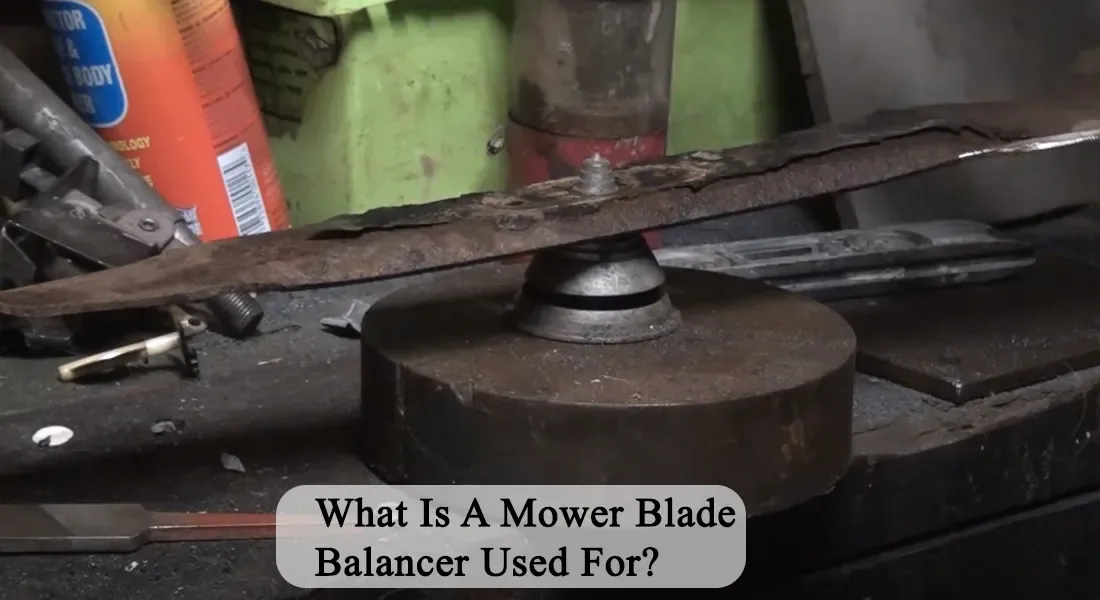
Image source: Web (Bing) / lawnask.com (Web image (fair-use with source credit))
Problems that live in the deck, not the blade
Vibration, rattling, and thrown objects usually trace back to worn spindle bushings, a bent deck lip, or packed debris in the spindle pocket. Clean the pocket while the blade is off. Spin the shaft.
If there's play, budget for the spindle assembly. The spindle and bushing notes in this forum thread cover the common symptoms.
Stripes and poor cut quality
If your cut looks worse on one side only, that's usually orientation or deck level. If it's uniformly ragged across the full width, suspect dullness or wrong blade type. Dull blades tear rather than cut.
See our notes on blade oil for a sharper edge for what helps and what doesn't.
Sharpen by hand vs. bench grinder
Hand filing preserves factory geometry and gives you control over pitch. Bench grinders are faster but vary shop to shop. For mulching blades, hand work only.
For standard blades, either works if you measure afterward.
Inspection rhythm
Check blades every 25 to 50 operating hours, plus at spring startup and the final fall cut. As of 2026, Spartan owners still cite hour-based intervals as the practical trigger rather than seasonal.
Safety Before, During, and After Blade Work
The blade is the only part of the mower that can throw metal. Treat every blade job as a serious hazard, not routine maintenance.
Shut the machine down properly
Park on level ground. Engine off, key out, spark plug wire off the plug. That's the baseline.
On decks with a hydraulic lift, relieve pressure before you put anything underneath.
Never reach under a running deck
Not for a second, not for a twig, not for a blade check. If the blade must turn, you step away. Per OSHA lawn mower safety guidance, guarding stays in place during every operation, so the discharge flap has to work with the blade installed.
Wear the right gear
Cut-resistant gloves, eye protection, and steel-toe footwear. Blades that have been in service throw rust and grass debris as easily as they throw stones.
Cracked means done
Any crack near the center hole or gusset ends the blade's service life. Don't sharpen around it. Thinning the metal makes failure more likely.
The CPSC safety guidance treats blade integrity and guarding as the two main injury controls on any walk-behind or ride-on machine.
Your Decision Guide: Blade Setup by Situation
Use this table to route yourself. If your symptom isn't listed, go back to the deck identification section first.
| Your situation | Blade to run | Check first |
|---|---|---|
| Twin-blade side-discharge deck | Blades rotating toward each other | Counterweight ends outboard |
| Tall or wet grass, bagging | Standard high-lift | Tip clearance |
| Dry lawn, regular schedule | Mulching blade | Tooth profile before sharpening |
| Rocks, trees, gravel nearby | Flip-up blade | Flap lock fully latched |
| Torn strip on one side | Any, reoriented | Edge-leading orientation |
| Vibration at speed | Any, rebalanced | Spindle bushing play |
| Debris flying outward | Any, rebalanced | Balance within 0.010 inch |
Maintenance rhythm
Inspect blades every 25 to 50 operating hours. Add a check at spring startup and at the final fall cut. Grease the spindles while the blade is off.
Confirm before you cut metal
Check part numbers, pilot hole size, and bolt size against your model. Manufacturer service manuals for the RT, SZ, XZ, SP, and SBZ series list deck-specific blade specs. A different brand's swap procedure can still help with sequencing.
Our Milwaukee blade setup walkthrough covers the same removal and torque logic on a walk-behind platform.
Frequently Asked Questions
What blade size fits my Spartan mower?
Blade diameter depends on deck width, not the model name alone. Manufacturer specifications list diameters from 21 to 26 inches across the lineup. Match the deck label on the front of the shell, then verify the part number.
A blade that's too long will hit the deck lip or the discharge flap.
Can I sharpen OEM Spartan blades instead of buying new ones?
Yes, if the blade is straight, uncracked, and the edge hasn't thinned to a feather. Hand filing preserves factory pitch better than a bench grinder. If a shop sharpens it, measure the result.
Mulching blades should stay with hand work, since grinder passes destroy the tooth geometry.
Why does my mower throw objects even after a blade change?
Balance is the first suspect. End-to-end runout should sit within about 0.010 inch. If a freshly installed blade still throws material, check the spindle bushing for play and inspect the deck lip for bends.
A bent lip can deflect clippings upward no matter how good the blade is.
Is a worn spindle bushing really worth replacing?
If the shaft has visible play or feels rough by hand, yes. A worn bushing shows up as vibration, uneven cut, and noise that gets blamed on the blade. Replacing the bushing is cheaper than replacing a spindle assembly, and cheaper still than replacing the blade repeatedly.
Should I replace all blades at once?
On a twin-blade deck, yes. Matching blades keep the cut even and the load balanced. On a single-blade deck it isn't required, but swapping both at the same service interval keeps the setup consistent across the season.

Michael Harris is an experienced woodworker and power tool expert with over 12 years in woodworking. Specializing in functional, high-quality furniture, he offers expert advice on tool selection, maintenance, and sharpening for both beginners and professionals.