What Does a Mulching Mower Blade Actually Look Like?
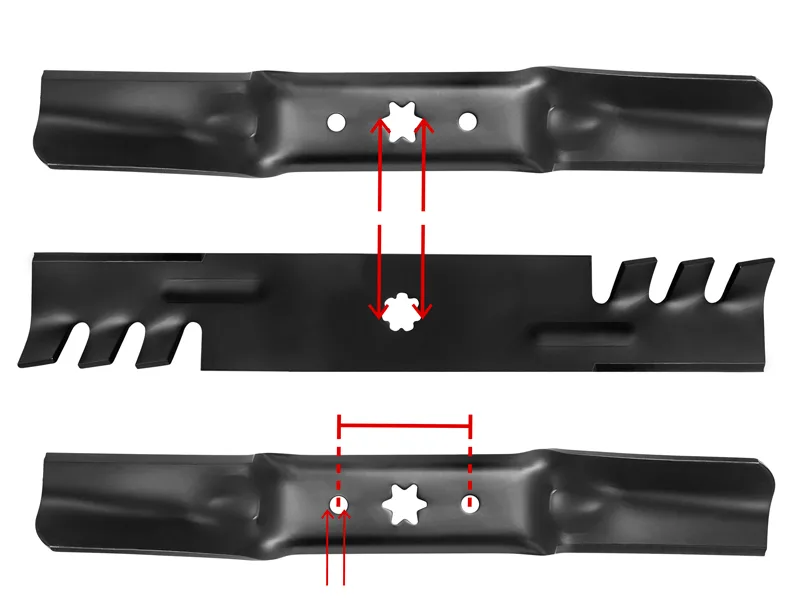
You've probably asked yourself what does a mulching lawn mower blade look like while standing in front of a hardware store shelf. The answer is simpler than you might think once you know what to check. A mulching blade shares the same basic shape as a regular rotary blade.
But it carries a few key visual tells that set it apart. Those tells are what let the blade trap grass inside the deck and cut it into fine pieces.
Manufacturer specifications indicate that mulching blades typically weigh 20 to 40 percent more than standard utility blades. That extra mass isn't random. It helps the blade create the suction needed to keep clippings floating long enough for multiple cuts.
Understanding these visual markers will help you pick the right blade and avoid costly mistakes.
Image source: Bing (Web (fair-use with source credit))
Quick Answer
A mulching blade has a rounded, closed tip with no side slot. Its surface includes extra cutting lobes and a raised discharge lip. These features recirculate clippings inside the deck for a finer chop.
As of 2026, most blades measure 18 to 54 inches long and cost $20 to $80. They also weigh noticeably more than standard blades.
What to Look for: The Defining Visual Features of a Mulching Blade
The Closed Tip and Raised Discharge Lip
The first thing you'll notice is the blade tip. A standard blade has a wide, open slot near the end. That slot lets clippings fly out into a bag or off to the side.
A mulching blade closes that end completely. The tip curves back into a smooth, rounded shape. It looks almost like a boomerang from certain angles.
Below the tip sits the raised discharge lip. This lip arcs upward and blocks the opening. It forces grass to stay inside the deck longer.
The lip works with the blade's curve to create a vacuum effect. That's why mulching blades can chop clippings two or three times before they settle back onto the lawn.
The Multi-Level Cutting Surface and Extra Lobes
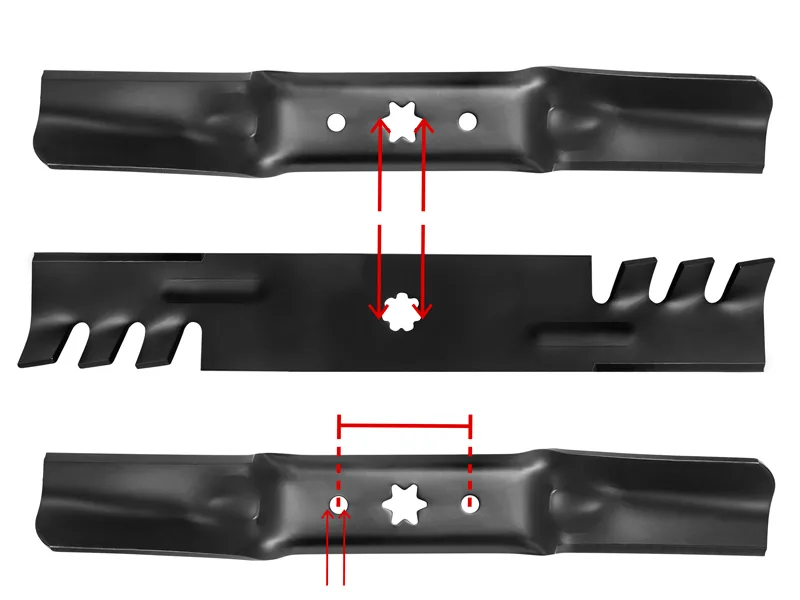
Image source: Bing (Web (fair-use with source credit))
Look at the top surface of a mulching blade and you'll see it's not flat. The blade has multiple cutting levels stacked along its length. The leading edge does the first cut.
A secondary lobe further back catches any larger pieces. Some designs add a third lobe near the center. Each edge meets the grass at a different angle.
This layered approach turns one slicing action into a series of micro-cuts. The result is a finer chop that settles into the turf quickly. It also means the blade doesn't clog as easily.
You won't see the same buildup of clumps that ruins a standard cut.
Blade Weight, Curve, and Balance
Mulching blades feel heavier in your hand than their standard counterparts. That's by design. The extra weight helps maintain momentum during the cut.
A light blade will stall when it hits thick grass. A heavy mulching blade keeps spinning smoothly.
The curve runs from tip to center. It lifts grass upright before the edge slices it. That lifting motion is what separates a good mulch from a ragged tear.
Manufacturers balance these blades to within 0.5 inches of displacement. An imbalanced blade will shake your mower and damage the engine over time.
Mulching Blade vs. Regular Blade: A Visual Side-by-Side
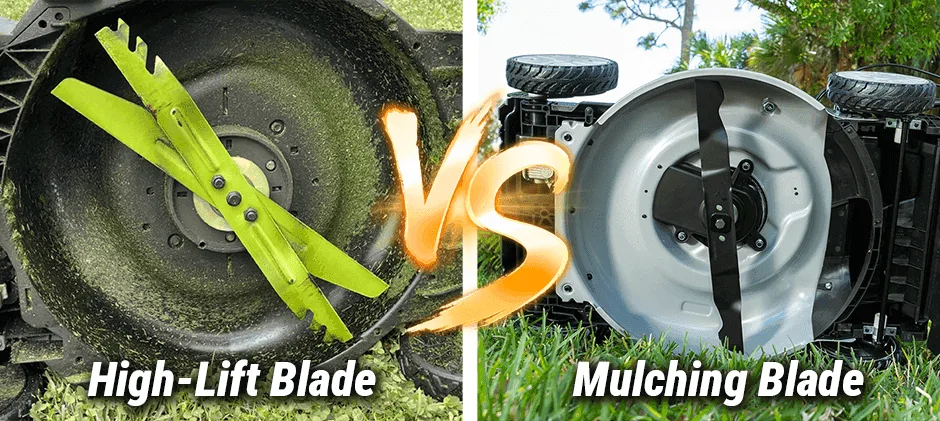
Image source: Web (Bing) / bestlawnmower.reviews (Web image (fair-use with source credit))
The easiest way to spot the difference is to lay both blades side by side. Start with the tips. The regular blade shows a wide outlet slot.
The mulching blade ends in a smooth curve. That single feature tells you everything about how each blade handles clippings.
Next, examine the cutting surface. A standard blade usually has one sharp edge running its full length. A mulching blade often has two or three.
The extra edges are what do the recutting work inside the deck. Without them, the blade would just push clippings around like a paddle.
High-Lift and Low-Lift Blades
High-lift blades look similar to mulching blades at first glance. They have more curve and lift grass well. But they still feature an open tip.
The slot lets clippings exit quickly for bagging. These blades excel in tall or wet grass where quick discharge matters.
Low-lift blades take the opposite approach. They have minimal curve and a flatter profile. The gentler cut suits sports fields and fairways where you want a clean shearing action.
Neither category recirculates clippings the way a true mulching blade does.
2-in-1 and 3-in-1 Combo Blades
Some manufacturers sell combo blades that claim to mulch, bag, and discharge. These are often 2-in-1 or 3-in-1 designs. They typically have a partially closed tip with a small slot still visible.
They work, but they don't mulch as finely as a dedicated mulching blade.
If your priority is nutrient recycling and clippings breakdown, a dedicated mulching blade wins. If you switch between bagging and mulching regularly, a combo blade offers flexibility. Just don't expect premium mulching results from a hybrid design.
| Feature | Mulching Blade | Standard High-Lift Blade | Combo 2-in-1 Blade |
|---|---|---|---|
| Tip design | Closed, rounded | Open slot | Partially open |
| Cutting edges | 2 to 3 levels | 1 main edge | 1 to 2 edges |
| Primary use | Mulching | Bagging / discharge | Multi-mode |
| Clip size | Fine, under 1 inch | Longer, for collection | Medium |
| Typical price | $20 to $80 | $15 to $60 | $25 to $70 |
How to Spot a Mulching Blade on Your Mower Right Now
Where to Look and What to Check First
Tilt your mower safely and examine the blade under the deck. You'll see the blade mounted to the spindle with a central bolt. Flip your view to the tip end.
If it curves back into a smooth cap, you're looking at a mulching blade. If there's a wide slot, it's a discharge or high-lift blade.
Check the surface above the cutting edge. You should see additional lobes or ridges running parallel to the main edge. These secondary surfaces are the mulching signature.
A plain single-edge blade won't have them.
Checking Compatibility With Your Deck
Not every mulching blade fits every mower. The center hole shape matters. Some decks use a round mounting hole.
Others require a triangular or star-shaped pattern. Measure the distance from the center bolt to the blade ends too. A 21-inch deck won't accept a 30-inch blade.
Review your mower's manual or the manufacturer's specification sheet. It will list the exact blade model and part number. Using the wrong blade can damage your deck or create unsafe operating conditions.
For more on finding the right blade for your machine, check our guide on Milwaukee mower blade setup.
Identifying Genuine vs. Fake Mulching Blades
Some blades get labeled "mulching" without the real features. These knockoffs often have a slightly curved tip but lack the extra cutting lobes. They look close enough to fool a quick inspection.
Test by holding the blade up to light. A genuine mulching blade will show multiple flat planes on its top surface. A fake one will look like a standard blade with a bent tip.
Buying from authorized dealers or the original equipment manufacturer reduces this risk. Aftermarket versions from unknown brands carry higher chances of mislabeling. If the price seems too good to be true, it probably is.
See our roundup of riding lawn mower blade costs for pricing benchmarks.
When a Mulching Blade Makes Sense (and When It Doesn't)
Lawns That Benefit Most
Mulching blades shine on healthy, regularly maintained lawns. They work best when you mow weekly and never remove more than one-third of the grass height. Fine fescues, ryegrasses, and Kentucky bluegrasses all respond well.
The recycled clippings break down fast and feed the soil.
Properties with organic waste bans also benefit. Many municipalities prohibit grass in landfills. Mulching eliminates that problem entirely.
It also reduces your fertilizer bills over time. How to properly oil mower blades can extend the life of your setup even further.
Conditions Where Mulching Fails
Tall, wet, or thatchy grass defeats mulching blades. The blade can't chop material fast enough. You'll end up with clumps that smother the turf.
Heavy thatch layers trap moisture and block airflow. In those conditions, bagging or side-discharge makes more sense.
Sandy or nutrient-poor soils may also struggle. Mulching returns some nutrients, but not enough to replace fertilizer on depleted ground. If your lawn needs a nutrient boost, bagging and applying targeted fertilizer is the better path.
Learn about home snow plow builds if you need seasonal equipment ideas beyond blade selection.
Real-World Scenarios and Trade-offs
Consider a suburban homeowner with a 0.4-acre yard. They mow every seven days. Their grass stays between 3 and 4 inches.
A mulching blade keeps the lawn clean, reduces bagging trips, and cuts fertilizer needs by roughly 20 percent. That's a solid win.
Now picture a rural property with overgrown fescue mixed with weeds. The grass reaches 8 inches. A mulching blade will clog within minutes.
The owner should switch to a high-lift blade for those sessions. Knowing when to swap blades is part of responsible lawn care. You can find community advice on our lawn mower forum.
Installing and Maintaining Your Mulching Blade
Safe Removal and Replacement Steps
Always disconnect the spark plug wire before working near the blade. Tilt the mower with the air filter facing up to protect the engine. Secure the blade with a wooden block or a DIY mower lift to keep it from turning.
Use the correct socket size, usually 5/8-inch or 7/8-inch.
Remove the old blade and compare it to the new one. Confirm the length, center hole shape, and mounting pattern match exactly. Place the new blade with the curved side facing up and the cutting edge leading toward the deck wall.
Tighten the bolt to the manufacturer's torque spec. Reconnect the spark plug wire only after everything is secure.
Sharpening, Balancing, and Inspecting for Wear
Sharpen a mulching blade every 20 to 25 hours of use. Use a bench grinder or a file to restore the primary edge. Keep the original angle intact.
Don't grind away the secondary lobes. Over-sharpening removes material and unbalances the blade.
Check balance after every sharpening. Suspend the blade from a nail or use a commercial balancer. The blade should sit level.
If one side drops, file metal from the heavy end until it balances. Inspect for cracks, especially near the center hole and tip. A cracked blade can shatter during operation.
Warning Signs You Need a New Blade
Vibration is the biggest red flag. If your mower shakes excessively at cutting speed, the blade may be damaged or unbalanced. Listen for unusual noises coming from the deck.
Excessive clumping after mowing signals a dull blade or improper mulching setup. Visible cracks, bent tips, or worn cutting lobes mean it's time to replace the blade.
For brand-specific guidance, see our articles on Ariens mower blade setup and Tiectown mower blade setup. Proper maintenance keeps your mulching blade performing at its best season after season.
Frequently Asked Questions
Can I convert my regular mower to mulch?
Yes, if your mower deck supports it. You'll need a mulching blade and possibly a mulching kit that includes a plug or baffle. Check your mower manual for compatibility before buying anything.
How often should I sharpen a mulching blade?
Sharpen every 20 to 25 hours of mowing. Frequent users may need to sharpen monthly during peak season. Dull blades produce poor mulch and damage grass health.
Do mulching blades work on wet grass?
No. Wet grass clumps easily and clogs the deck. Wait until the dew dries or the rain stops.
Dry conditions are essential for clean mulching performance.
What's the difference between a 2-in-1 and 3-in-1 blade?
A 2-in-1 blade mulches and discharges. A 3-in-1 blade adds bagging capability. Both are hybrids.
They don't mulch as finely as a dedicated mulching blade.
Will a mulching blade damage my mower deck?
No, if it's the correct size and properly installed. An oversized blade can strike the deck and cause damage. Always match the blade to your deck's specifications.
Are mulching blades louder than regular blades?
They run at similar noise levels. The main difference is cut quality, not sound. Mulching blades may actually reduce noise slightly by trapping clippings inside the deck.

Ms.Sultana
Affiliate Marketer | SEO Specialist | Blogger at Elite Global Marketing Agency
Ms.Sultana brings over 16 years of expertise working with global Clients by providing different skills and Services. For the last 5 years working as an Affiliate marketer, specializing in high-ticket campaigns that drive exponential growth. She holds a degree in Computer Science and Engineering as well as achieved many more skills certificates from different institute/academies/Platform. As part of the Elite Global Marketing team, Sultana has helped clients generate millions in revenue through strategic partnerships, innovative funnels, and data-driven insights. She’s passionate about empowering businesses to scale by connecting them with the right affiliate opportunities.
Explore our resources or connect with us on LinkedIn to stay ahead in affiliate marketing.